


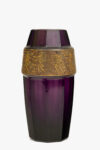
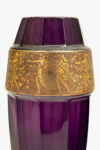
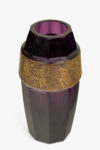
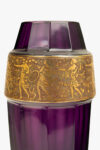
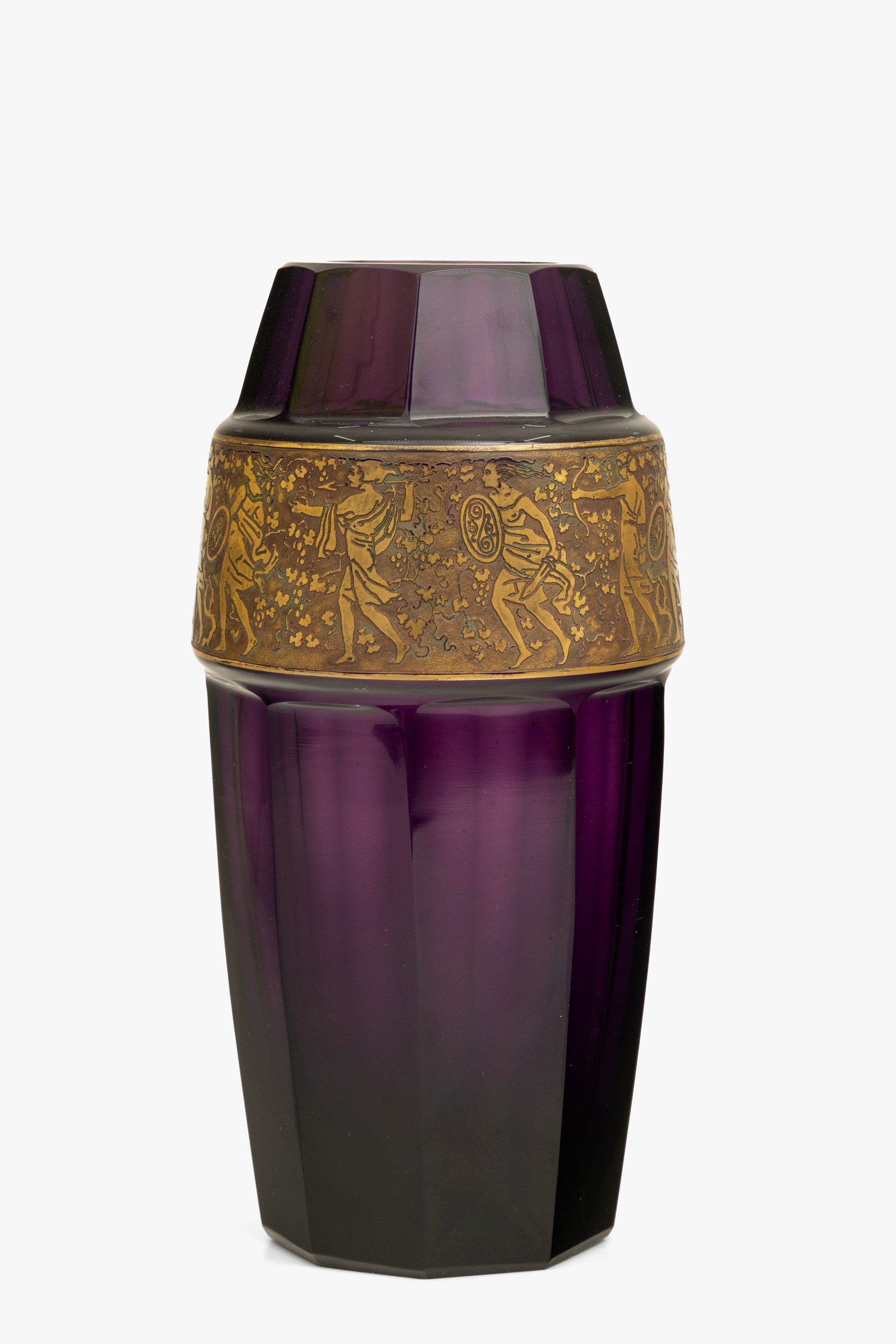
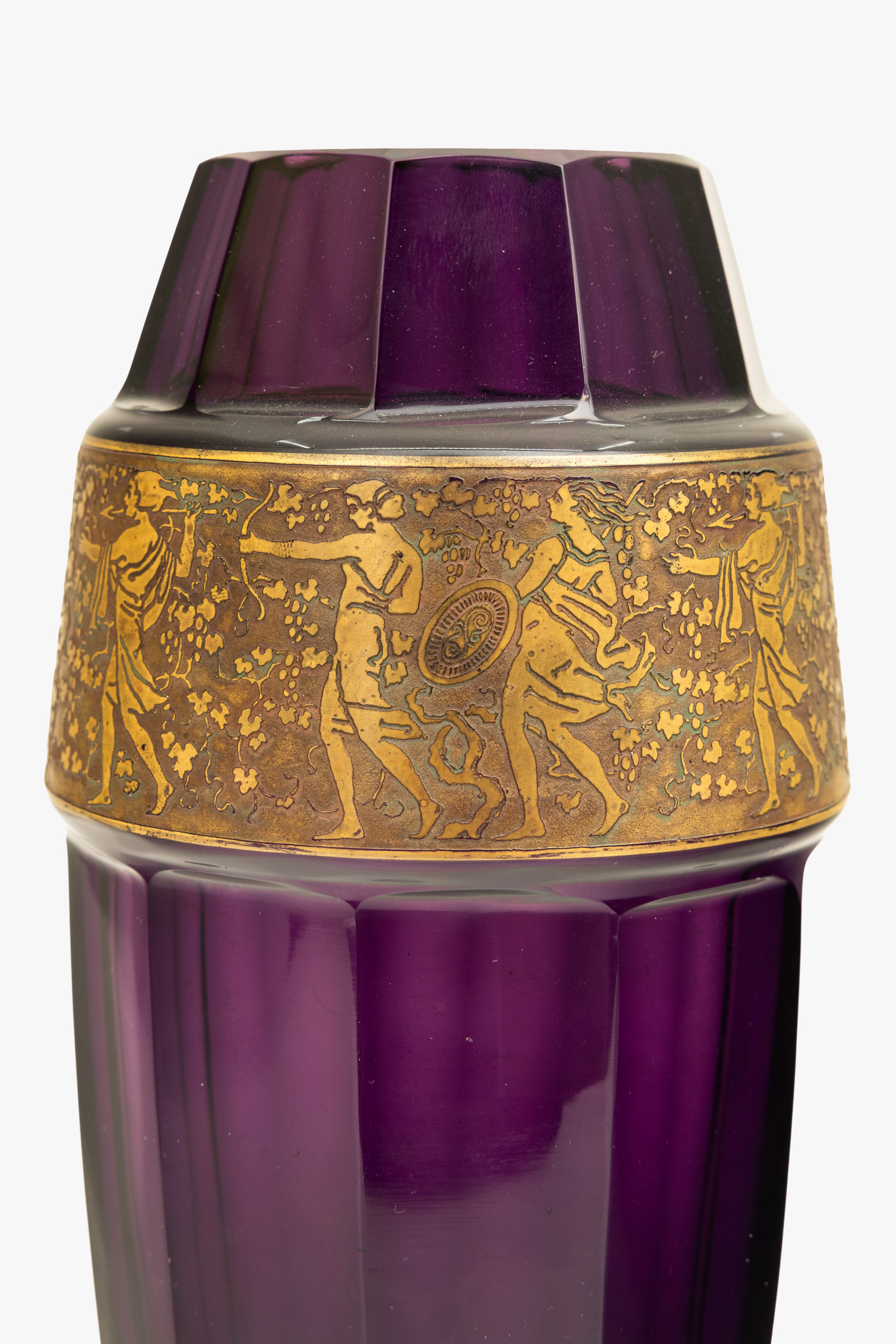
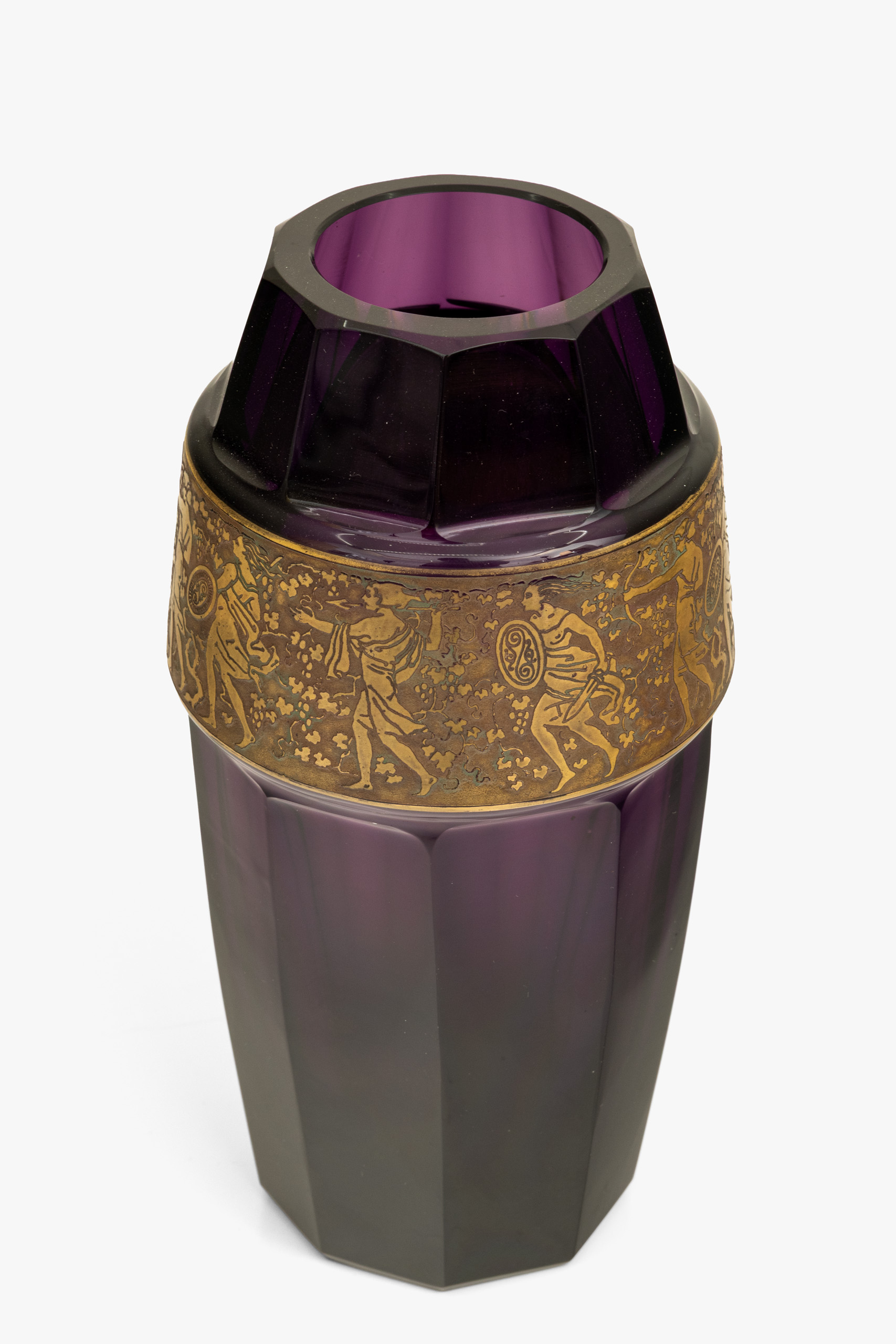
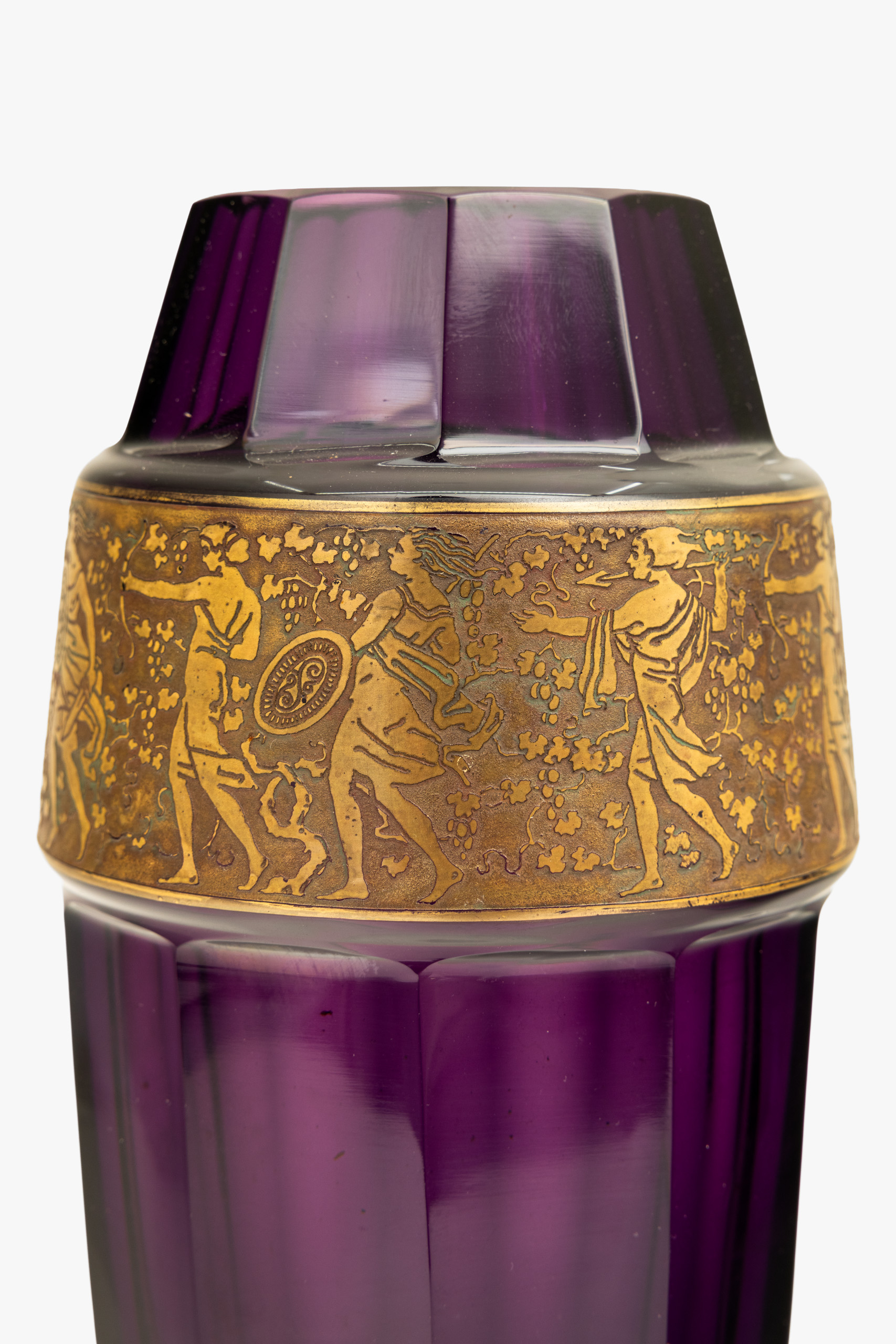
Moser Amethyst Glass Vase with Classical Frieze in Gilt Bronze, ca. 1910
Original price was: € 425,00.€ 400,00Current price is: € 400,00.
A luxurious amethyst-colored glass vase attributed to Moser, featuring deep vertical faceting and a classical gilt bronze frieze with warriors and dancers in relief. An elegant fusion of Bohemian craftsmanship and neoclassical revival aesthetics, dating to the early 20th century.
1 in stock
MAKE AN OFFER - SELECT:
This exceptional Moser vase stands as a striking example of early 20th-century Bohemian artistry, executed in richly saturated amethyst glass. The body is deeply cut into faceted panels, rising toward a wide upper collar encased in a gilt bronze band.
The bronze frieze is finely cast and chased with classical figures—helmeted warriors, dancers, and musicians—reminiscent of Greco-Roman processional scenes. This decorative band elevates the piece from a simple glass form to a neoclassical objet d’art, reflecting the Edwardian fascination with antiquity and opulence.
Attributable to Moser Karlsbad, a renowned Bohemian glassworks known for its luxurious pieces made for the imperial and aristocratic clientele across Europe.
-
Origin: Bohemia (likely Moser, Karlsbad)
-
Period: ca. 1900–1915
-
Material: Hand-cut amethyst crystal and finely cast gilt bronze
-
Dimensions: Approx. H 23 cm x Ø 10 cm
| Condition | Excellent |
|---|---|
| Material | Glass |
| Period | 1900 – 1950 |
| Style | Art Deco |
Related Products
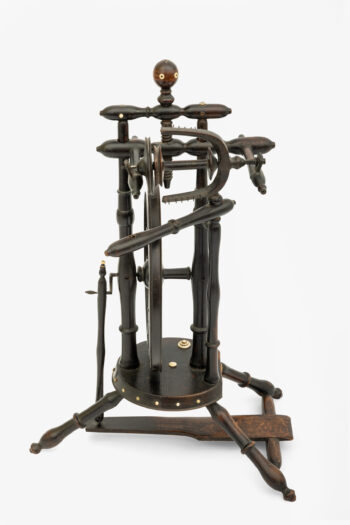
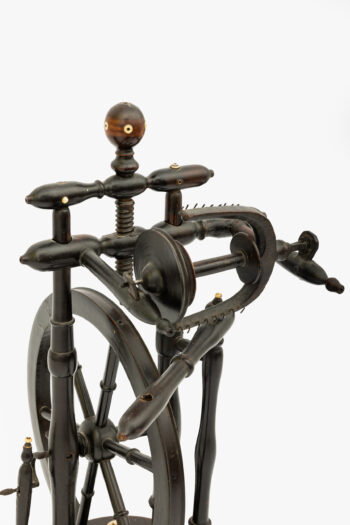
A 19th–early 20th century Dutch spinning wheel in dark-stained hardwood, featuring finely turned supports and a bronze medallion bearing a crowned “W” monogram, symbolizing the reign of Queen Wilhelmina. A decorative yet functional piece of Dutch textile heritage.
Out of stock
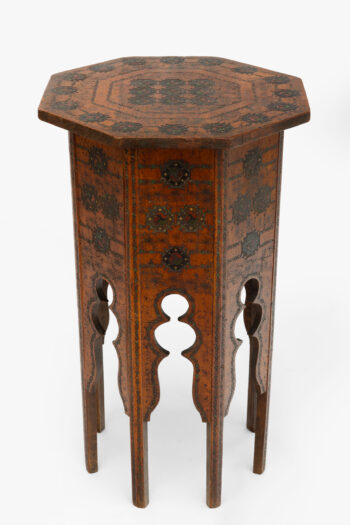
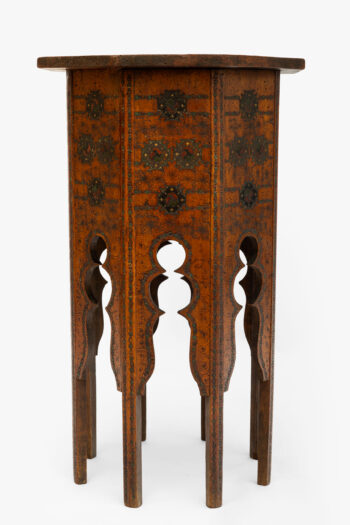
Rare antique octagonal pedestal table entirely decorated in pyrography and polychrome, combining Neo-Brâncovenesc geometric ornament with Moorish Revival architectural form. Bucharest or Wallachia, circa 1890–1910.
Out of stock
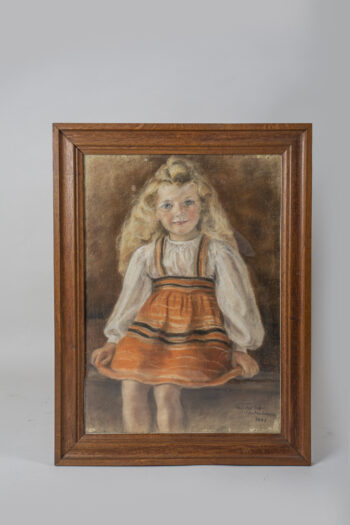
by Thalita Eik‑Constantinescu, 1947 pastel portrait of blonde girl in orange folk dress, framed under glass.
1 in stock
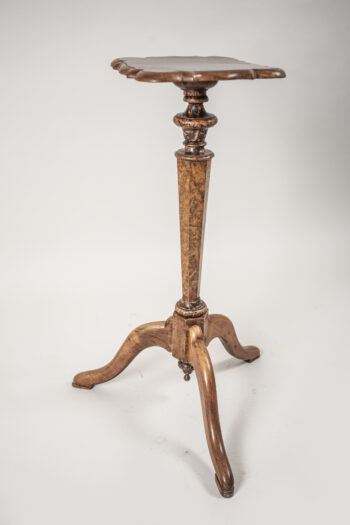
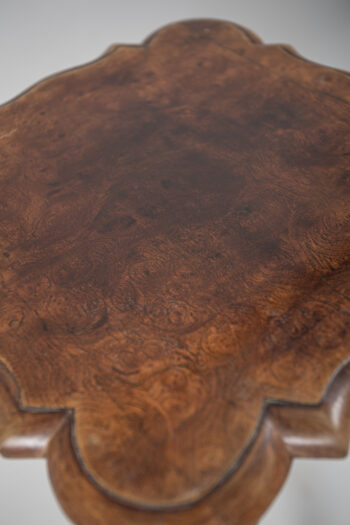
An elegant late 18th-century Dutch candle stand with a scalloped top and turned baluster shaft in richly figured burr walnut. Its refined tripod base and balanced proportions suggest Louis XVI or early Directoire influences. Originally used as a light stand or occasional table.
1 in stock
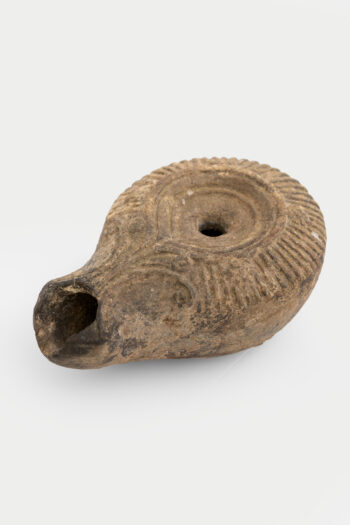
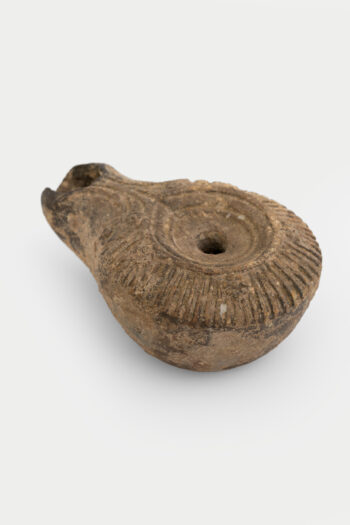
Ancient molded terracotta oil lamp with stylized decoration and central filling hole, attributed to Roman or Samaritan-type production.
Out of stock
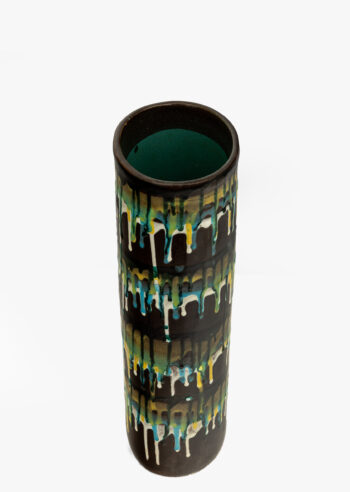
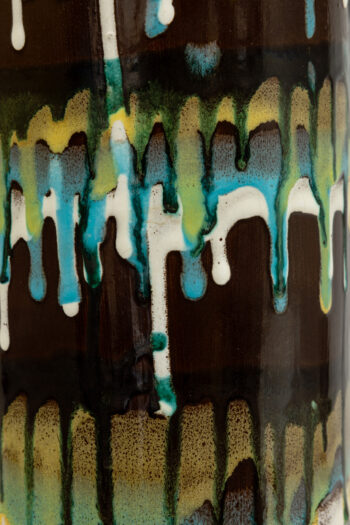
A striking mid-century ceramic floor vase from West Germany, featuring the iconic lava-style drip glaze in bold tones of turquoise, ochre, lime, and ivory over a deep chocolate-brown body. A superb sculptural decorative piece typical of the Fat Lava aesthetic.
1 in stock
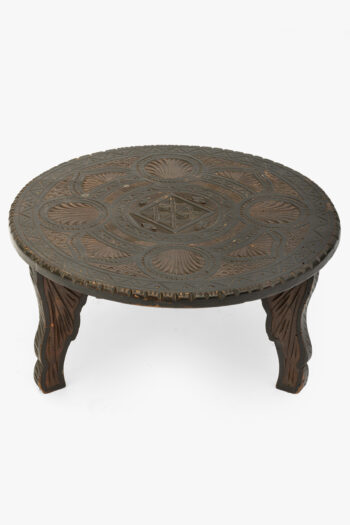
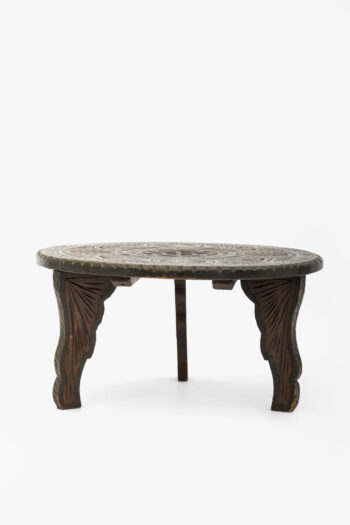
A finely carved Neo-Romanian low table featuring rich geometric ornamentation and traditional solar motifs, executed in dark-stained wood, Romania, circa 1920–1940.
Out of stock
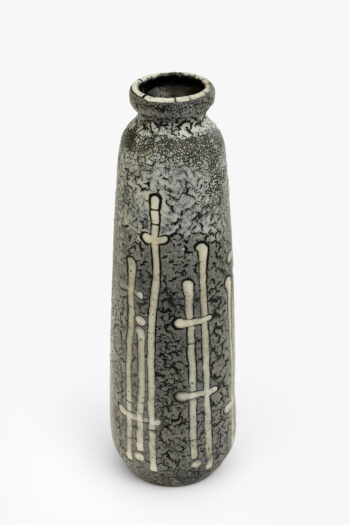
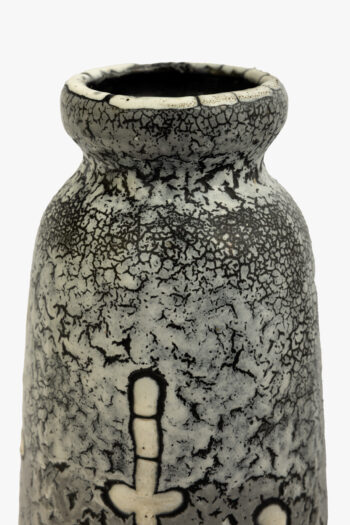
A striking mid-century West German ceramic vase featuring a textured “volcanic lava” glaze in black, white, and grey tones. Decorated with raised abstract relief motifs reminiscent of minimalist tribal patterns, this piece exemplifies the popular “Fat Lava” style of 1960s–1970s West German pottery.
1 in stock
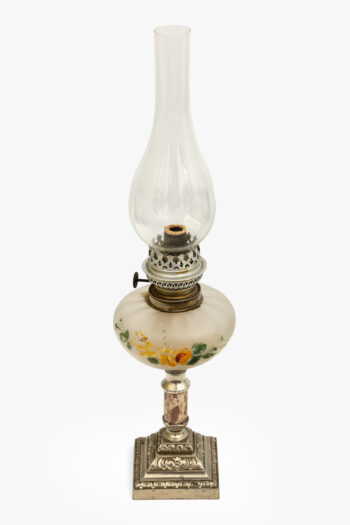
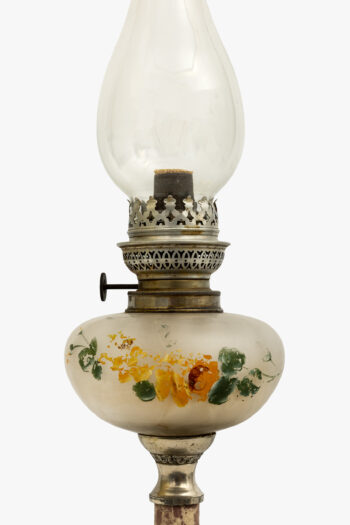
An elegant French oil lamp from the late 19th century, featuring a hand-painted opaline glass font with floral decoration, mounted on a veined marble shaft and resting on an ornate cast spelter base. A refined example of Belle Époque domestic design, blending artistry and functionality.
1 in stock
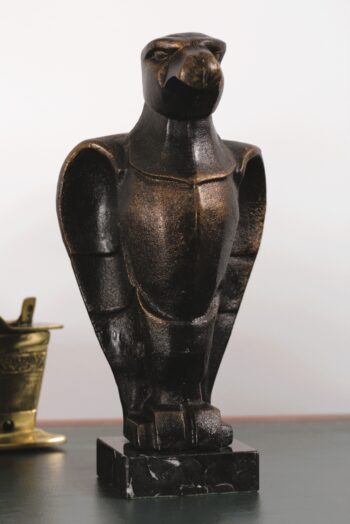
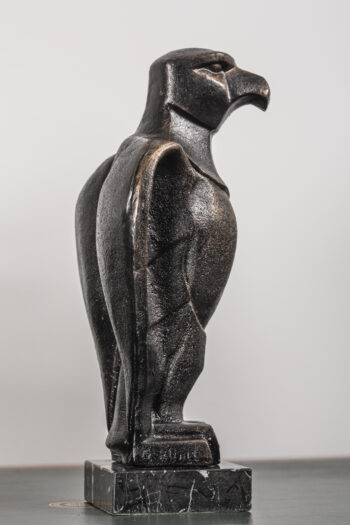
A bold, stylized eagle sculpture with angular geometric lines and a dark bronze patina, mounted on a polished black marble base. Although inspired by the strong modernist aesthetic of the 1920s–1930s Art Deco period, this piece was produced later, likely mid-20th century, echoing the same symbolism of strength and elegance.
Out of stock


A superb English Windsor armchair, handcrafted circa 1880 in solid elm, boasting a beautifully pierced back splat, sculpted saddle seat, and masterfully turned legs. A true 19th-century original with deep, lustrous patina.
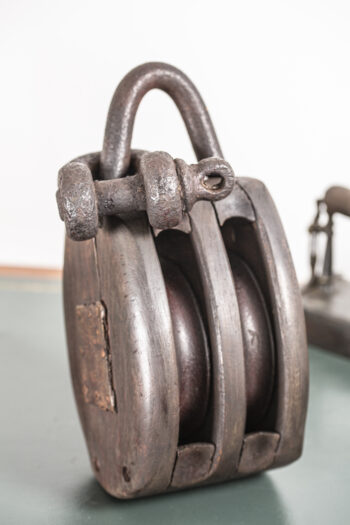
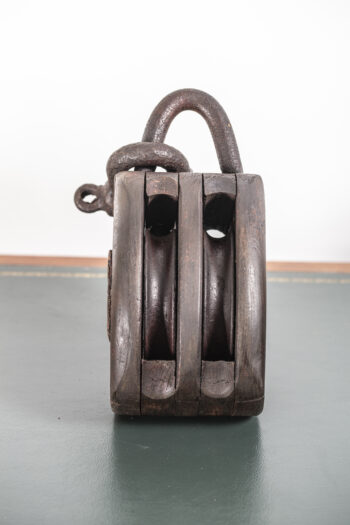
A robust hand-crafted maritime pulley featuring a double-sheave hardwood housing with rich patina and a forged iron shackle. Likely used aboard a traditional sailing vessel, it represents authentic late 19th to early 20th-century nautical rigging equipment.
1 in stock