



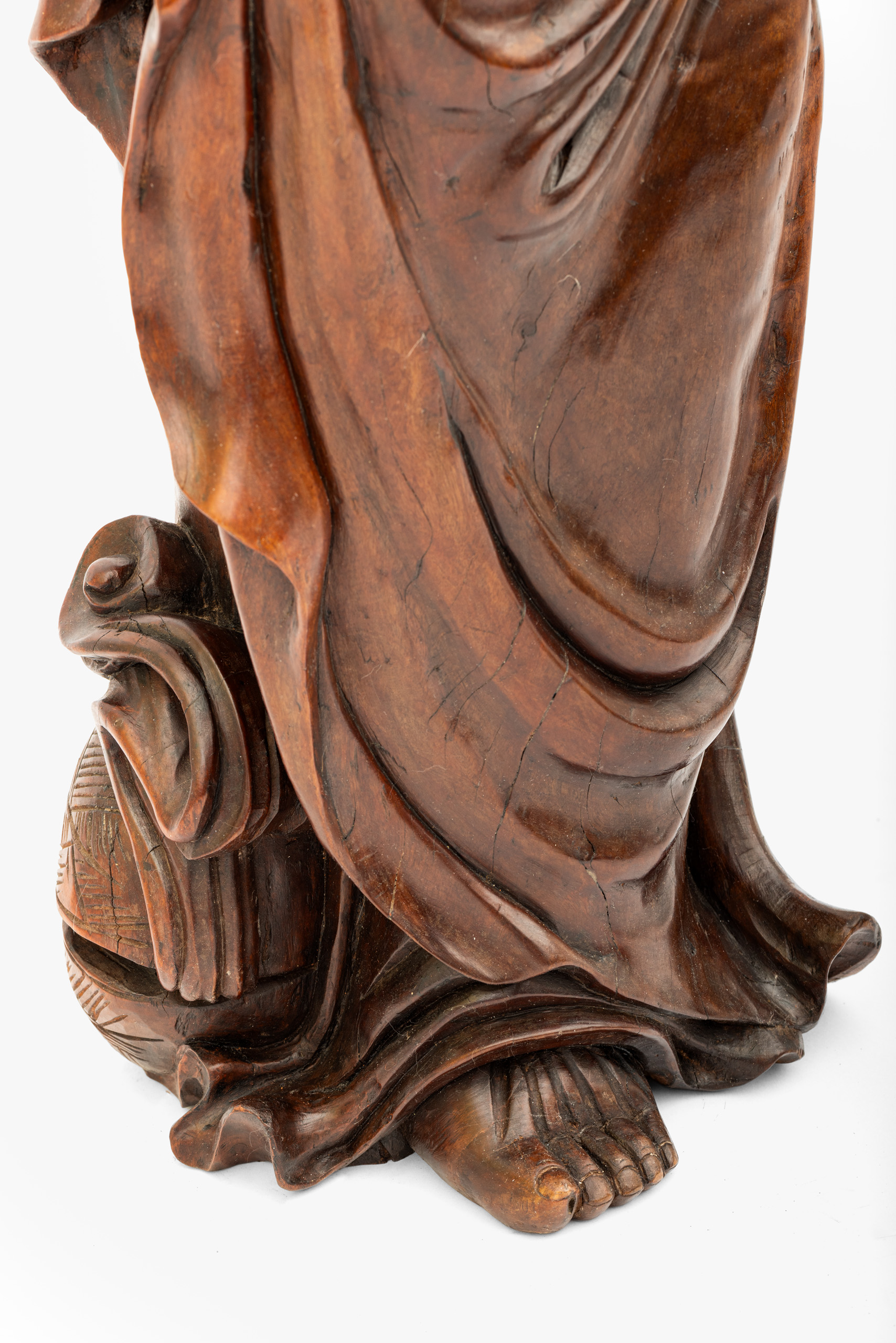
Large Chinese Carved Hardwood Figure of Bodhidharma (Damo) – Late 19th Century, 85 cm
€ 2.800,00
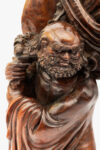
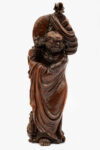
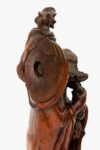
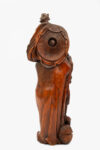
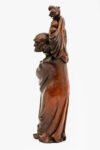
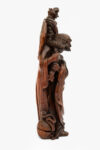
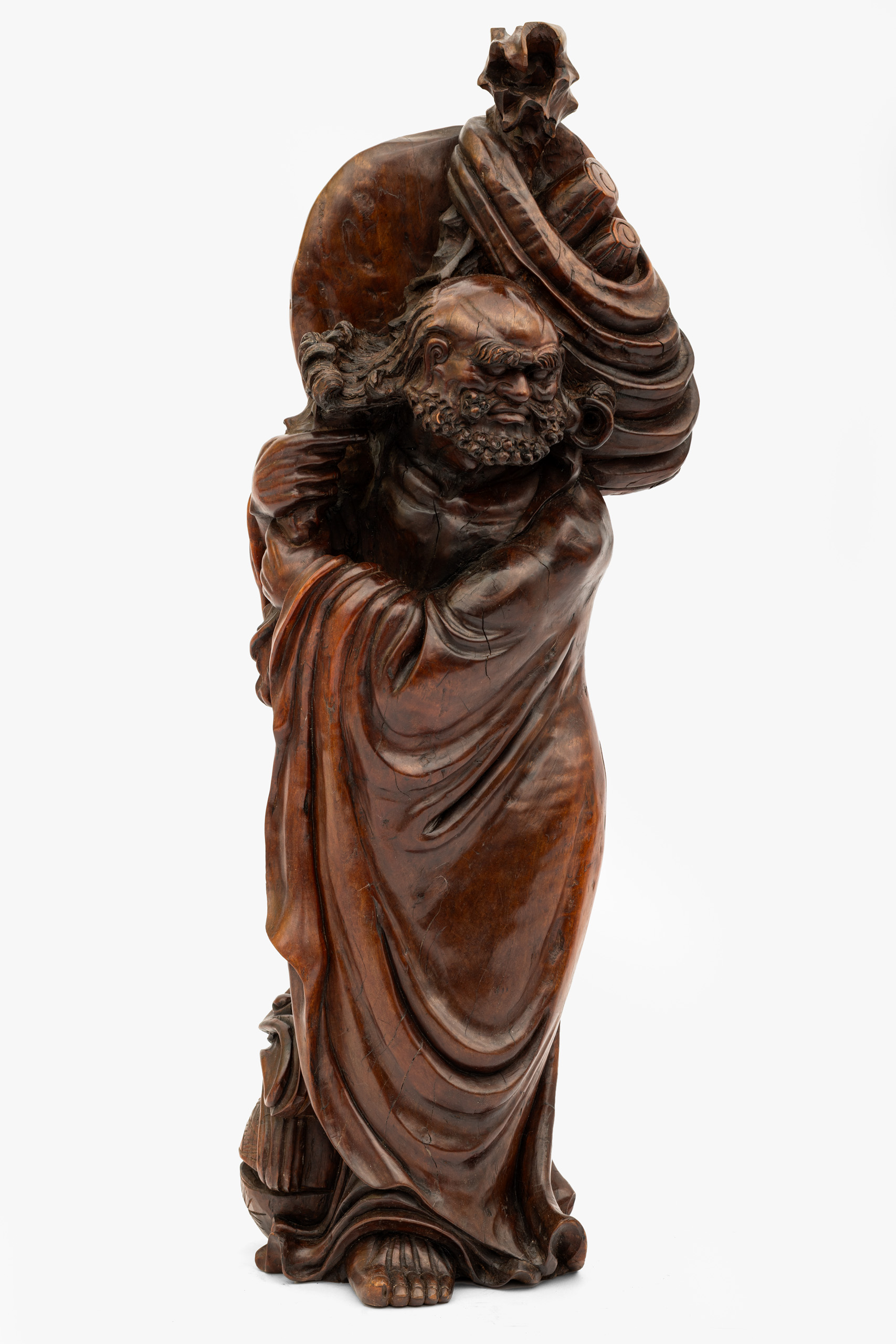
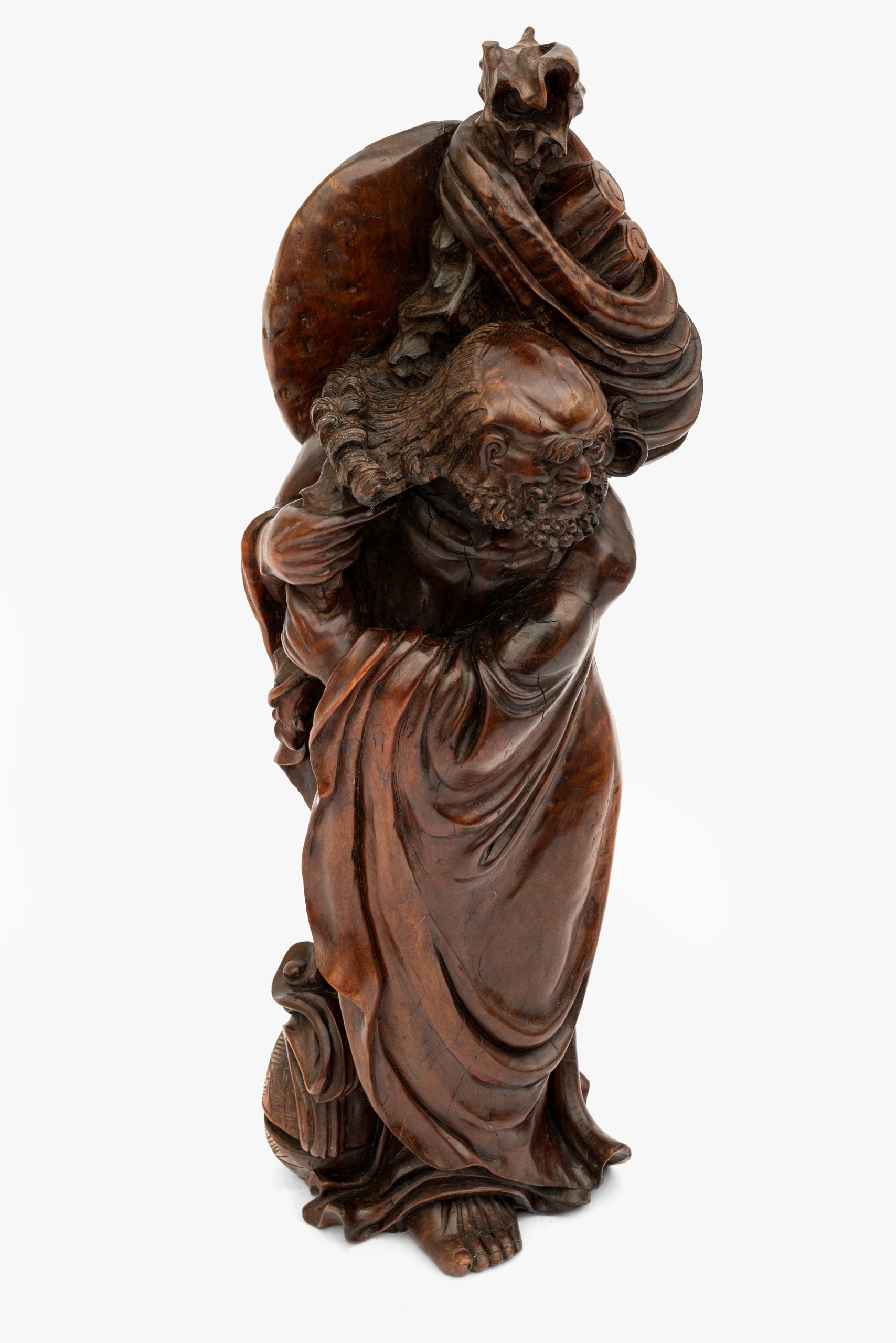
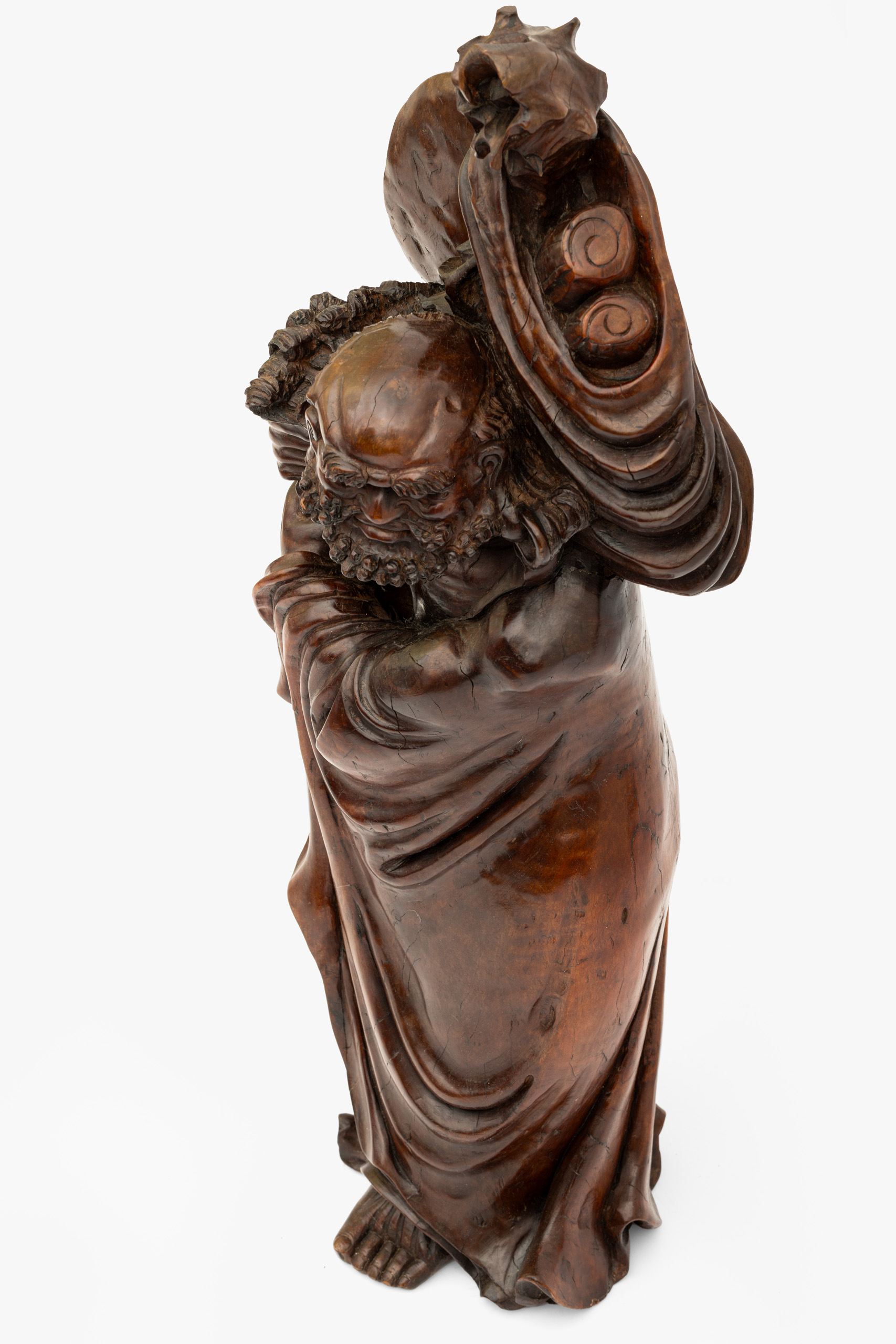
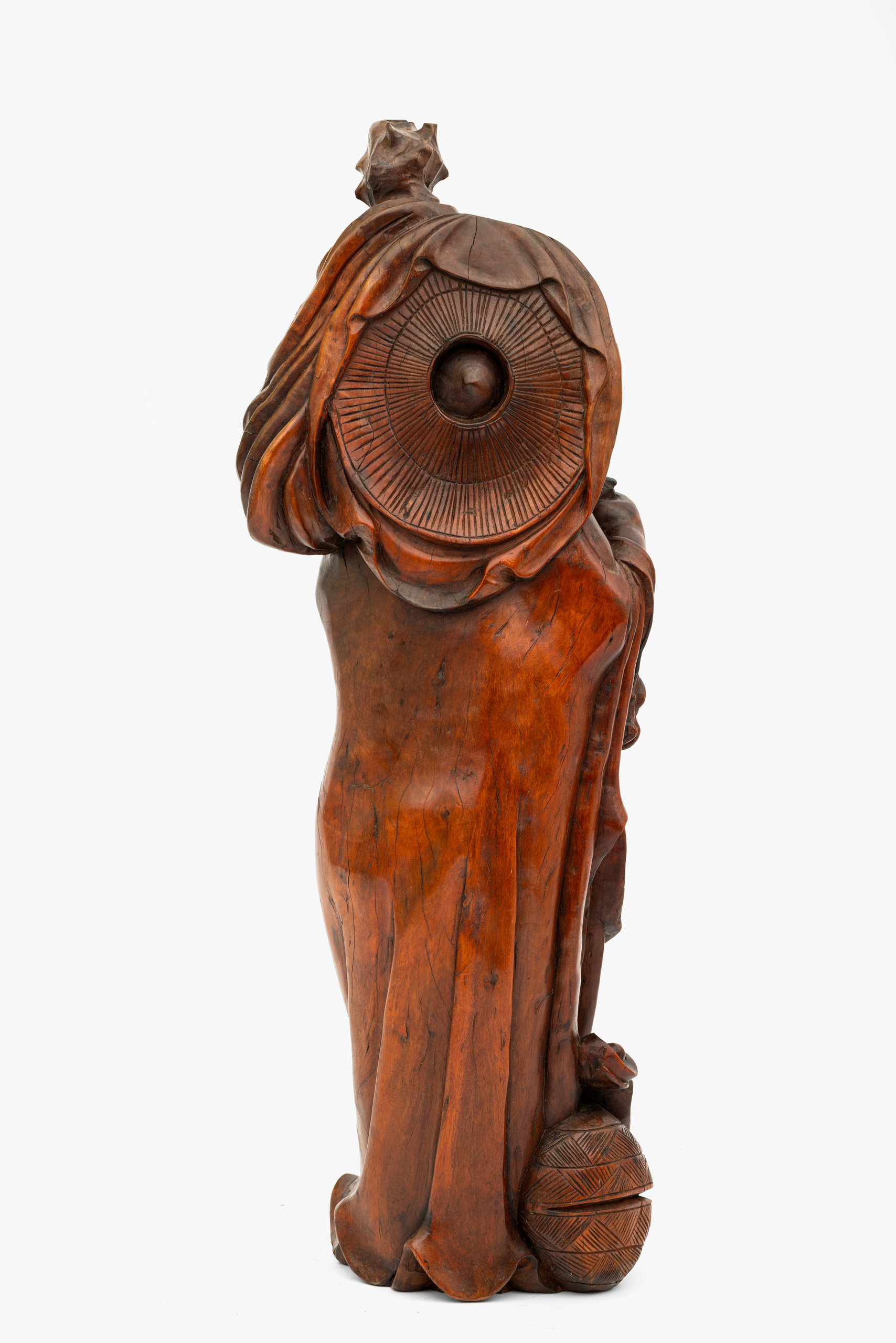
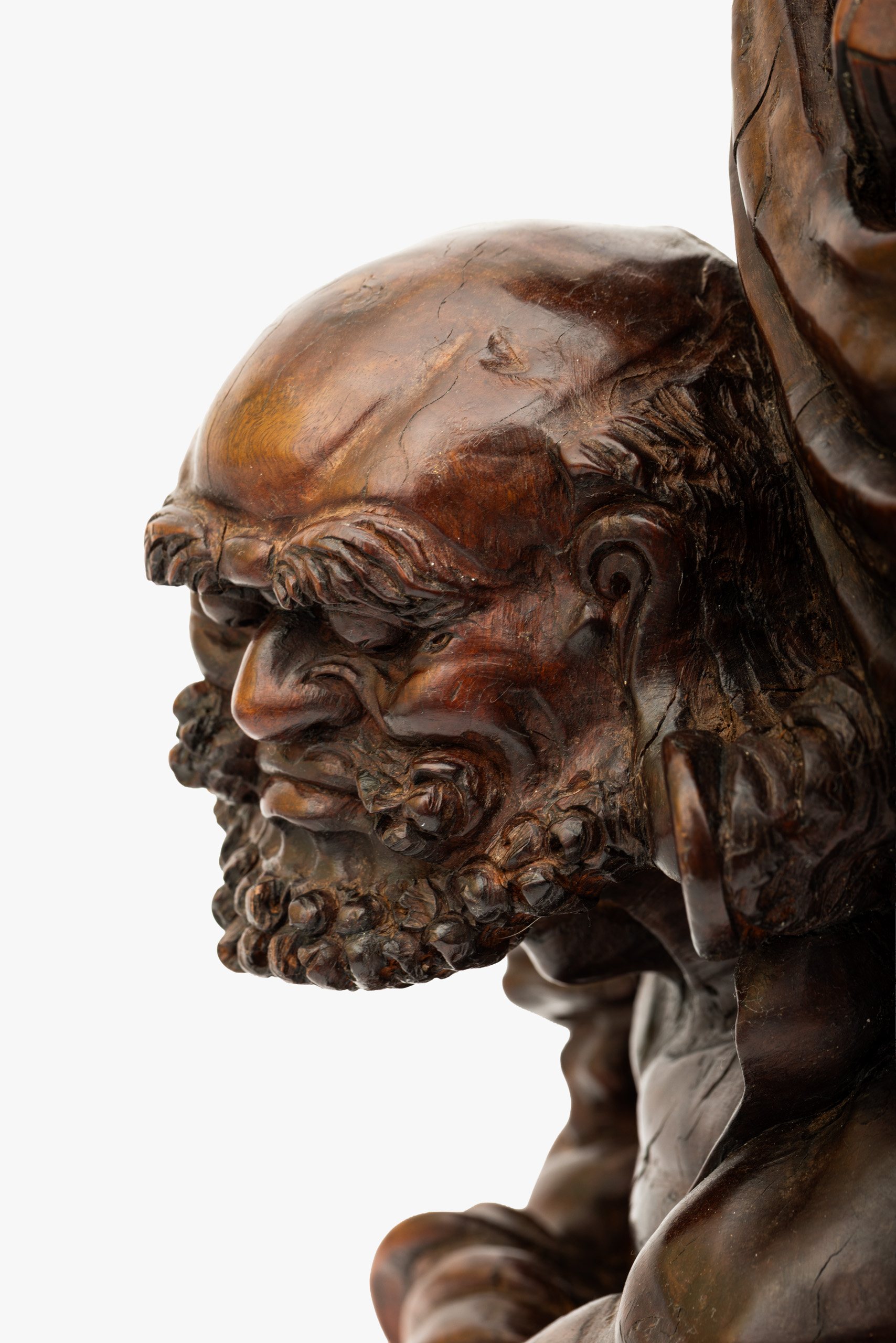
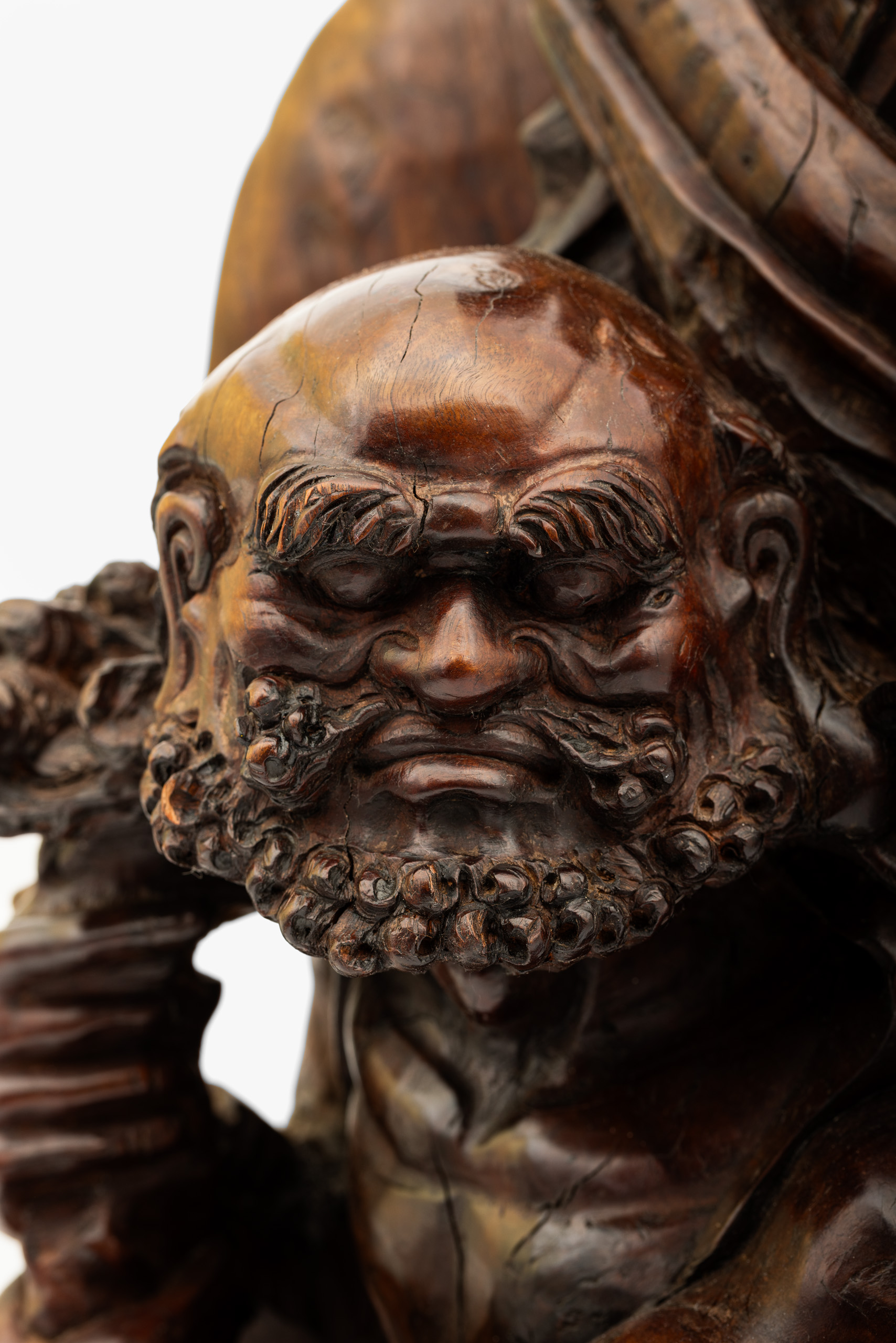
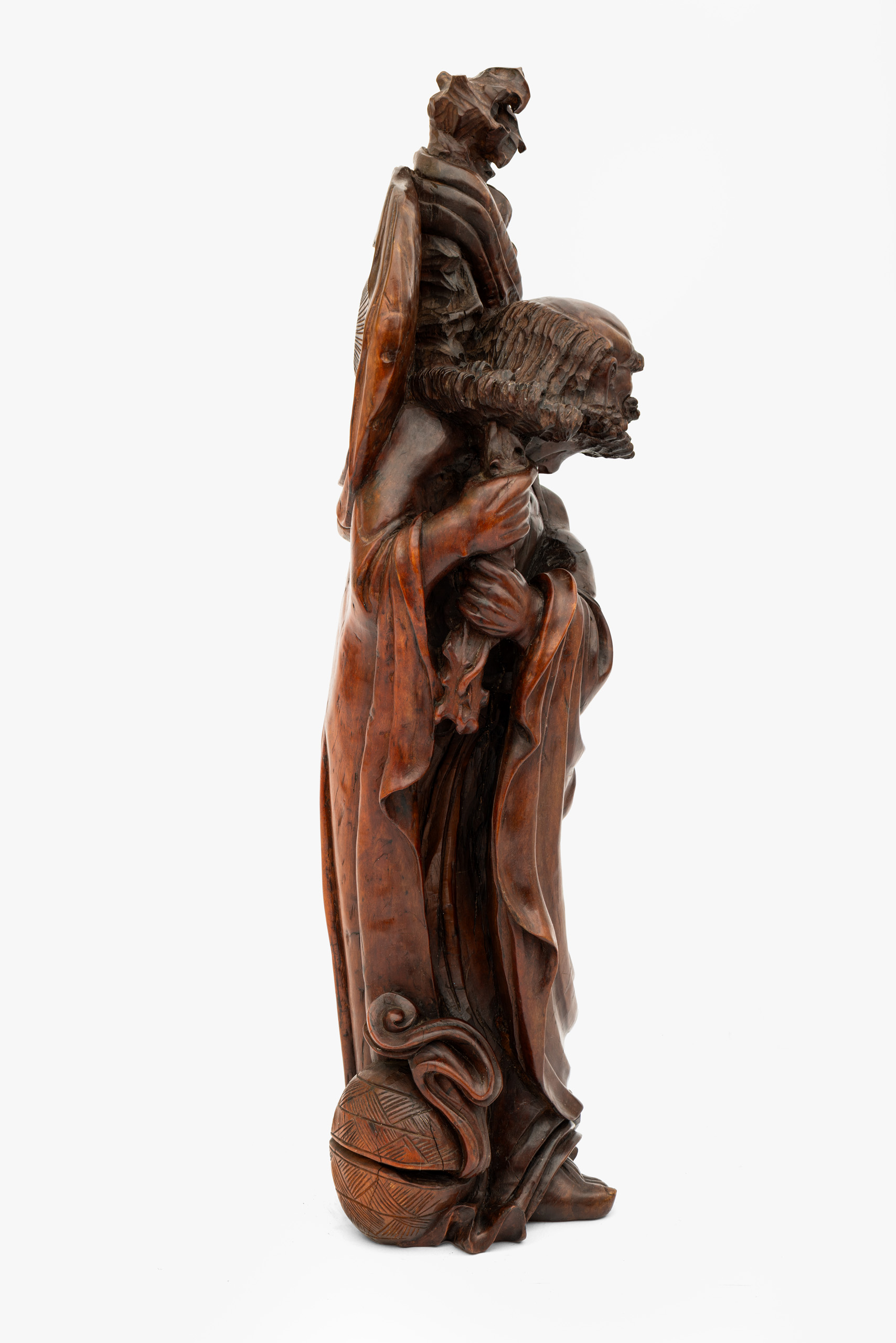
An imposing late 19th-century Chinese carved hardwood figure of Bodhidharma (Damo), the legendary Buddhist monk traditionally credited with transmitting Chan Buddhism to China. Standing approximately 85 cm high, the sculpture depicts Damo as a powerful, expressive figure carrying his travelling possessions, executed with deeply carved robes, strongly modelled features and a rich, naturally aged surface.
1 in stock
MAKE AN OFFER - SELECT:
A substantial Chinese carved hardwood sculpture representing Bodhidharma, known in China as Damo (达摩), dating to the late 19th century.
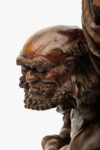
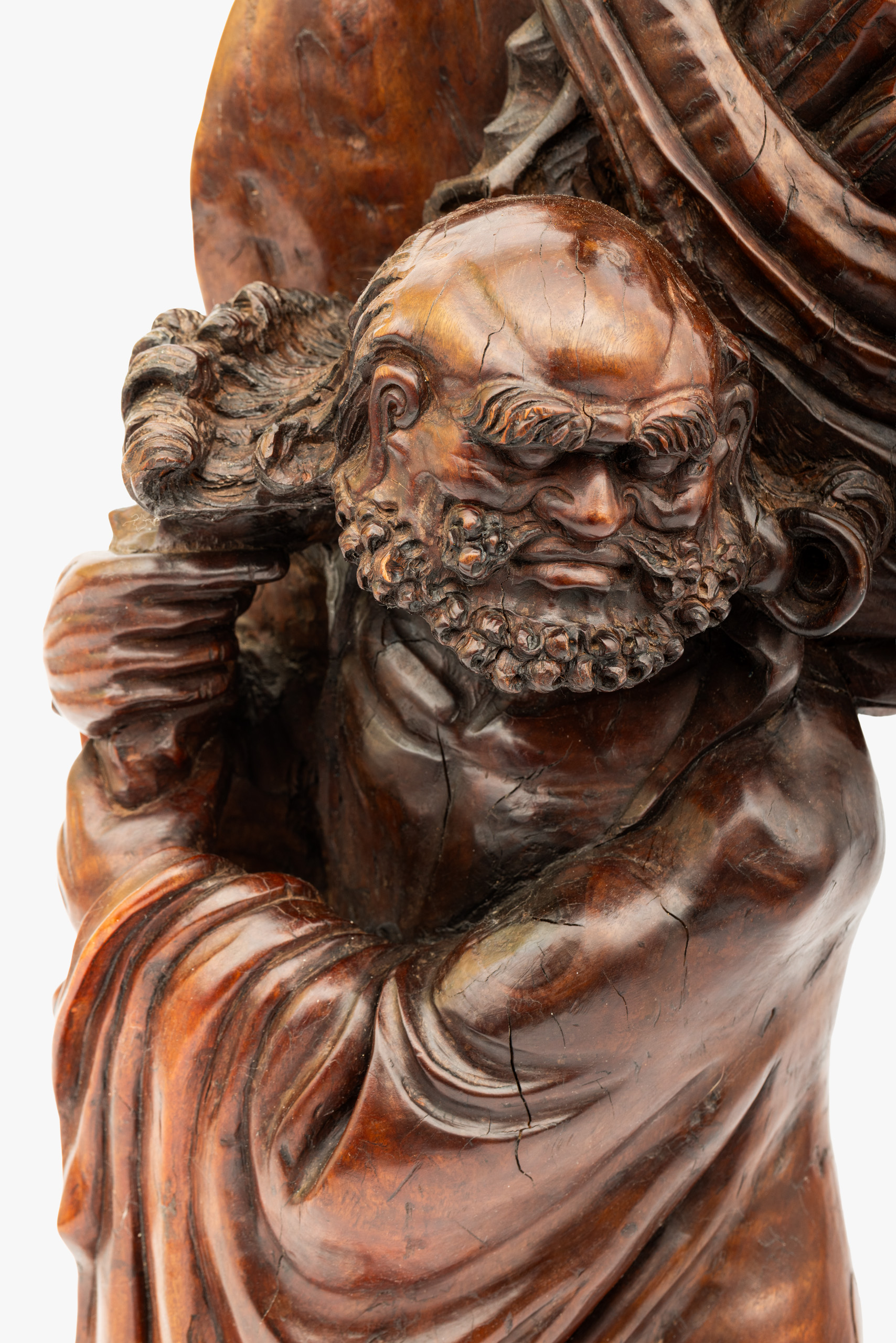
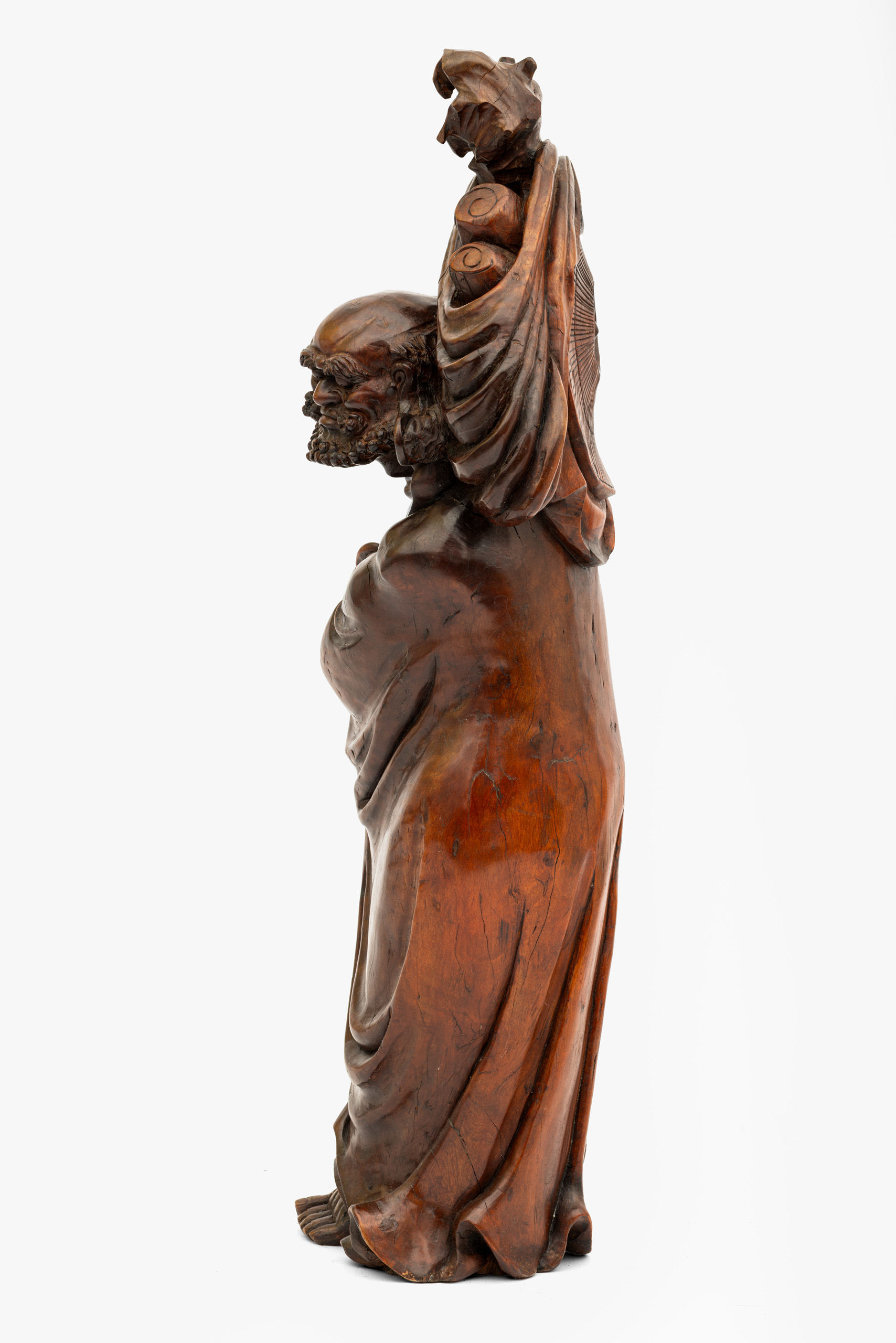
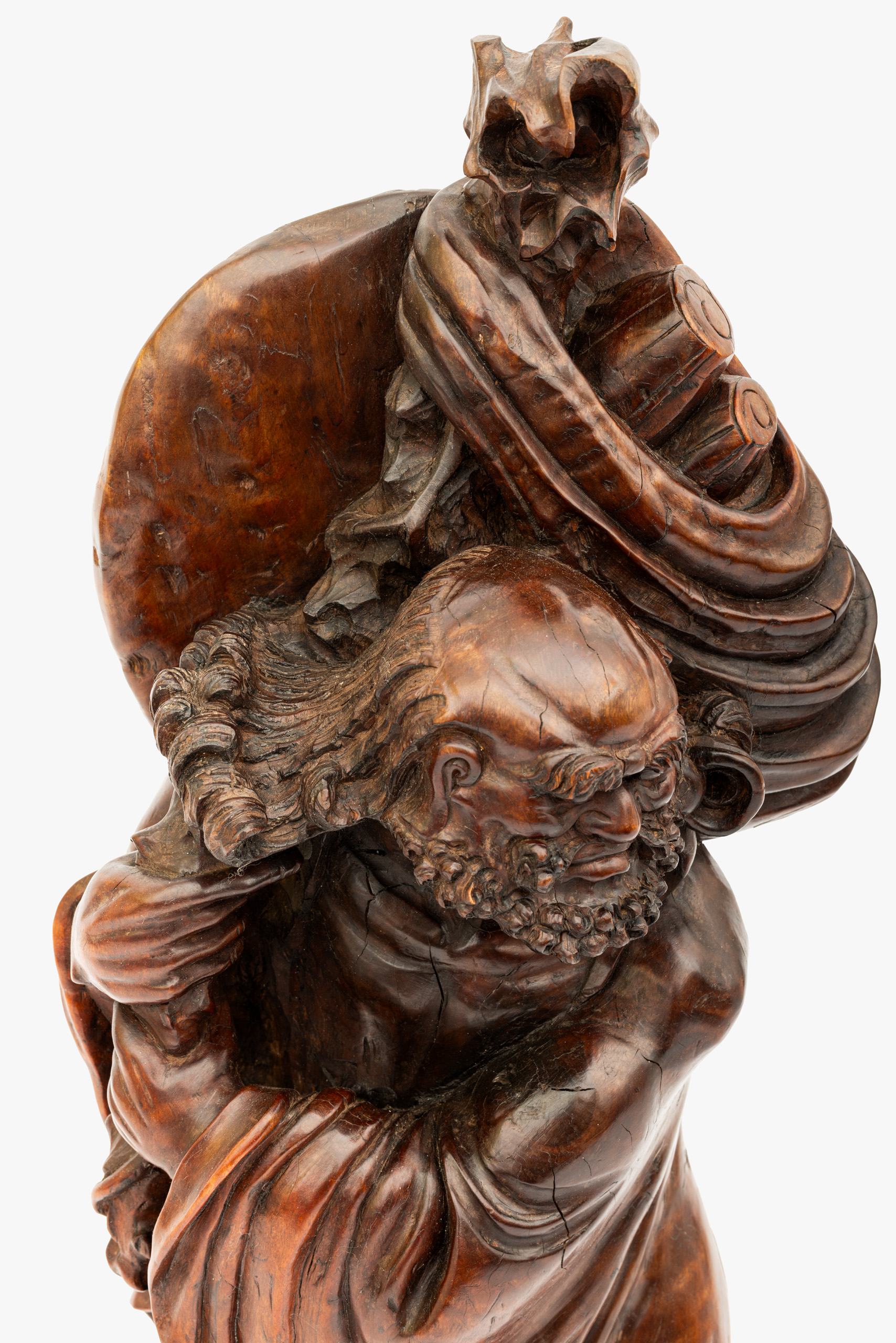
Bodhidharma is traditionally regarded as the Indian or Central Asian monk who transmitted the teachings that developed into Chan Buddhism, later known in Japan as Zen. Chinese representations characteristically emphasize his foreign appearance through an intense expression, prominent eyebrows, beard and strongly modelled facial features—all particularly evident in this sculpture.
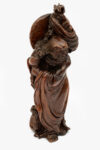
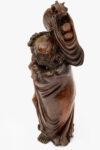
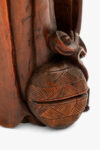
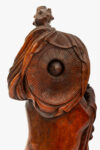
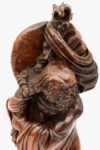
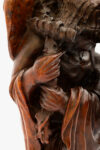
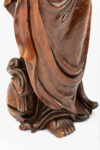
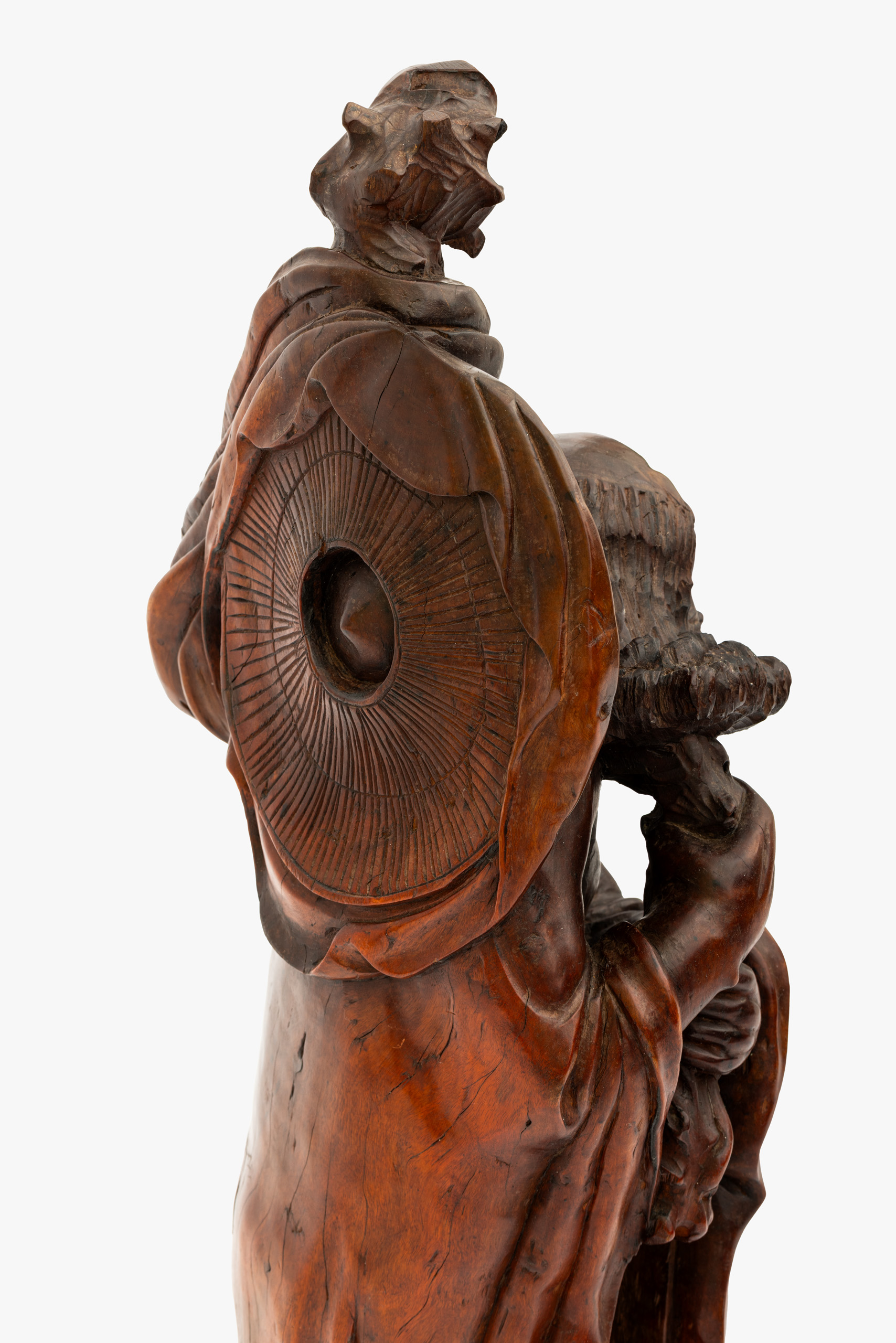
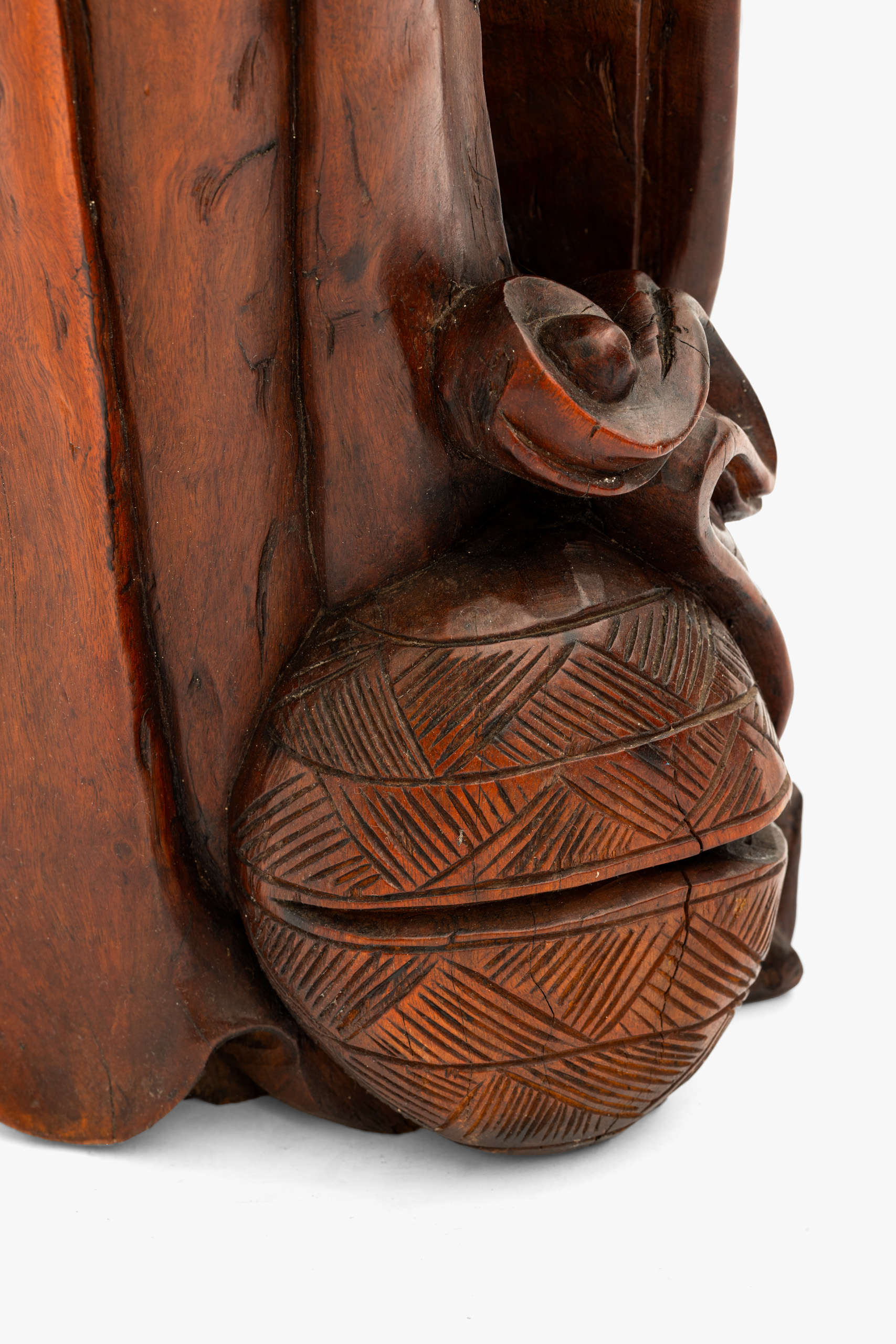
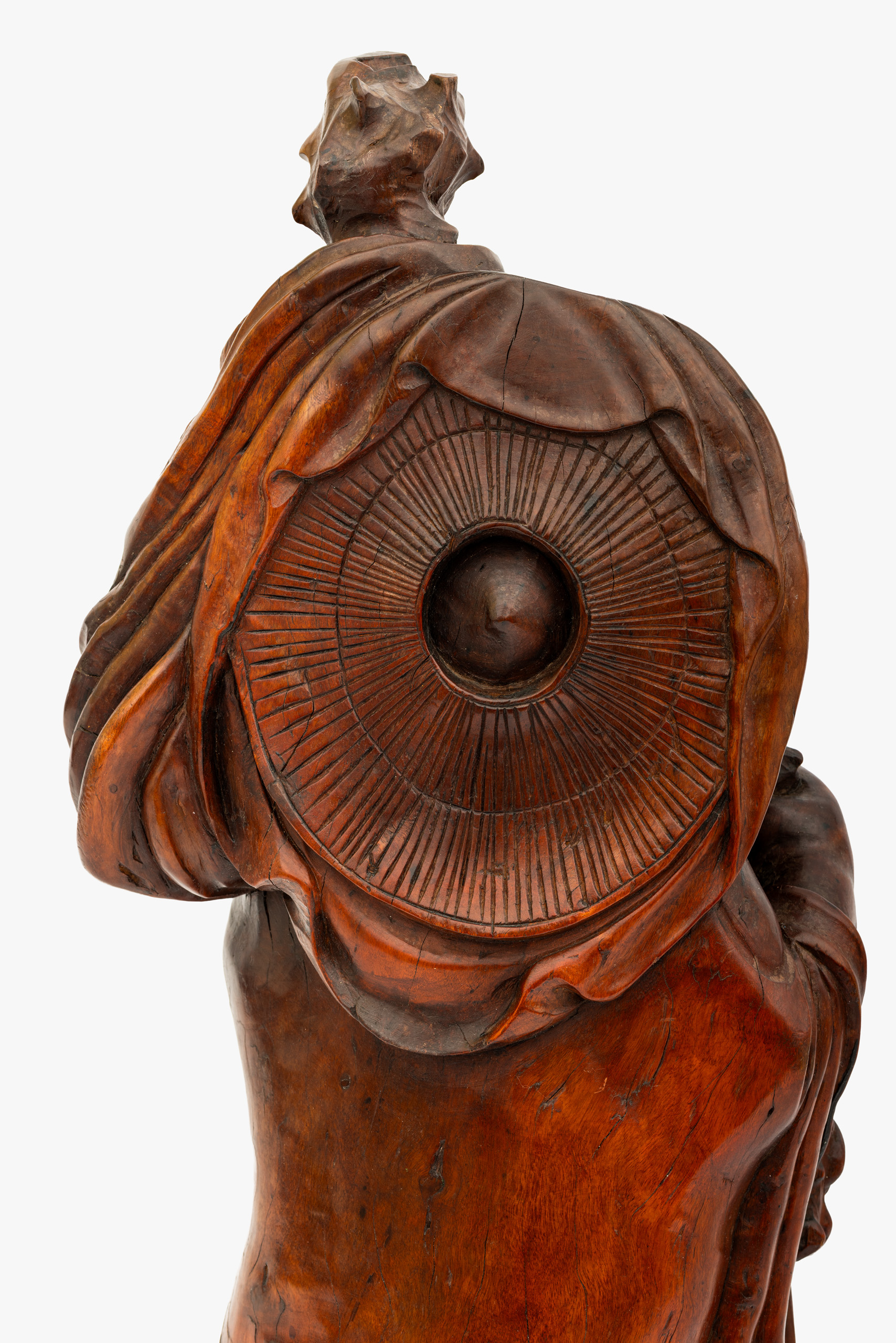
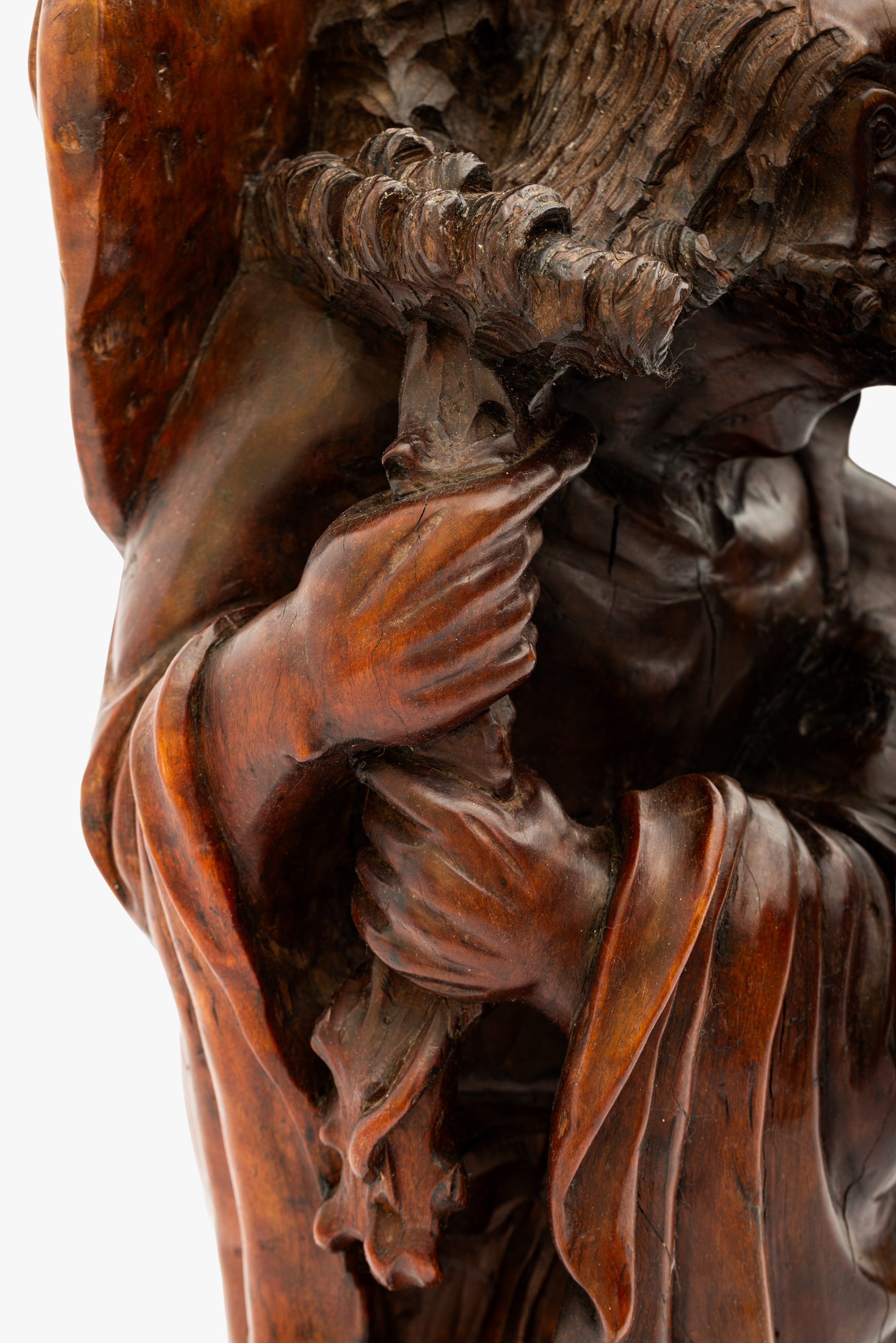
The figure is shown standing beneath the weight of his travelling possessions, with voluminous robes falling in broad, deeply undercut folds. Particularly attractive details include the expressive treatment of the face and beard, the carefully articulated hands and feet, the woven basket or container at the base, and the large circular object carried across the back, its surface carved with a radiating geometric pattern.
The carving combines areas of remarkably smooth modelling with vigorous, almost sculptural cutting around the hair, beard and upper luggage. Its considerable 85 cm height gives the figure an architectural presence uncommon to smaller scholar’s carvings.
The hardwood has developed a deep reddish-brown surface with warm variations in tone and visible signs of age. Fine shrinkage cracks, surface wear and other irregularities are present throughout, consistent with the age and substantial solid-wood construction of the sculpture. These have been left visible rather than disguised and form part of the object’s historical character.
A visually commanding example of late Qing-period Chinese Buddhist decorative sculpture.
Condition
Good antique condition with a well-developed aged surface. Numerous age-related drying and shrinkage cracks are visible throughout the solid hardwood, particularly to the head, torso, robes and accessories, together with surface wear, minor losses and old marks. The uppermost element shows irregularity/loss. Please refer closely to the detailed photographs, which form an important part of the condition description.
Technical Details
Origin: China
Period: Late Qing Dynasty, late 19th century
Date: Circa 1880–1900
Subject: Bodhidharma / Damo
Material: Carved dark hardwood, probably rosewood/palisander-type wood
Height: Approx. 85 cm
Technique: Hand carved
Condition: Antique condition with age-related cracks, wear and minor losses
| Condition | Good |
|---|---|
| Material | Wood |
| Origin | China |
| Period | 1850-1900 |
| Style | Qing Dynasty |
Related Products
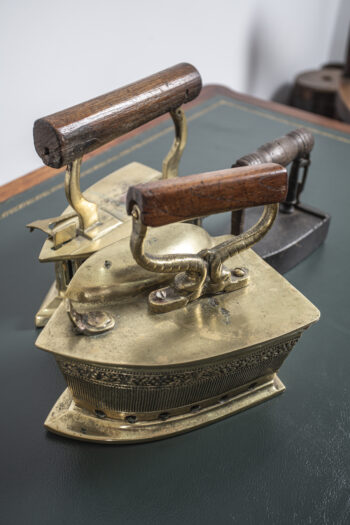
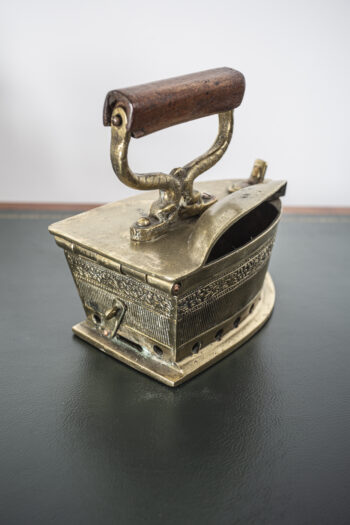
A charming set of three vintage irons in various styles and finishes. Crafted in solid brass and cast iron with wooden handles, they evoke the craftsmanship and domestic rituals of the past, serving today as striking decorative objects for rustic or industrial-themed interiors.
Out of stock
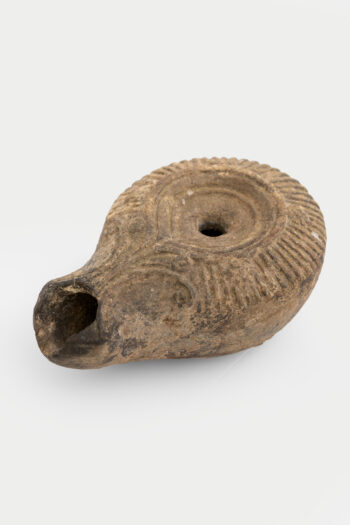
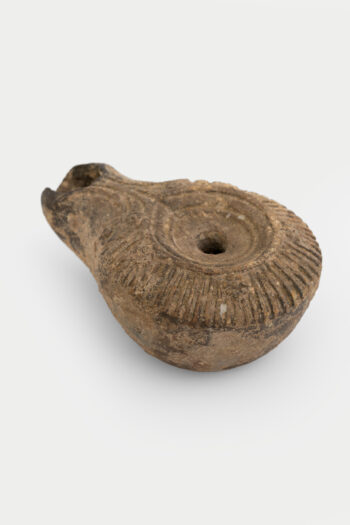
Ancient molded terracotta oil lamp with stylized decoration and central filling hole, attributed to Roman or Samaritan-type production.
Out of stock


A striking industrial theatre spotlight by Strand Electric, mounted on its original wheeled tripod stand. Made in England around the 1950s–60s, this sculptural lighting piece retains its authentic lens and cast aluminium body, now rewired for domestic interior use.
1 in stock
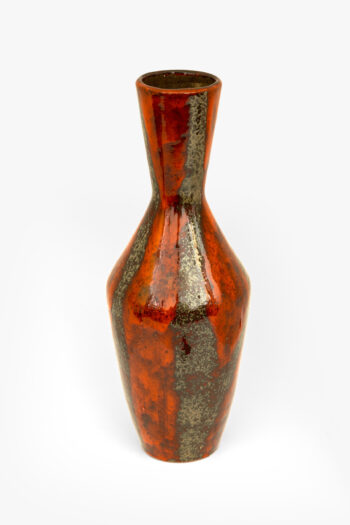
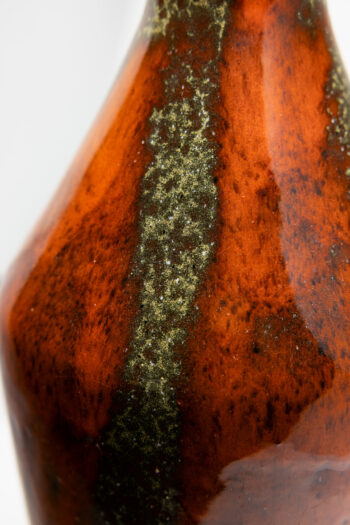
A striking West German art pottery vase from the mid-20th century, featuring a bold red lava glaze with deep, textured dark flows. Characteristic of the Fat Lava movement, this sculptural piece reflects the experimental glazes of the 1960s ceramic revival.
1 in stock
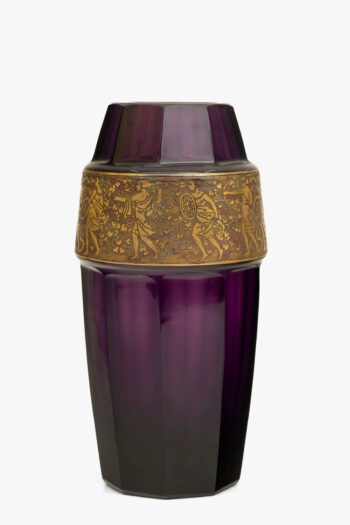
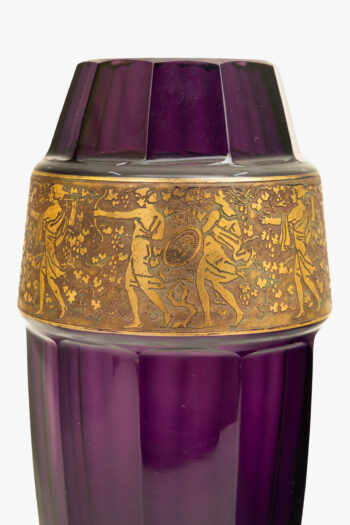
A luxurious amethyst-colored glass vase attributed to Moser, featuring deep vertical faceting and a classical gilt bronze frieze with warriors and dancers in relief. An elegant fusion of Bohemian craftsmanship and neoclassical revival aesthetics, dating to the early 20th century.
1 in stock
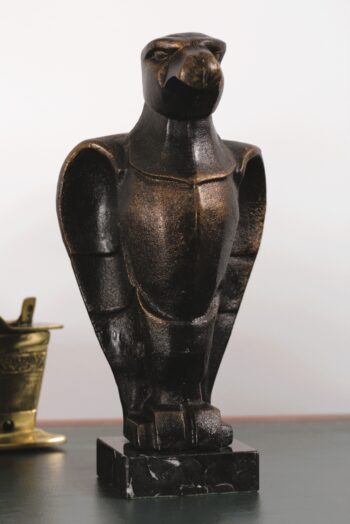
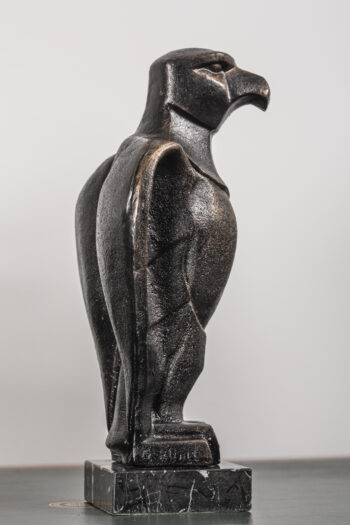
A bold, stylized eagle sculpture with angular geometric lines and a dark bronze patina, mounted on a polished black marble base. Although inspired by the strong modernist aesthetic of the 1920s–1930s Art Deco period, this piece was produced later, likely mid-20th century, echoing the same symbolism of strength and elegance.
Out of stock
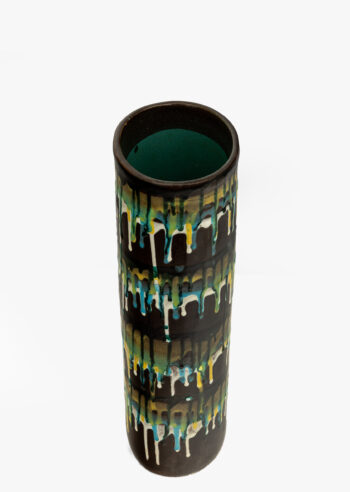
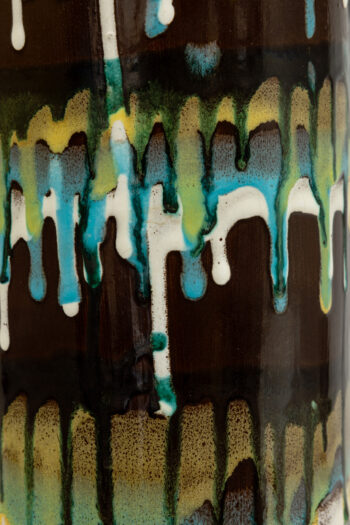
A striking mid-century ceramic floor vase from West Germany, featuring the iconic lava-style drip glaze in bold tones of turquoise, ochre, lime, and ivory over a deep chocolate-brown body. A superb sculptural decorative piece typical of the Fat Lava aesthetic.
1 in stock
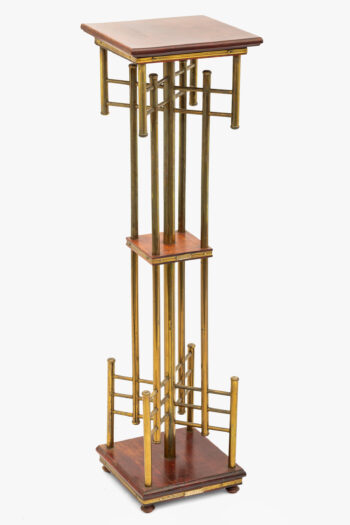
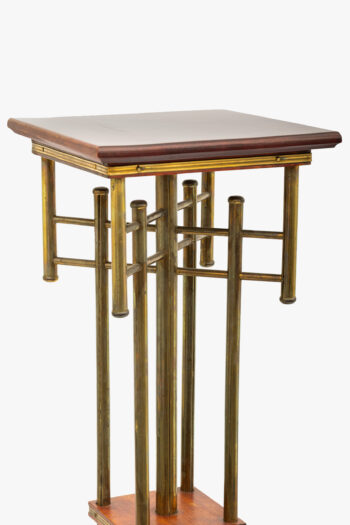
Elegant Art Deco pedestal stand combining stained wood and brass rods in a striking architectural composition, echoing Viennese and Czech modernist influences of the 1930s.
Out of stock
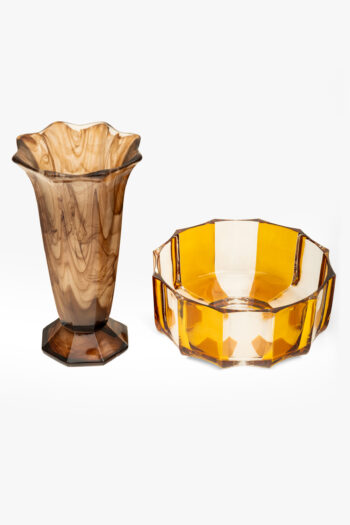
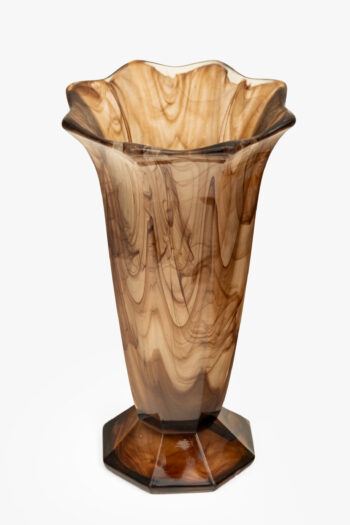
Elegant pairing of early 20th-century glassware: a faceted amber crystal bowl and a smoky marbled glass vase, both showcasing refined Art Deco aesthetics.
1 in stock
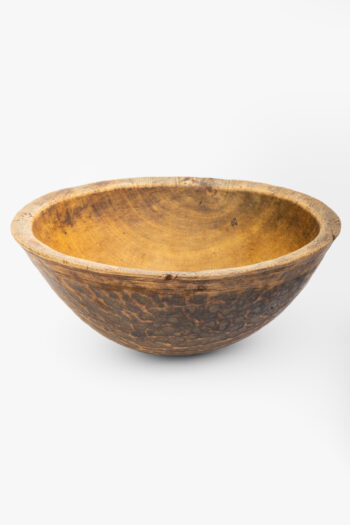
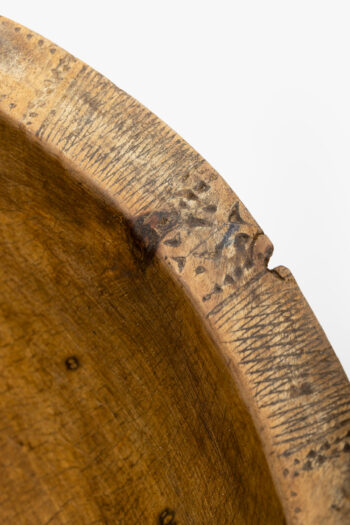
A deeply tactile and visually striking milk vessel from the Fulani (Peuls) people of Cameroon. Carved from a single block of dense hardwood, the bowl is adorned with hand-incised and scorched tribal motifs. A functional object transformed into an artifact of enduring aesthetic and ethnographic value.
1 in stock
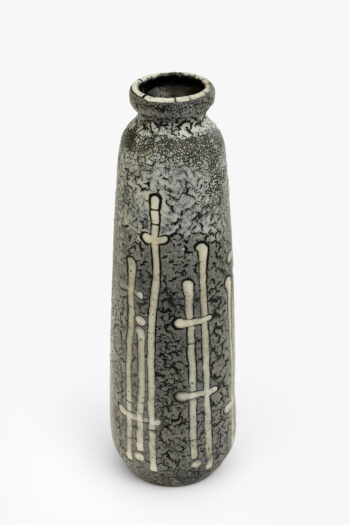
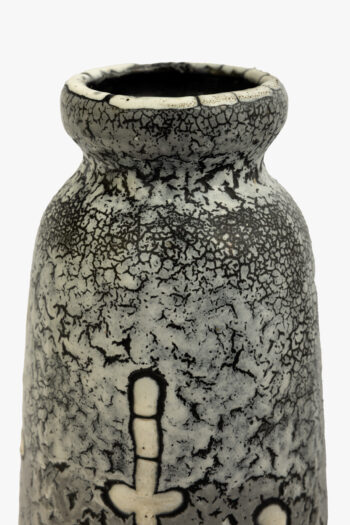
A striking mid-century West German ceramic vase featuring a textured “volcanic lava” glaze in black, white, and grey tones. Decorated with raised abstract relief motifs reminiscent of minimalist tribal patterns, this piece exemplifies the popular “Fat Lava” style of 1960s–1970s West German pottery.
1 in stock
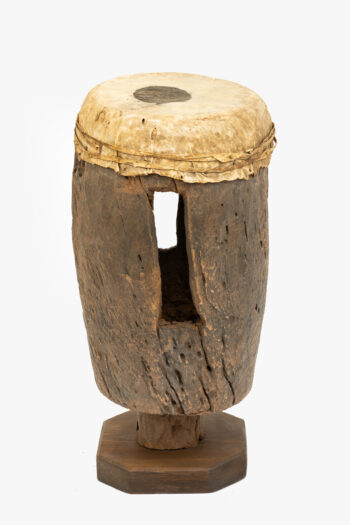
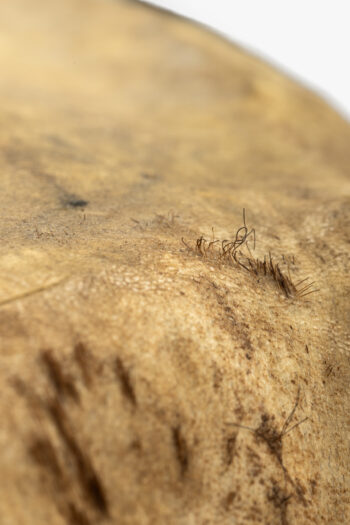
An authentic West African slit drum, hand-carved from a single log with deep vertical openings and a natural animal-skin drumhead. Showing pronounced surface erosion, rich patina, and visible adze tool marks, this late 19th–early 20th century piece served for both ritual music and long-distance communication in a traditional village setting.
1 in stock