


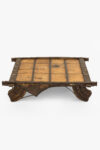
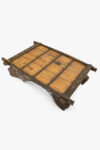
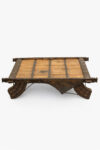
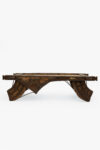
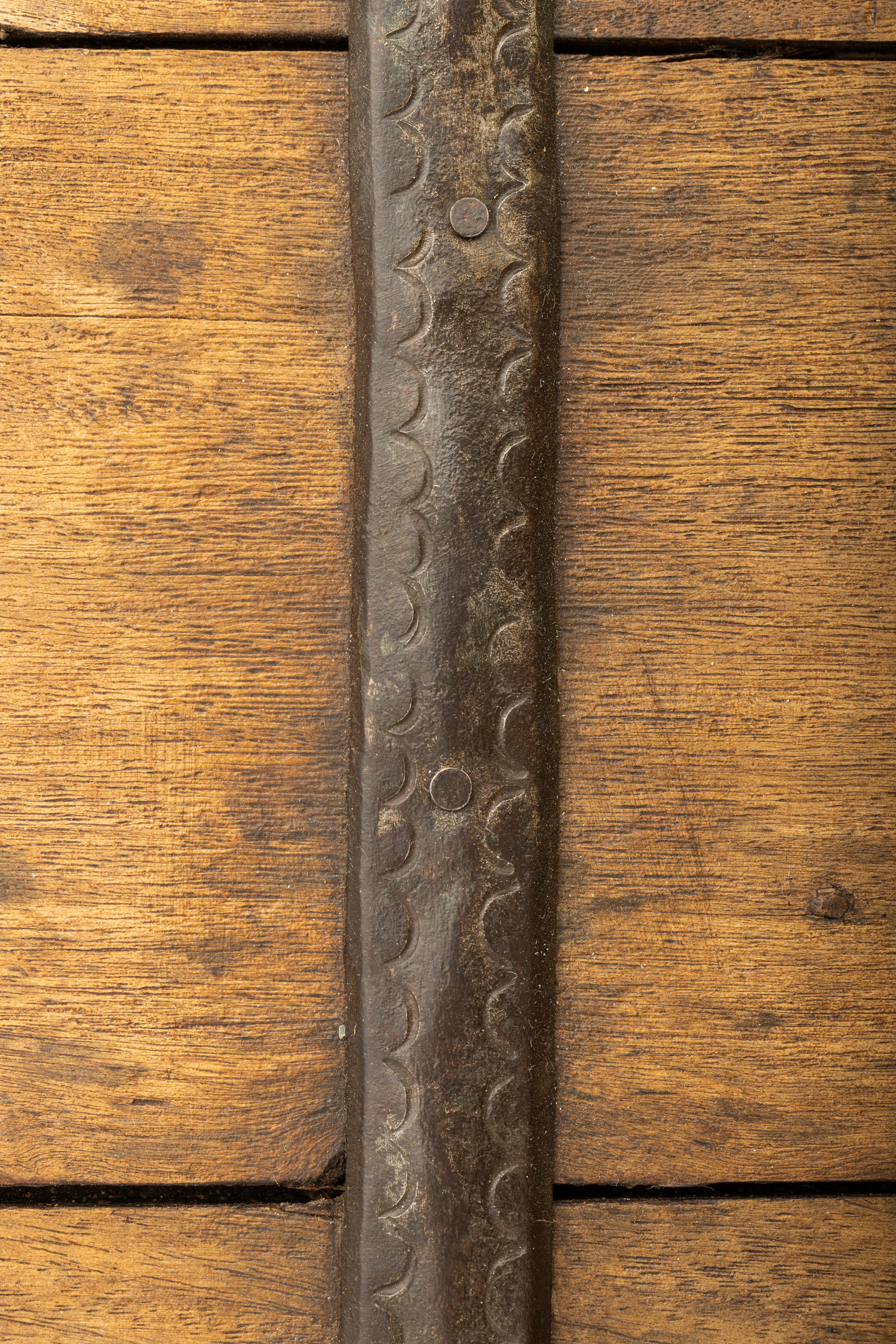
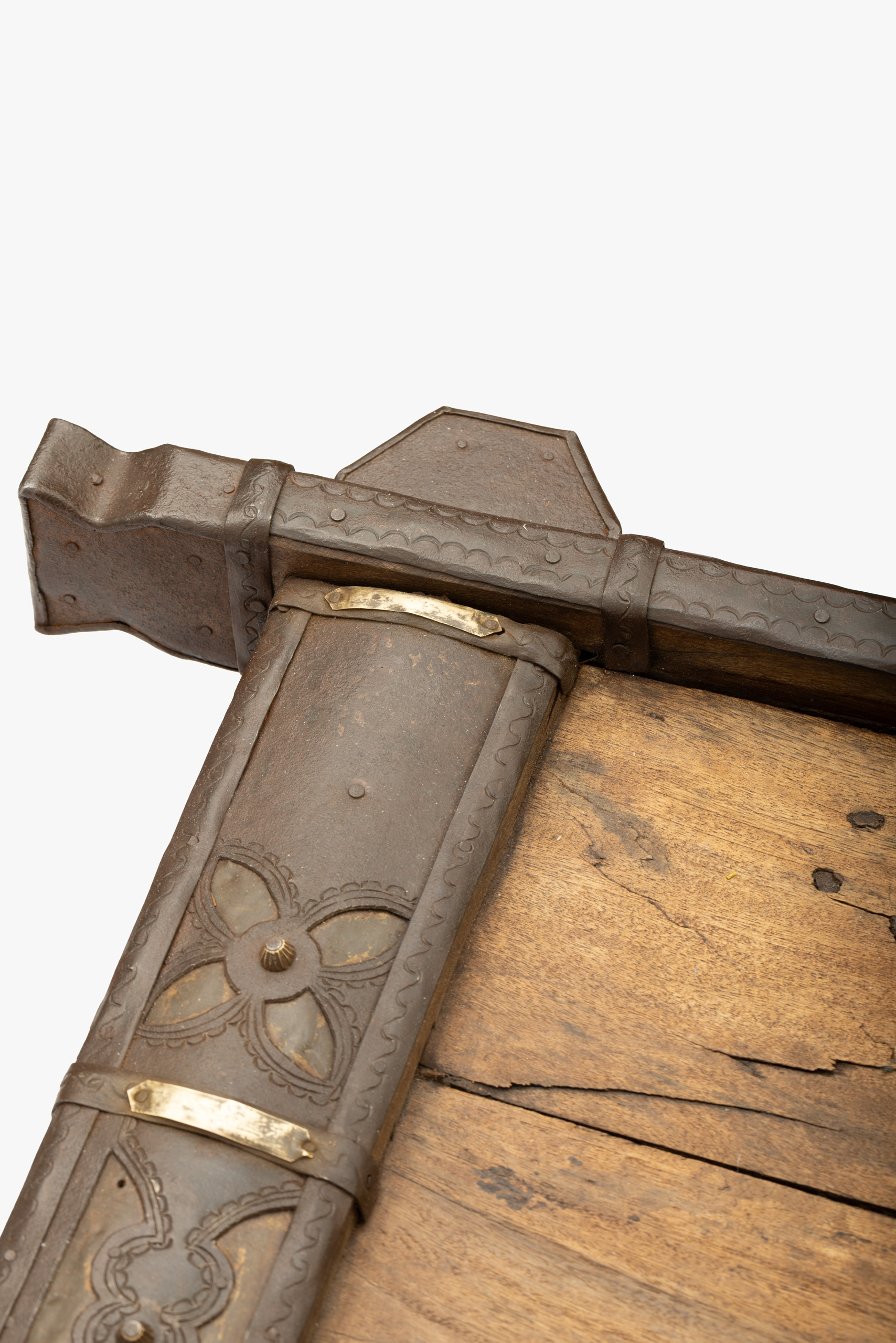
Antique Indian Ox-Cart Coffee Table, Teak and Decorative Ironwork with Brass Accents, Rajasthan or Gujarat, 19th – Early 20th Century
Original price was: € 1.250,00.€ 1.100,00Current price is: € 1.100,00.
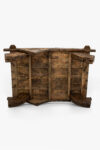
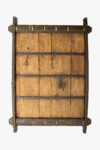
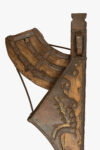
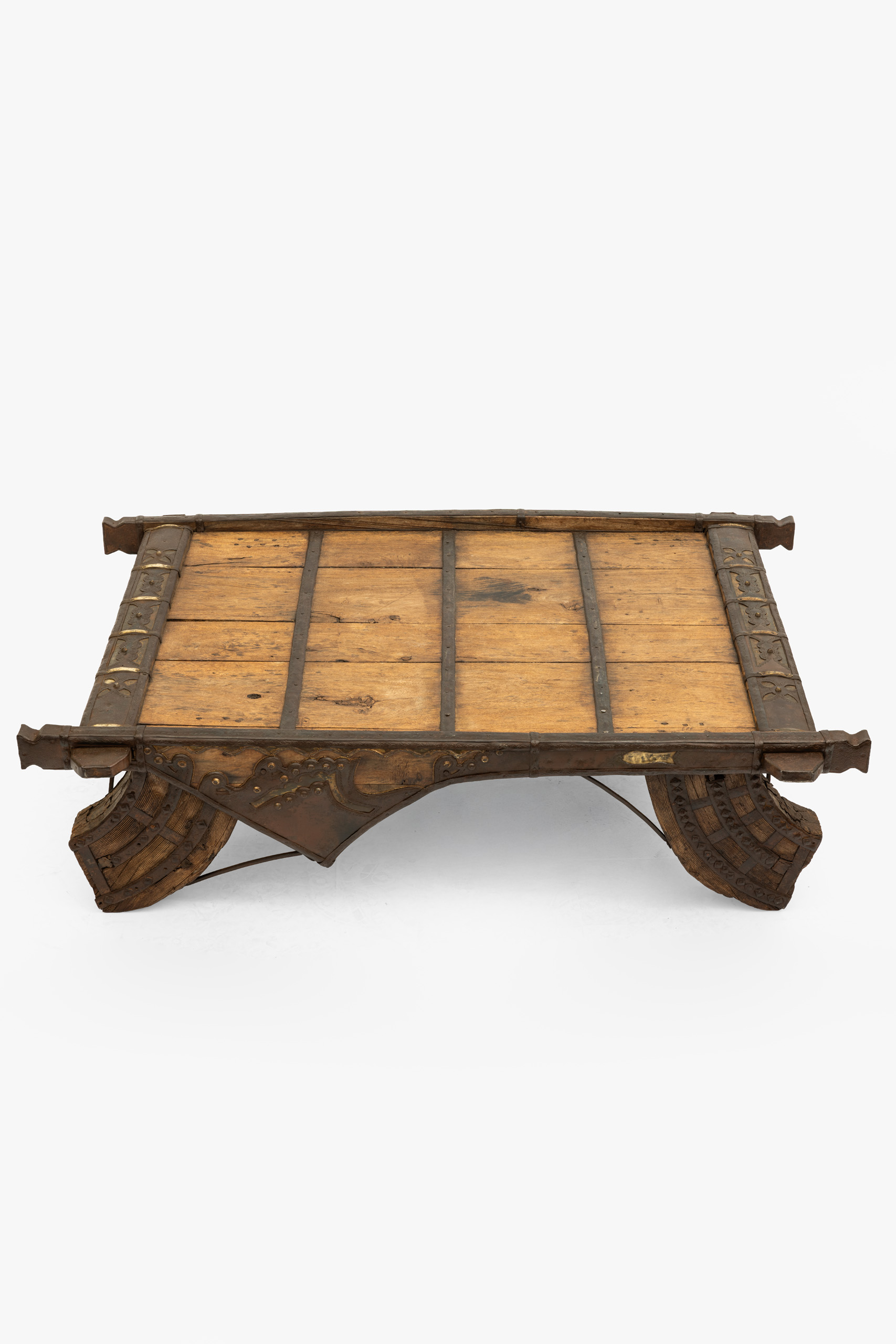
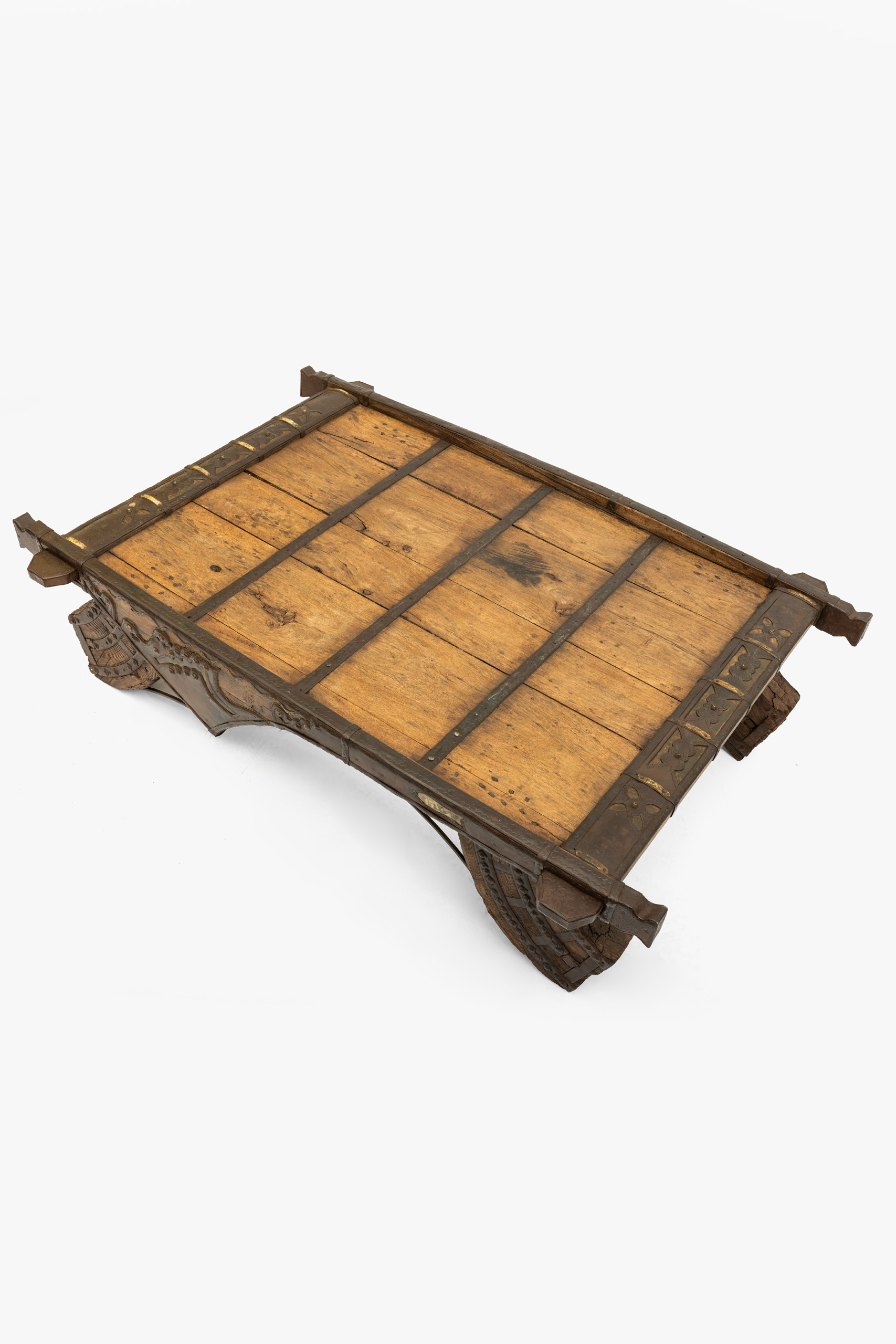
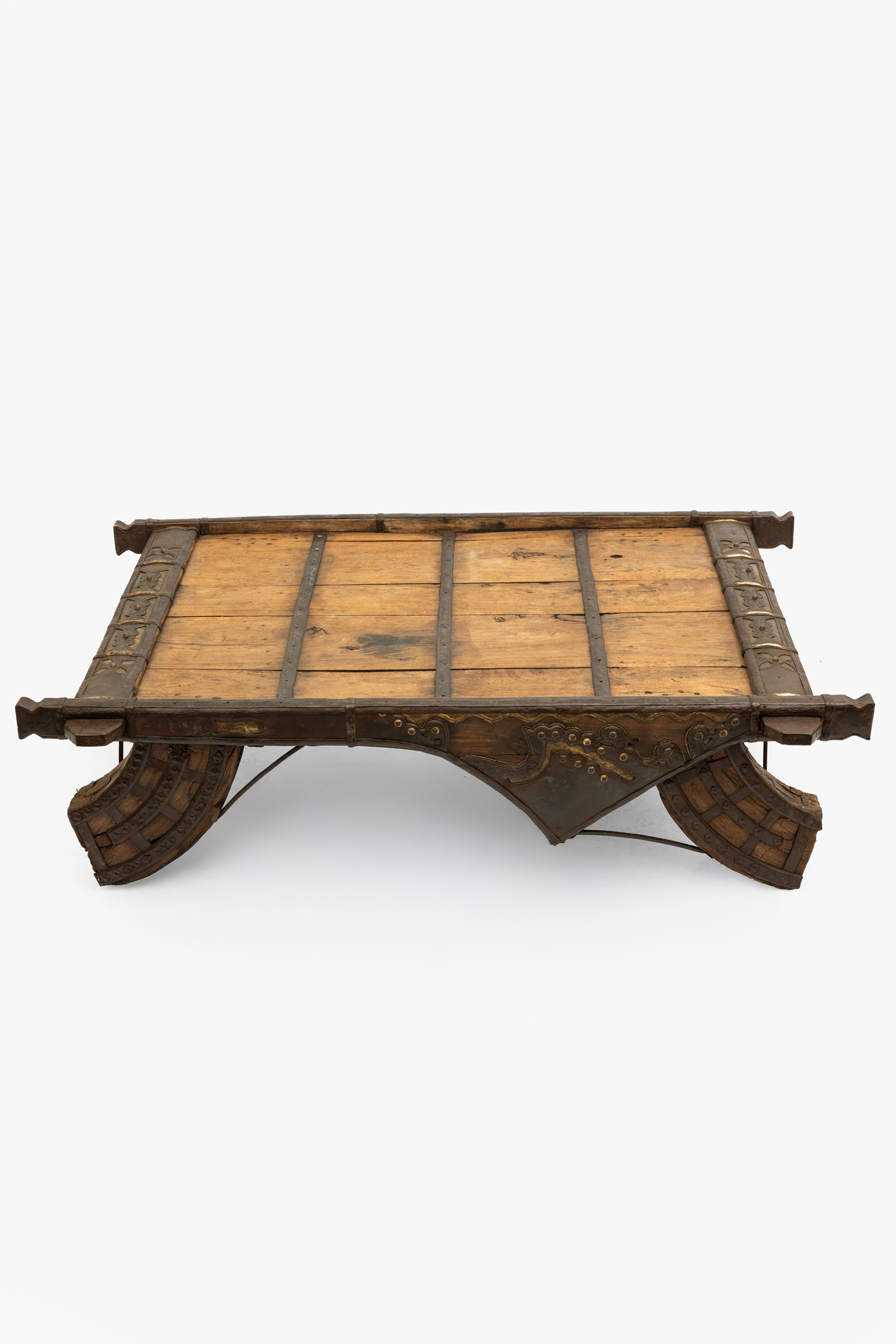
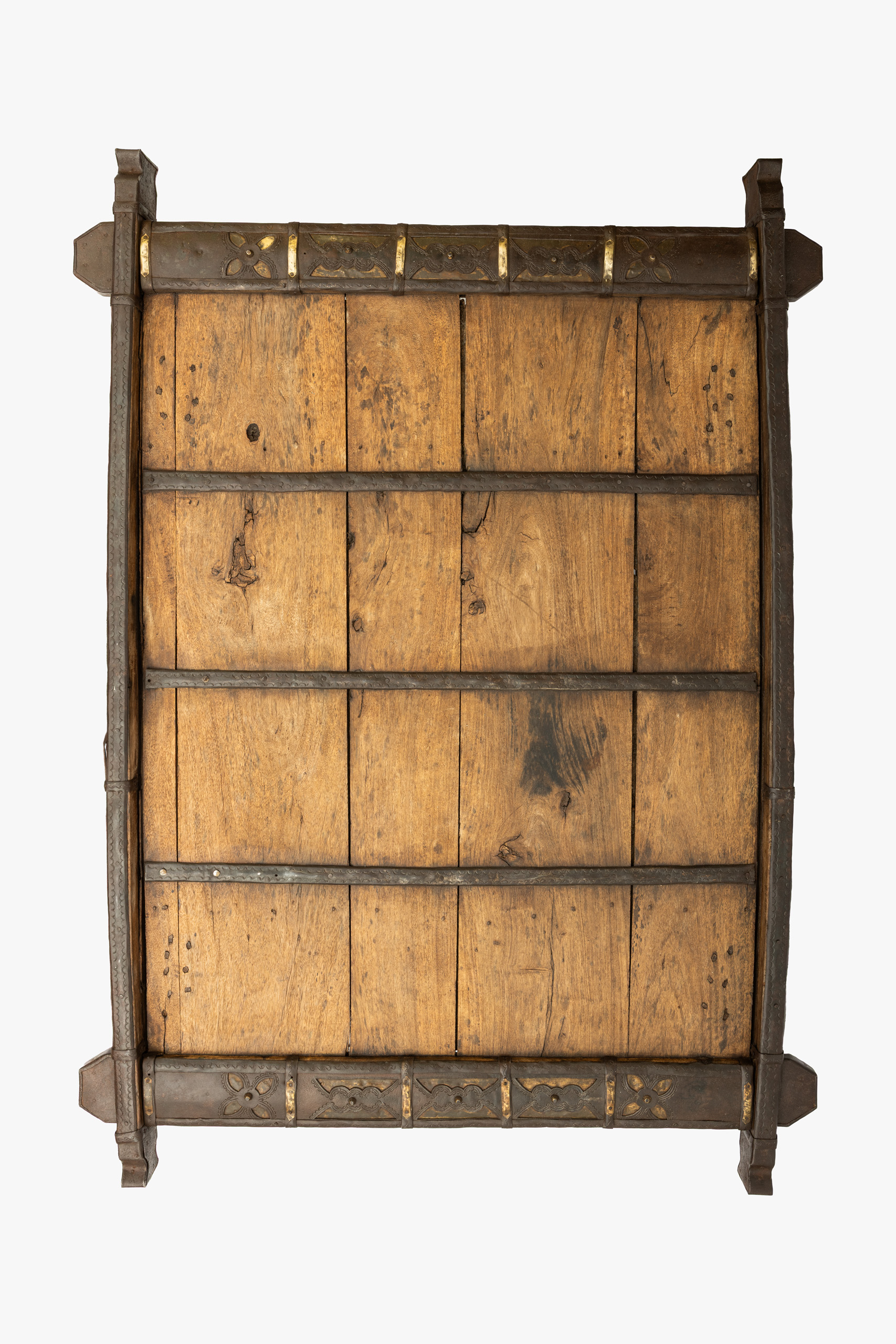
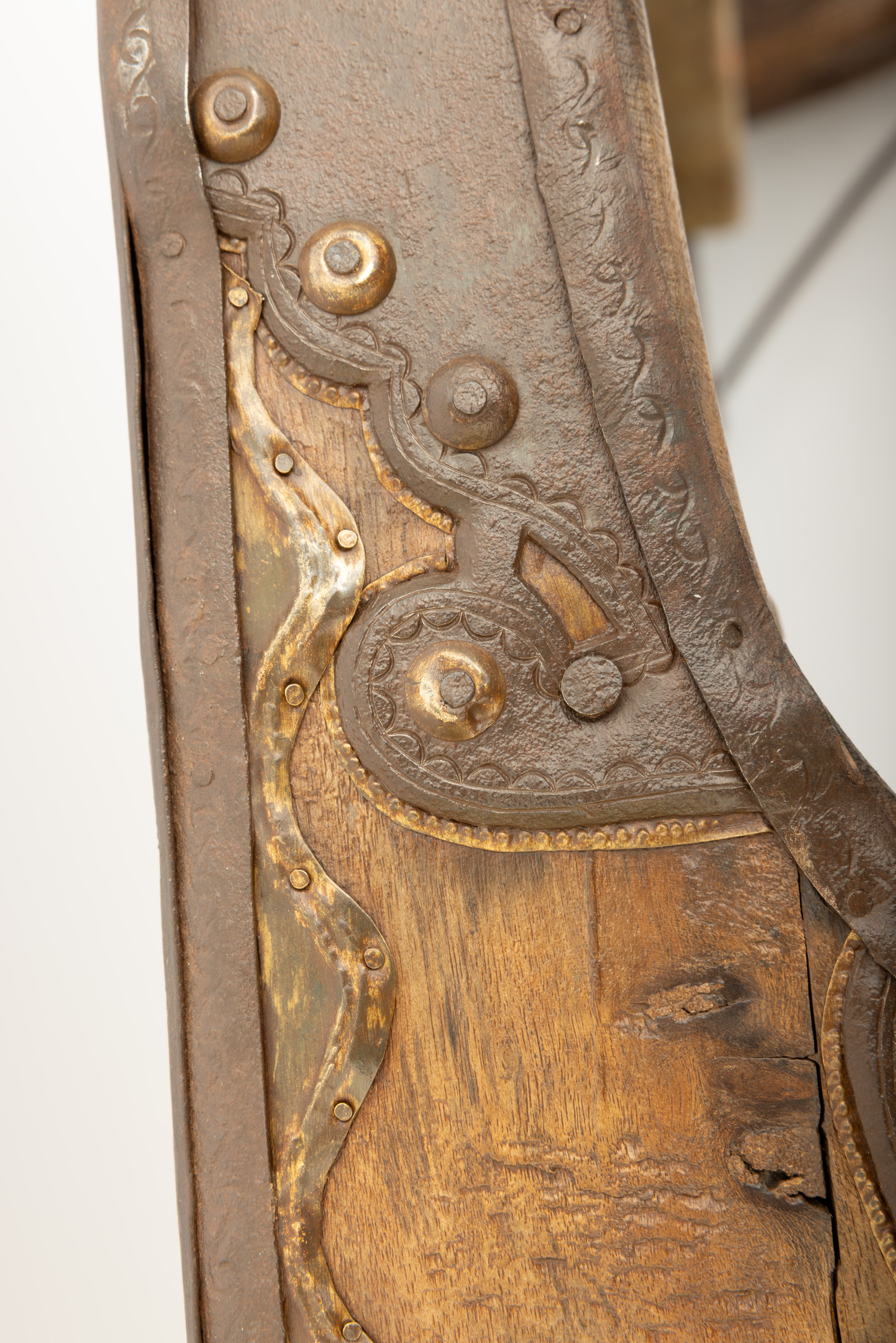
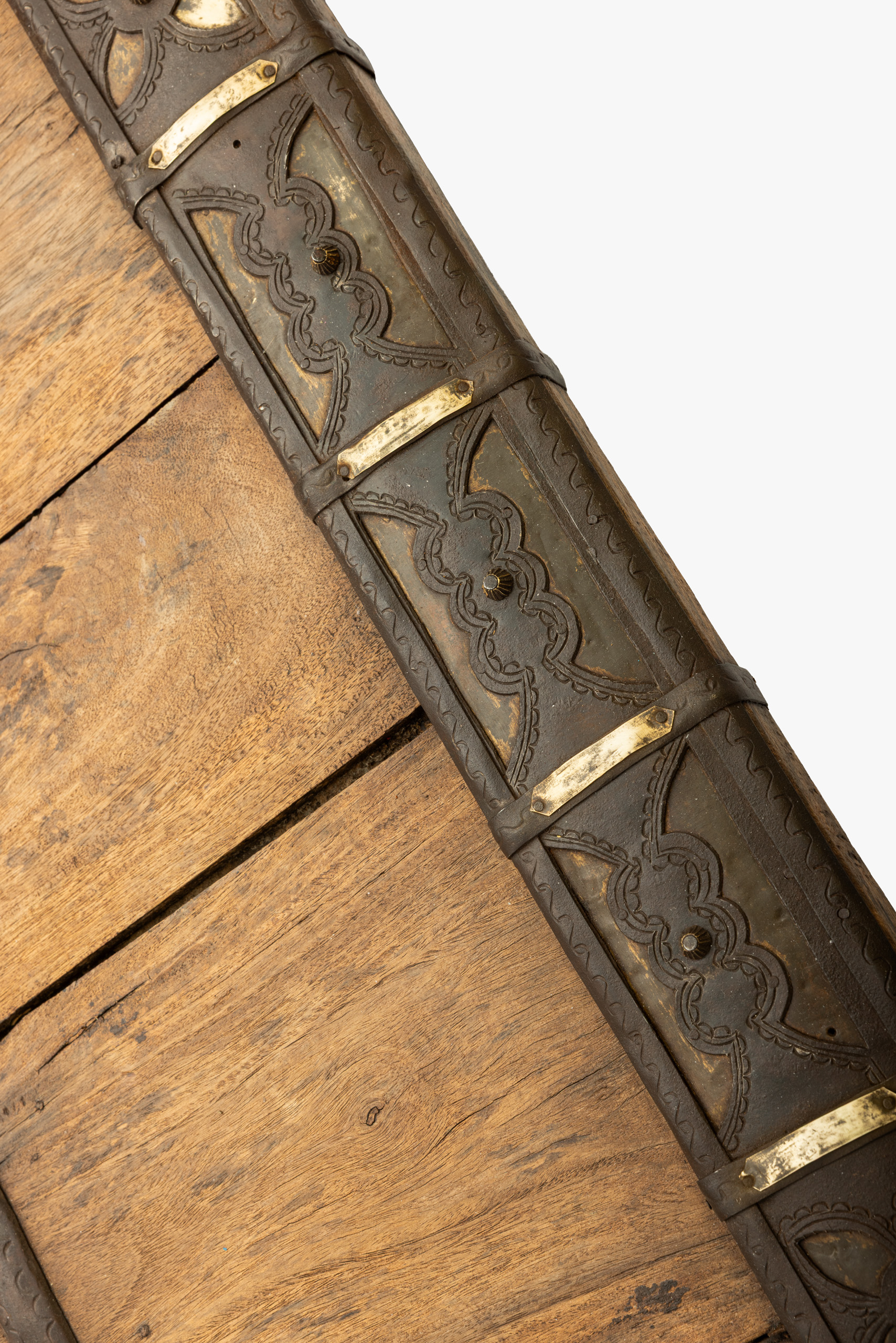
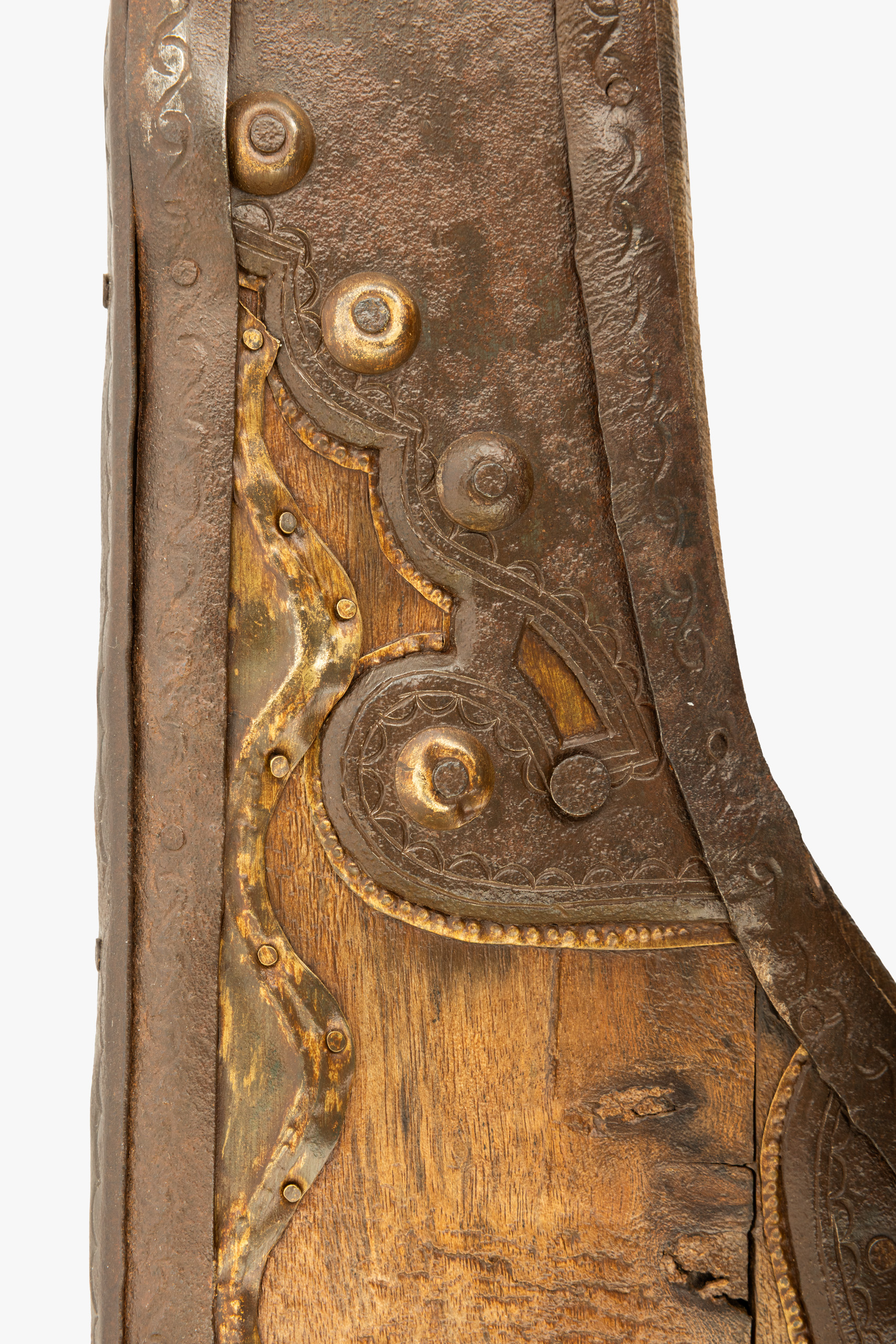
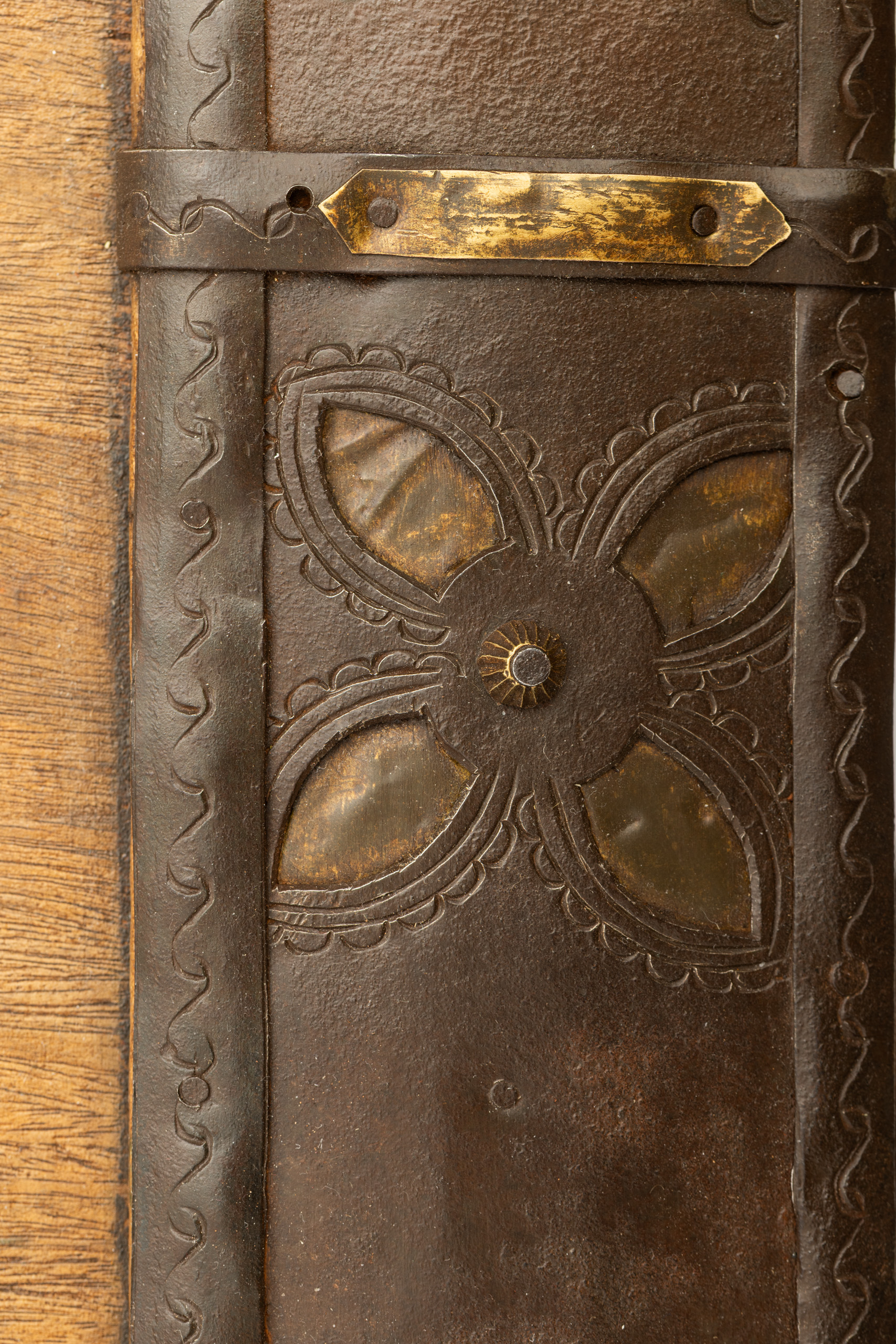
Antique low coffee table converted from an Indian ox-cart, retaining its original teak plank bed, iron cross-strapping, repoussé iron apron with brass studs, and carved wooden wheel-arch rockers. Rajasthan or Gujarat, 19th – early 20th century.
1 in stock
MAKE AN OFFER - SELECT:
A powerful and authentic example of Indian utilitarian craft elevated to the status of sculptural furniture, this low coffee table retains in its entirety the structure and ornament of a Rajasthani or Gujarati ox-cart (bail gaadi), converted at some point in the 20th century for use as a decorative interior object.
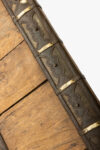
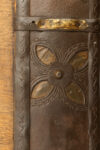
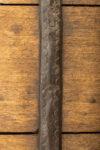
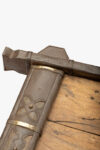
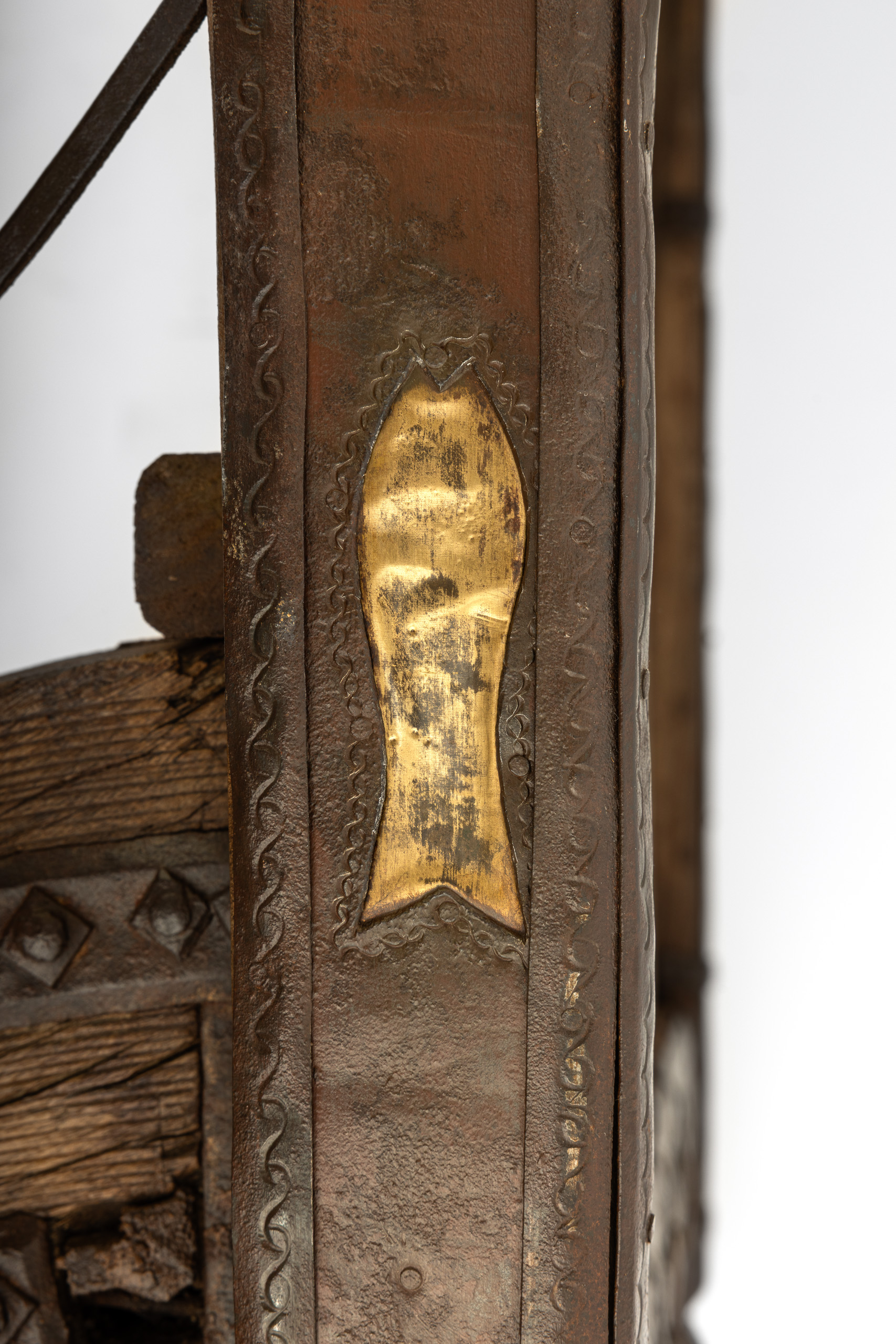
The tabletop consists of the original cart bed: a series of solid teak or sheesham hardwood planks joined edge to edge and secured across their width by three horizontal iron strapping bars, the whole framed within a rectangular iron border decorated with repeating repoussé quatrefoil and interlace panels, alternating with flat brass accent plates fixed at regular intervals. The four corner brackets — original cart hardware — project outward as stepped iron finials, completing the architectural quality of the frame.
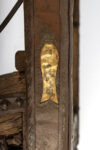
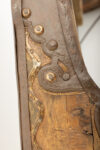
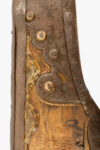
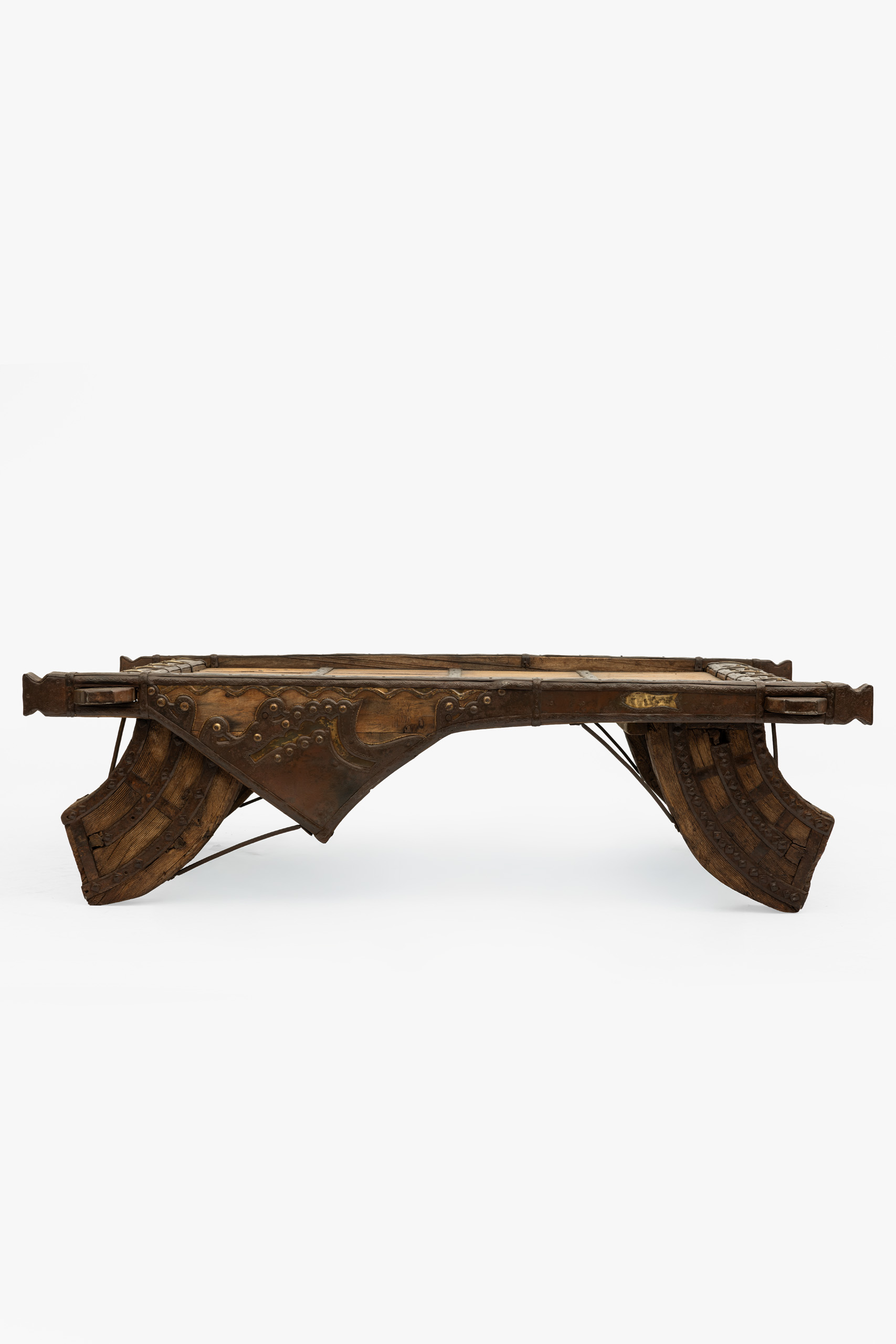
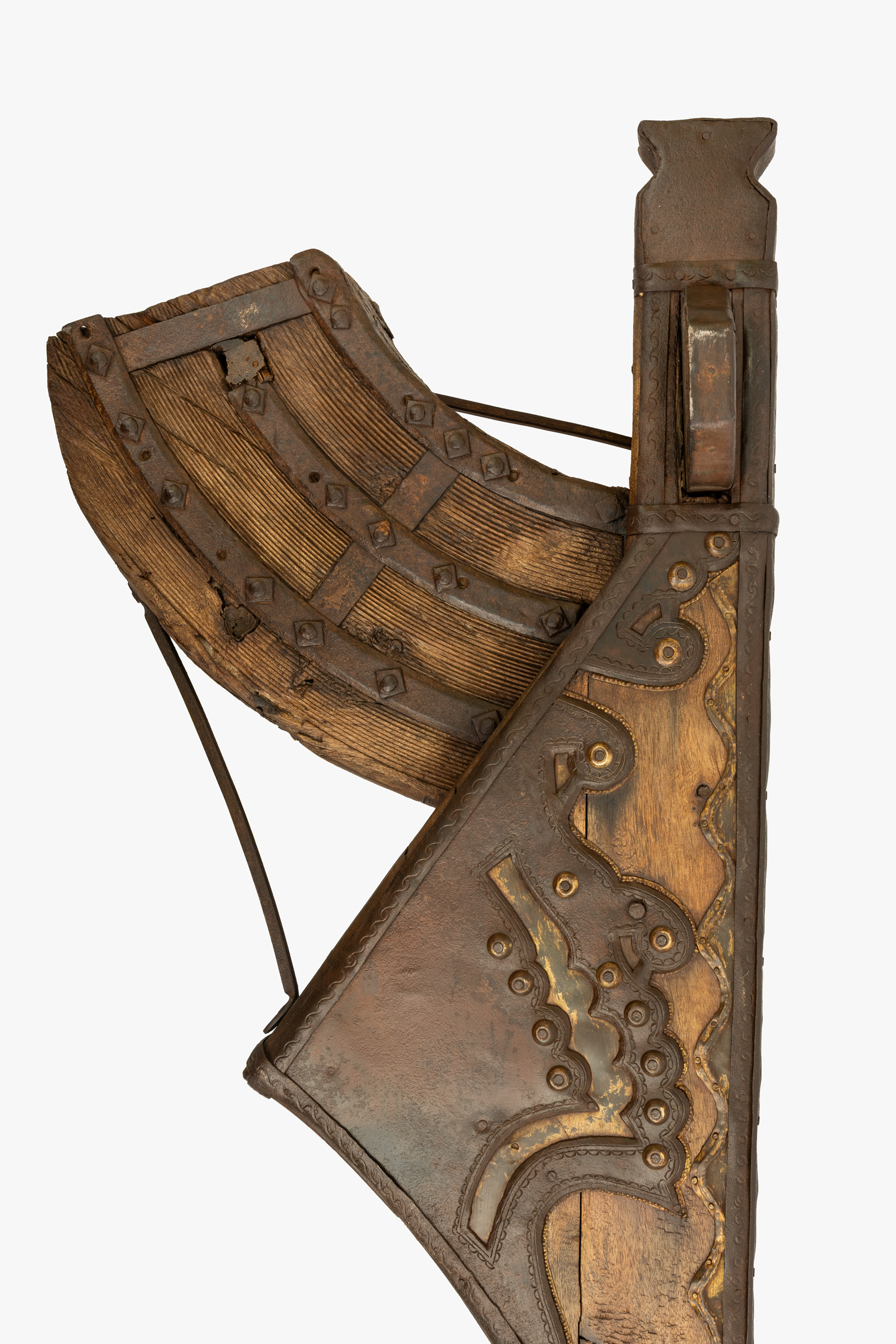
The apron below the top face presents a bold decorative iron fascia with repoussé scrolling foliate and cloud motifs, accented with dome-headed brass studs, the metalwork darkened to a deep bronze patina consistent with long use and age.
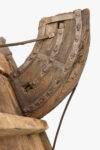
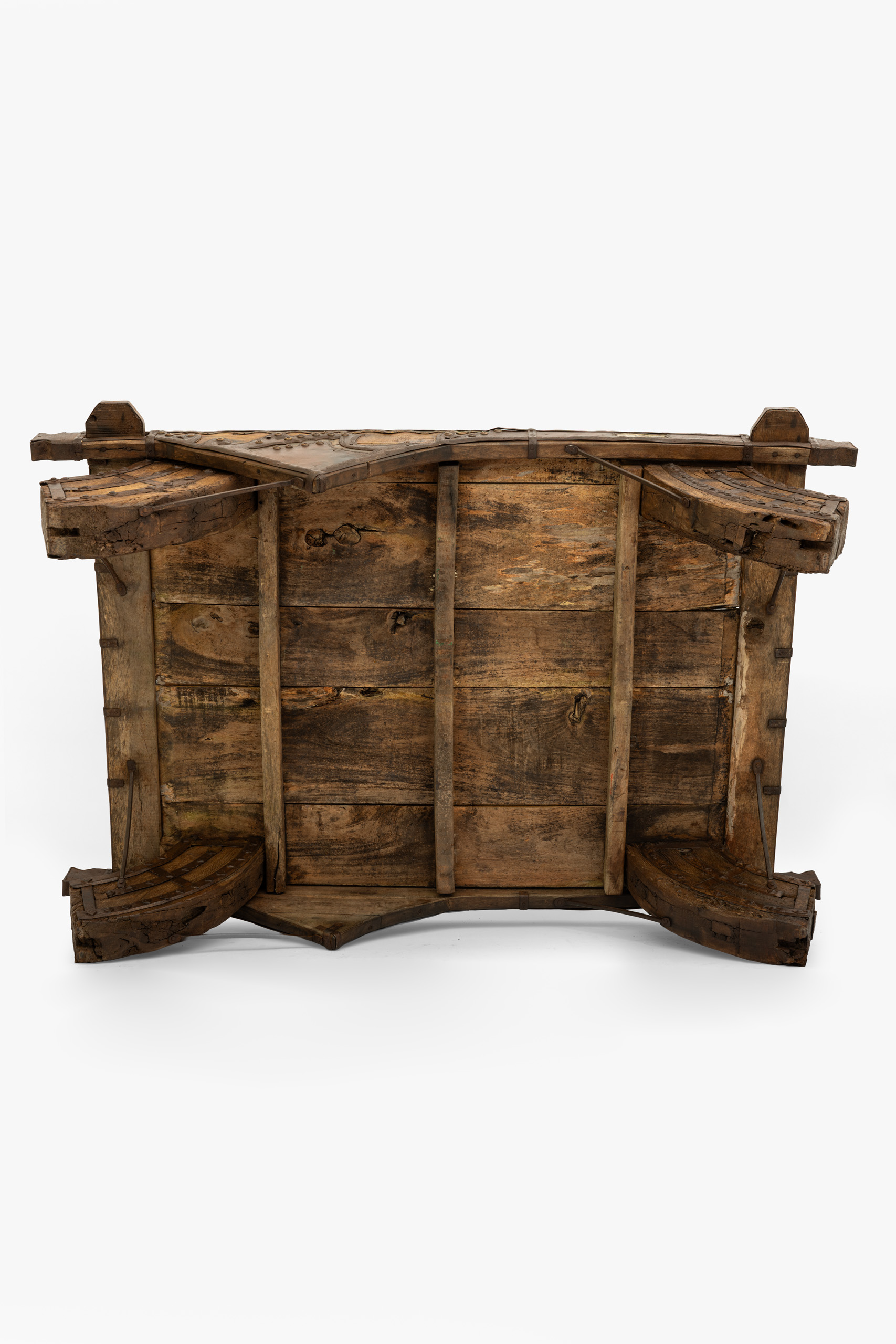
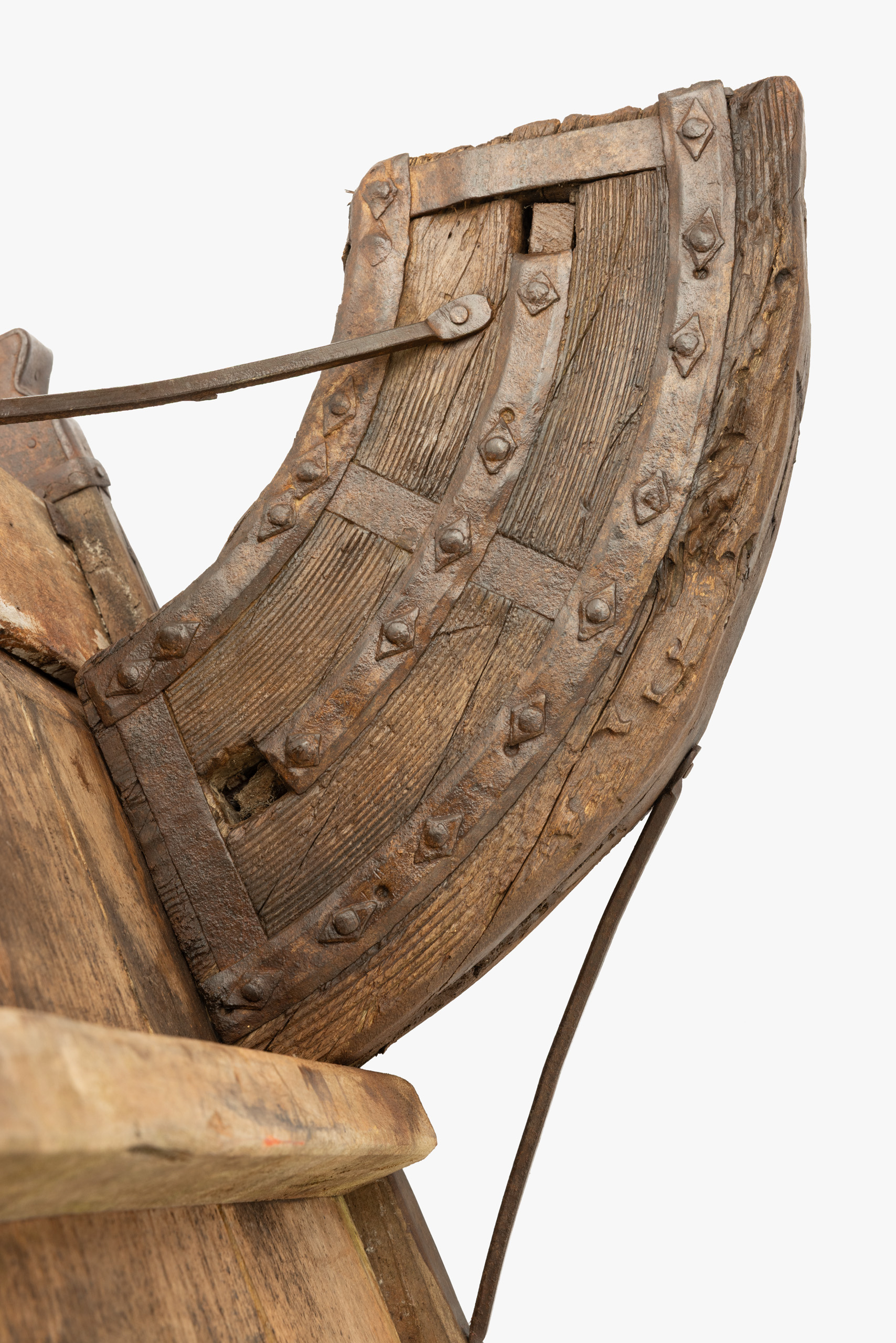
The base consists of two original cart wheel supports — massive carved and laminated wooden arch-rockers, their curved profile derived directly from the wheel axle structure of the cart. The laminated construction, visible in cross-section, and the dense grain and patina of the wood speak to considerable age and authentic working use. Iron wire bracing between the rockers provides lateral stability in the table’s converted configuration.
Objects of this type — ox-cart furniture — entered the Western design vocabulary in the 1970s and have remained among the most sought categories of Indian decorative antiques, prized for the combination of raw material presence, artisanal metalwork, and the powerful formal contrast between the refined iron ornament and the unadorned character of the wood.
Origin / Maker / Period / Style / Material / Dimensions
- Origin: Rajasthan or Gujarat, India
- Maker: Anonymous village craftsmen / blacksmiths
- Period: 19th – early 20th century
- Style: Indian folk / utilitarian craft / global eclectic
- Material: Teak or sheesham hardwood, decorative ironwork, brass accents
- Dimensions (approx.):
- Length: ~110–130 cm
- Width: ~75–90 cm
- Height: ~35–45 cm
Condition Good antique condition consistent with age and working use. Original patina throughout. Iron and brass metalwork intact with expected oxidation. Wood surface shows honest wear, grain, and minor staining. Iron wire stabilizer bracing between wheel-rockers present. Structurally sound.
| Condition | Good |
|---|---|
| Material | Wood |
| Period | 1850-1900 |
| Style | Folk |
Related Products


A highly sought-after Scandinavian vintage lounge chair and ottoman set, designed by Madsen & Schubell in the 1970s. Model 68, featuring tufted natural leather cushions and elegant beech star bases.
1 in stock
by Thalita Eik‑Constantinescu, 1947 pastel portrait of blonde girl in orange folk dress, framed under glass.
1 in stock


A rare 17th-century European iron strongbox, masterfully hand-forged with a breathtaking internal lock mechanism, original key, and faint remnants of its original polychrome decoration. A museum-worthy piece of security craftsmanship.
Out of stock
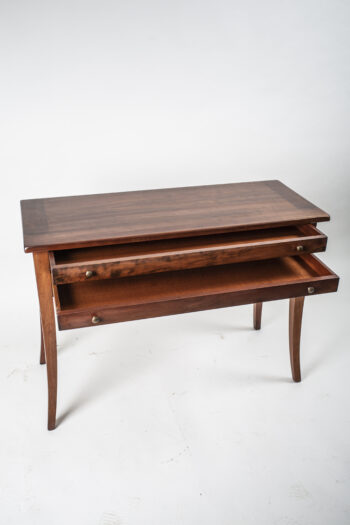
An elegant mid-century Continental European console table in solid mahogany, circa 1950, featuring two slim drawers and gently splayed legs. Timeless, versatile, and superbly crafted.
Out of stock


A sculptural Danish Modern armchair by Erik Kirkegaard, crafted in Denmark in the 1960s. Solid teak frame with organic lines and armrests, upholstered in original black natural leather.
1 in stock
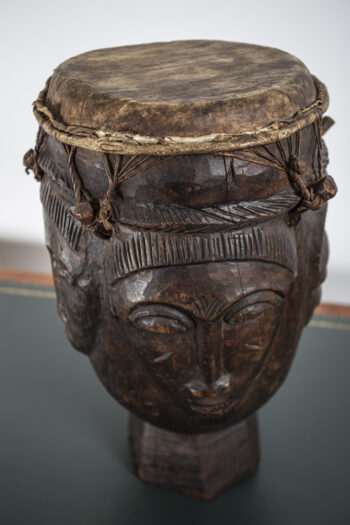
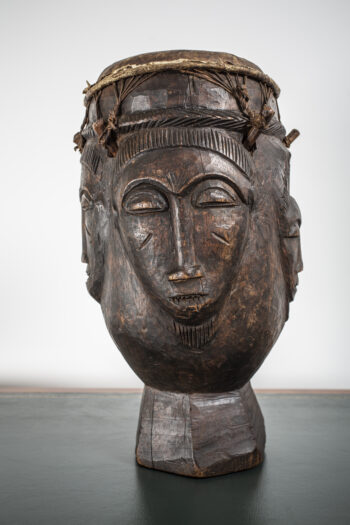
A striking African ceremonial drum, mid-20th century, carved with three stylized tribal faces and topped with its original goatskin hide secured by natural fiber ropes. A powerful example of mid-century tribal artistry, both decorative and functional.
1 in stock
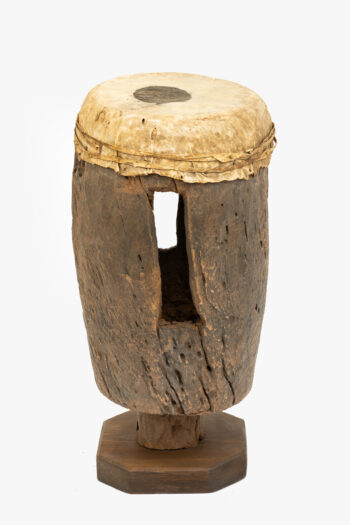
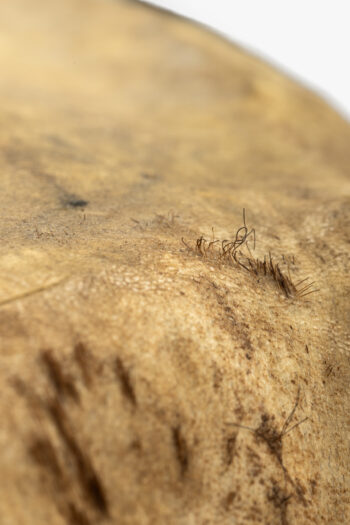
An authentic West African slit drum, hand-carved from a single log with deep vertical openings and a natural animal-skin drumhead. Showing pronounced surface erosion, rich patina, and visible adze tool marks, this late 19th–early 20th century piece served for both ritual music and long-distance communication in a traditional village setting.
1 in stock
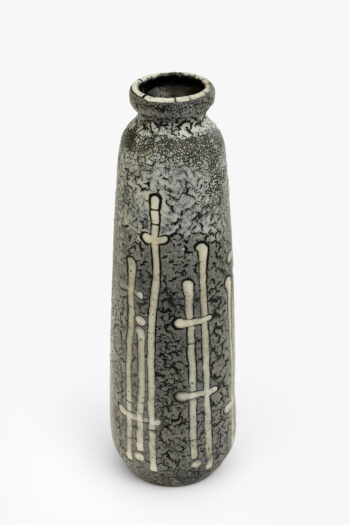
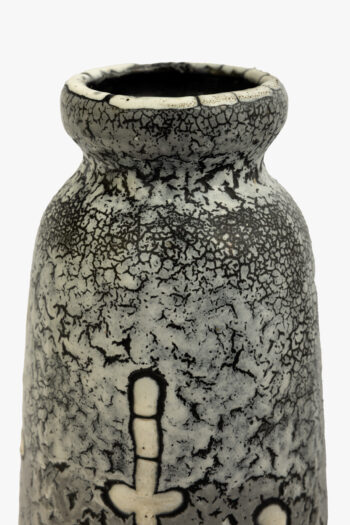
A striking mid-century West German ceramic vase featuring a textured “volcanic lava” glaze in black, white, and grey tones. Decorated with raised abstract relief motifs reminiscent of minimalist tribal patterns, this piece exemplifies the popular “Fat Lava” style of 1960s–1970s West German pottery.
1 in stock
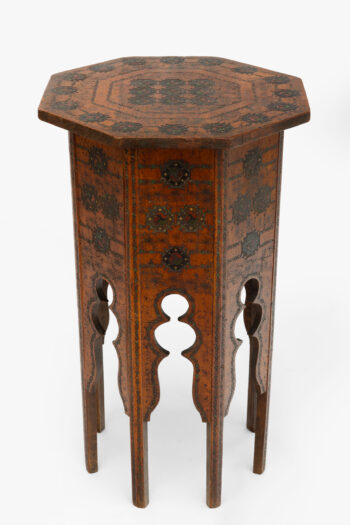
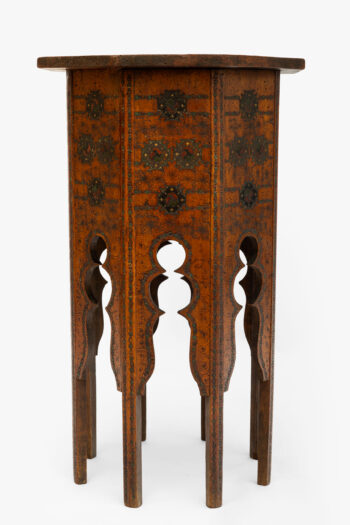
Rare antique octagonal pedestal table entirely decorated in pyrography and polychrome, combining Neo-Brâncovenesc geometric ornament with Moorish Revival architectural form. Bucharest or Wallachia, circa 1890–1910.
Out of stock
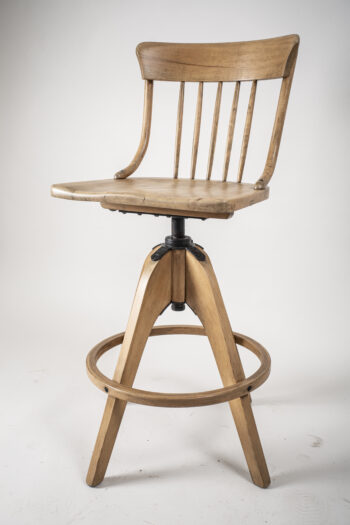
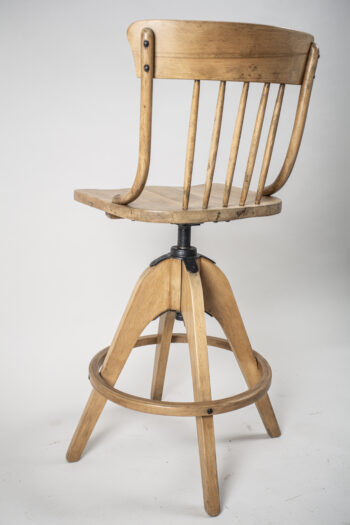
A robust and elegant industrial swivel chair from the early 20th century, featuring a solid beech wood frame with spindle back, saddle-shaped seat, and a cast iron rotating mechanism. Likely of Austro-German origin, this architect-style chair blends artisanal craftsmanship with early industrial design principles.
Out of stock


A superb English Windsor armchair, handcrafted circa 1880 in solid elm, boasting a beautifully pierced back splat, sculpted saddle seat, and masterfully turned legs. A true 19th-century original with deep, lustrous patina.


A refined French Louis-Philippe style work table in rich mahogany, dating circa 1860–1880, featuring two drawers, original brass escutcheons, and a fitted interior with multiple compartments. A versatile and elegant 19th-century piece.
Out of stock