


Indonesian Carved Teak Jodang Wedding Chest – Java or Madura, Late 19th–Early 20th Century
€ 650,00
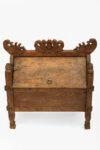
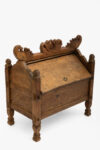
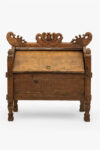
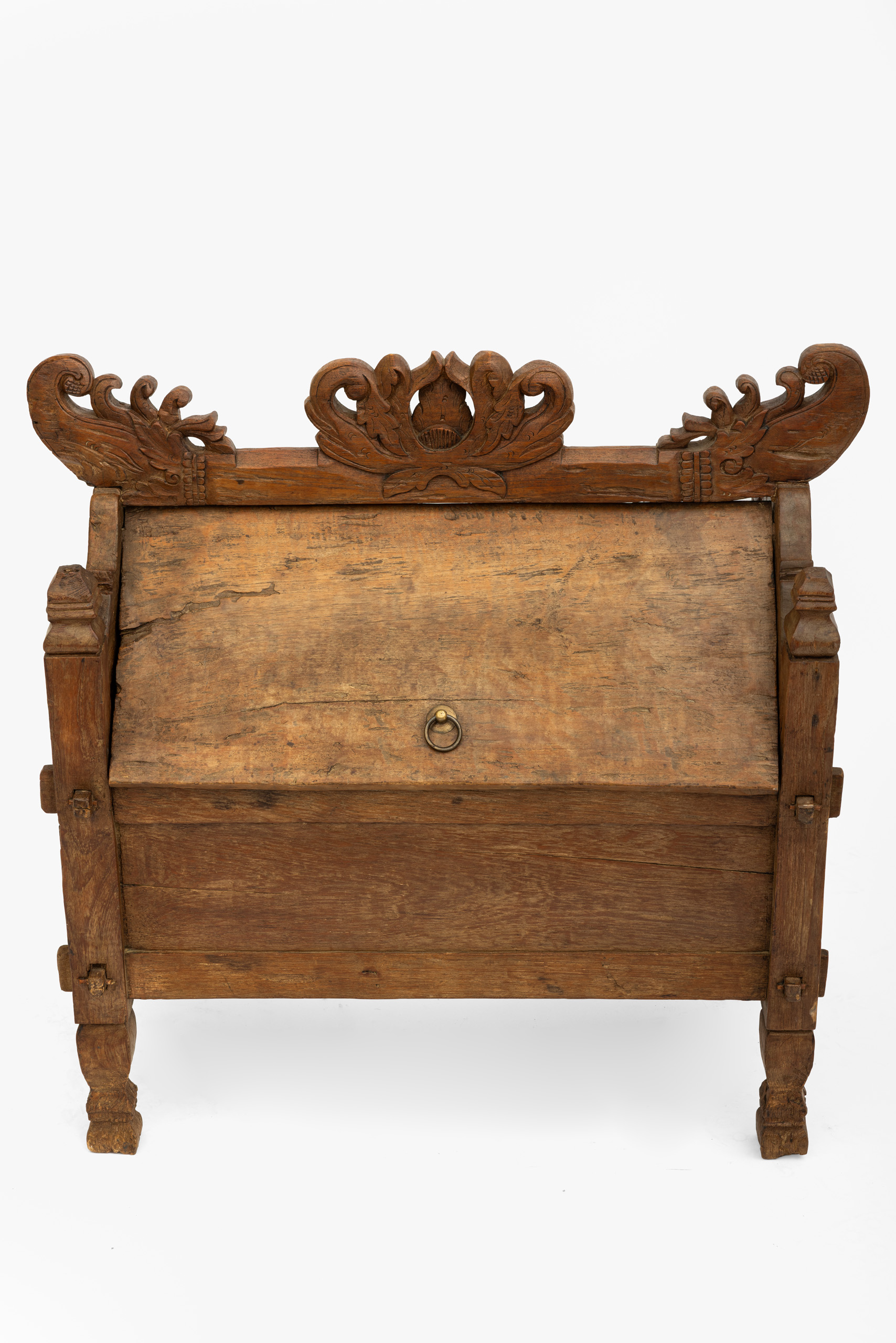
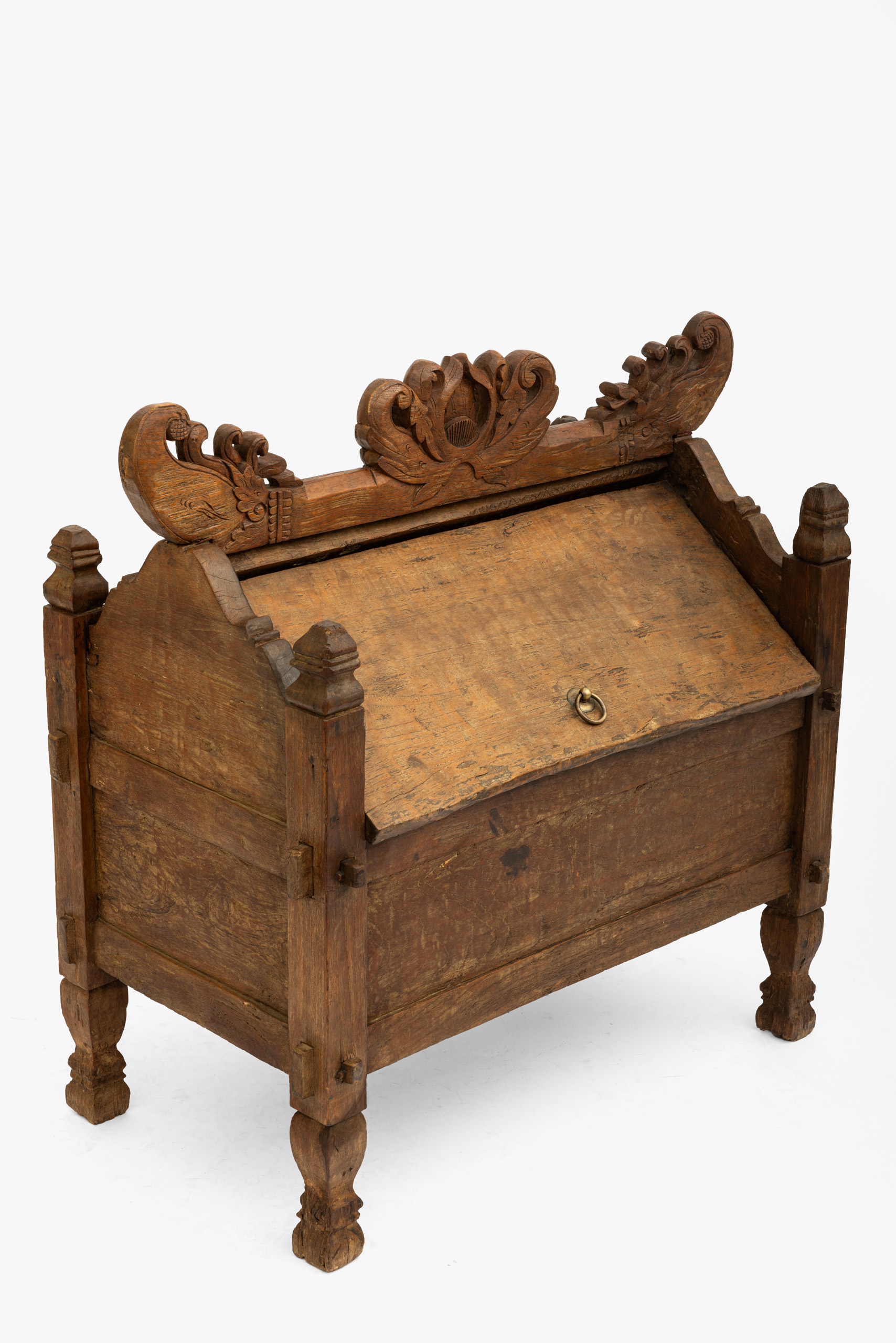
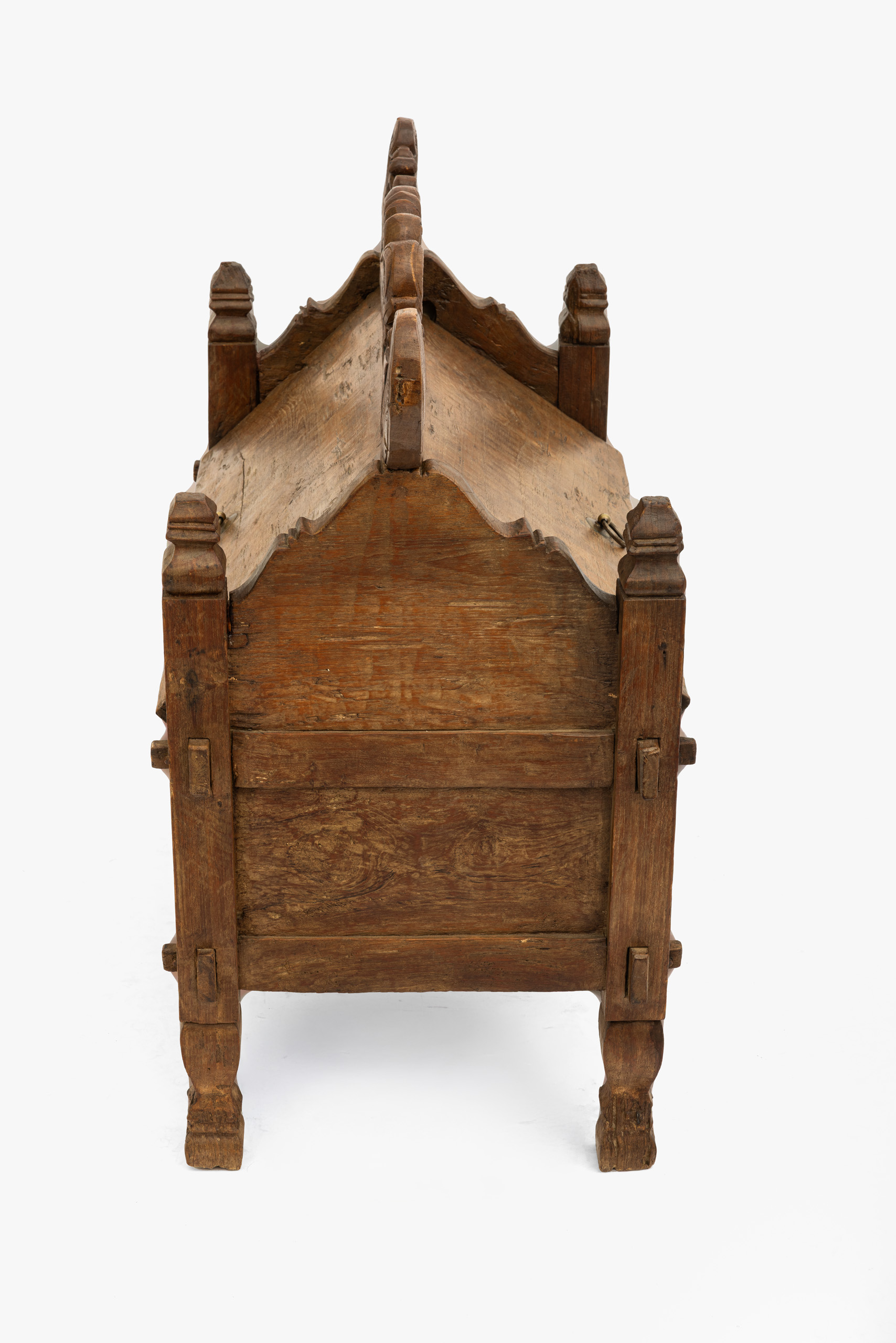
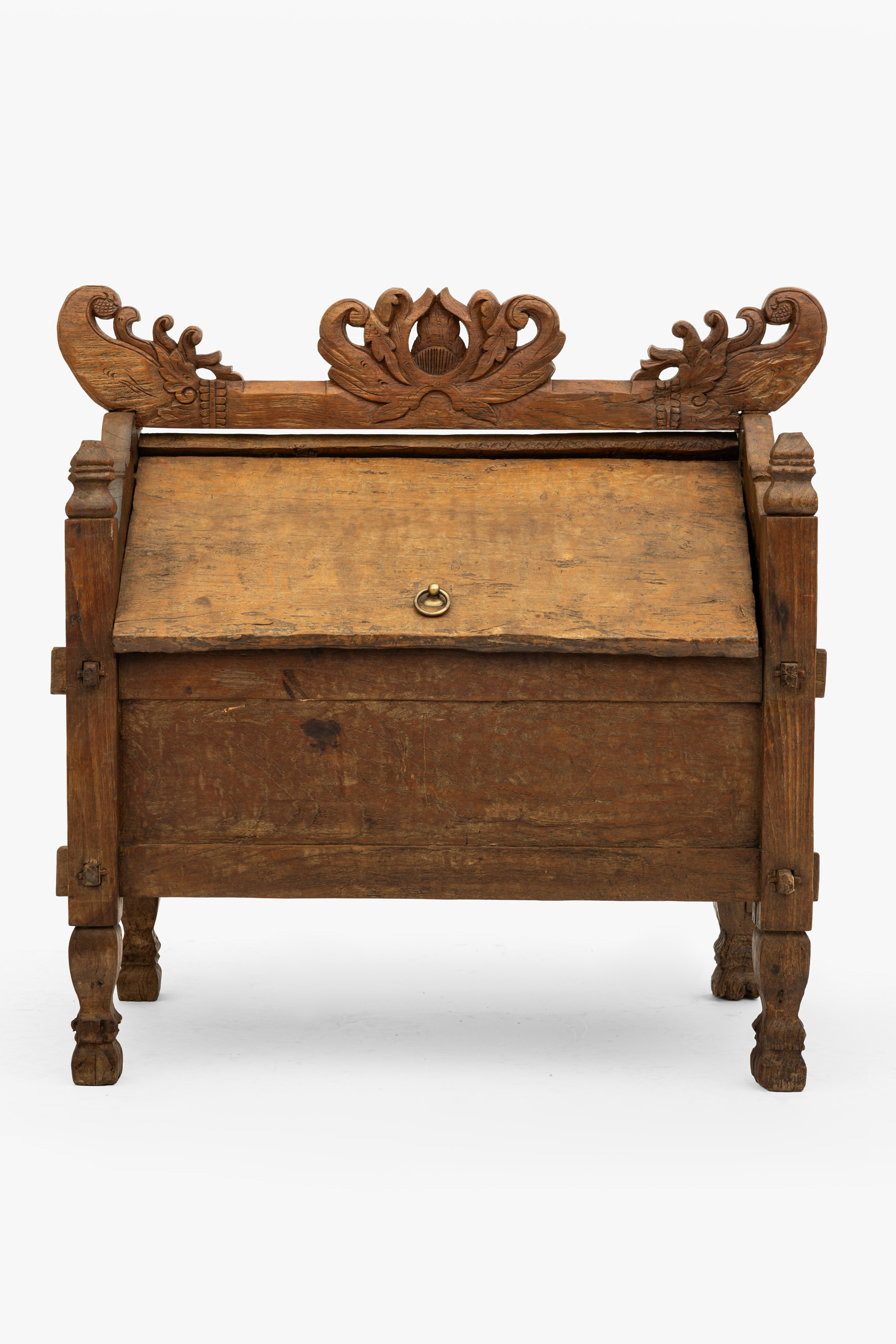
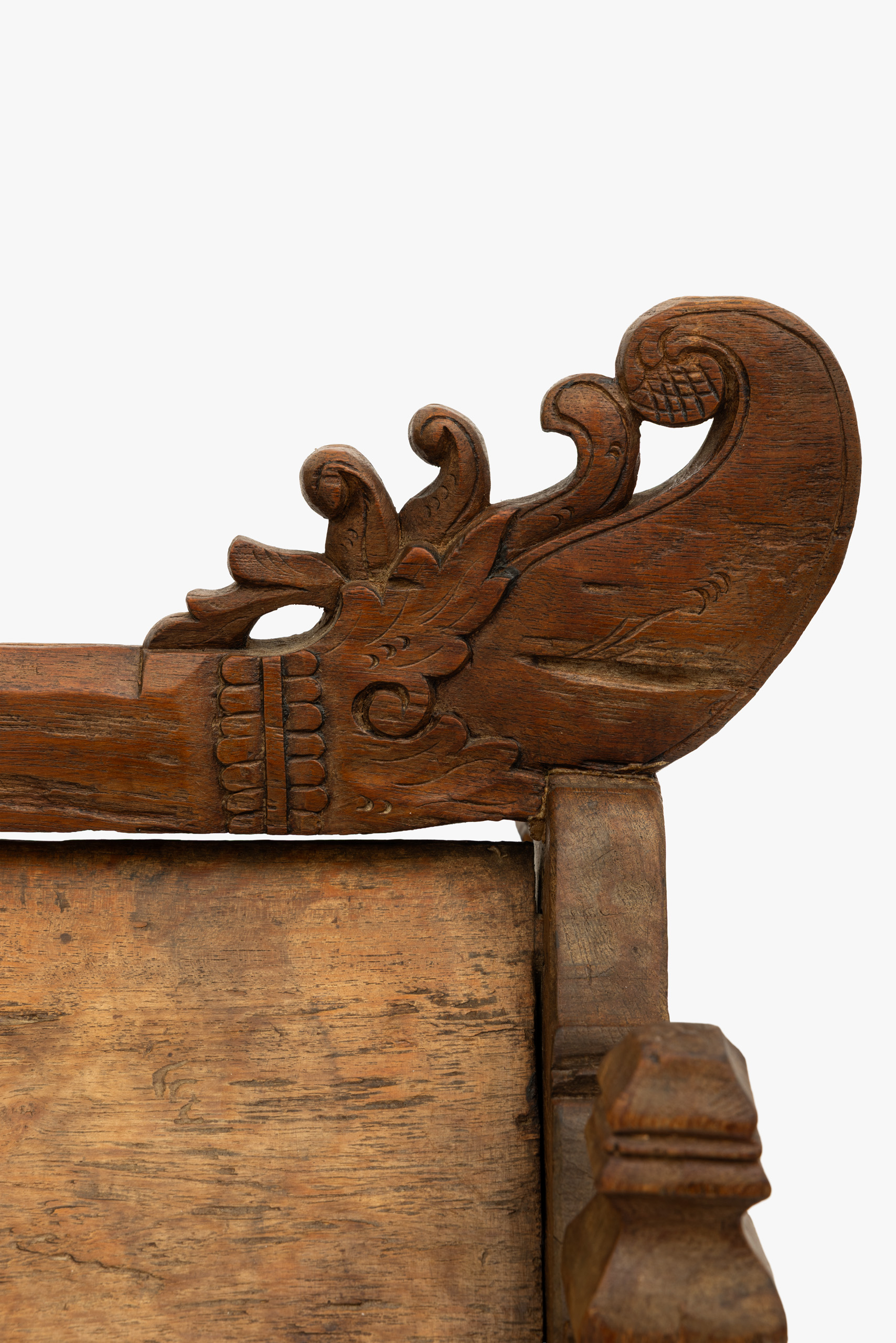
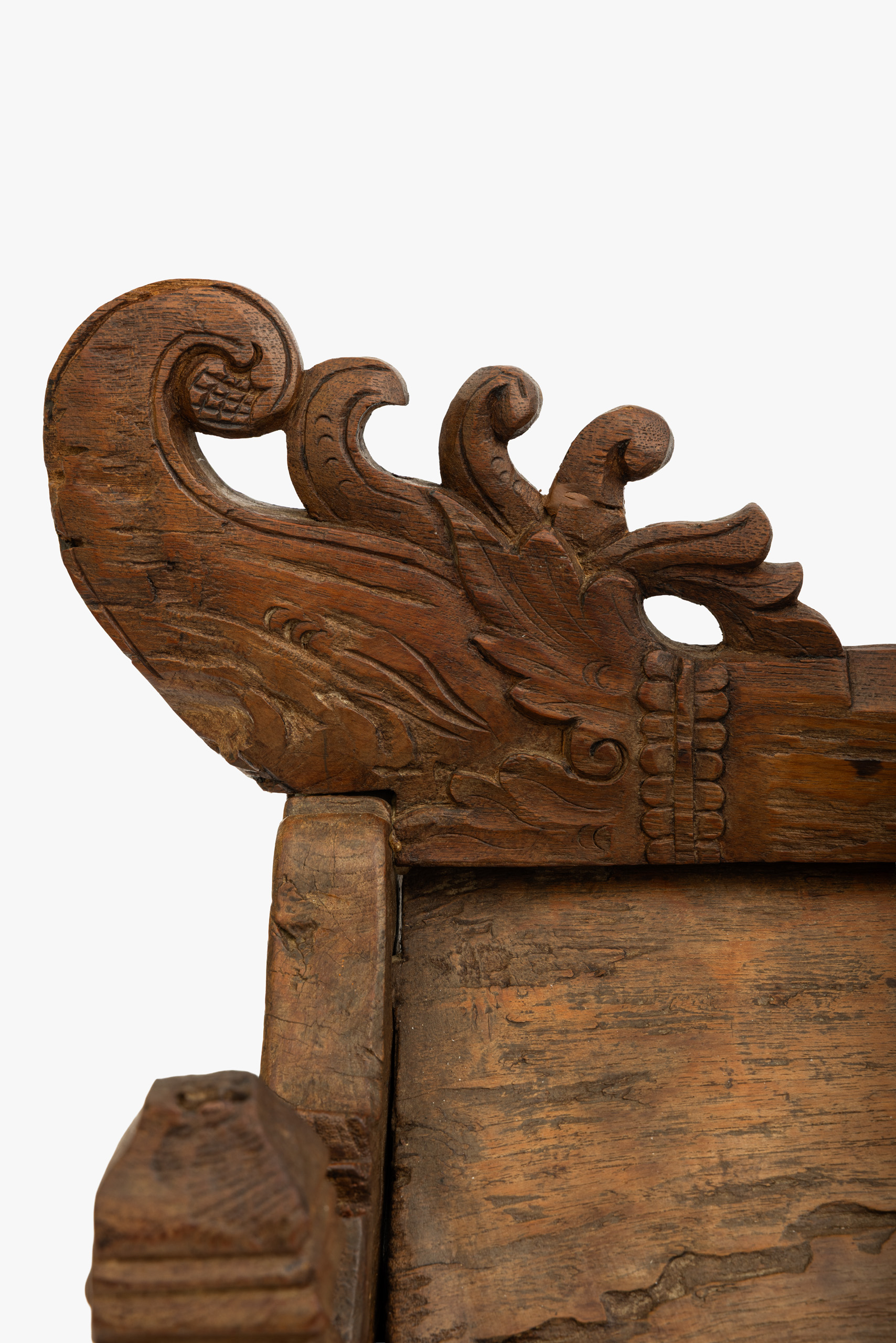
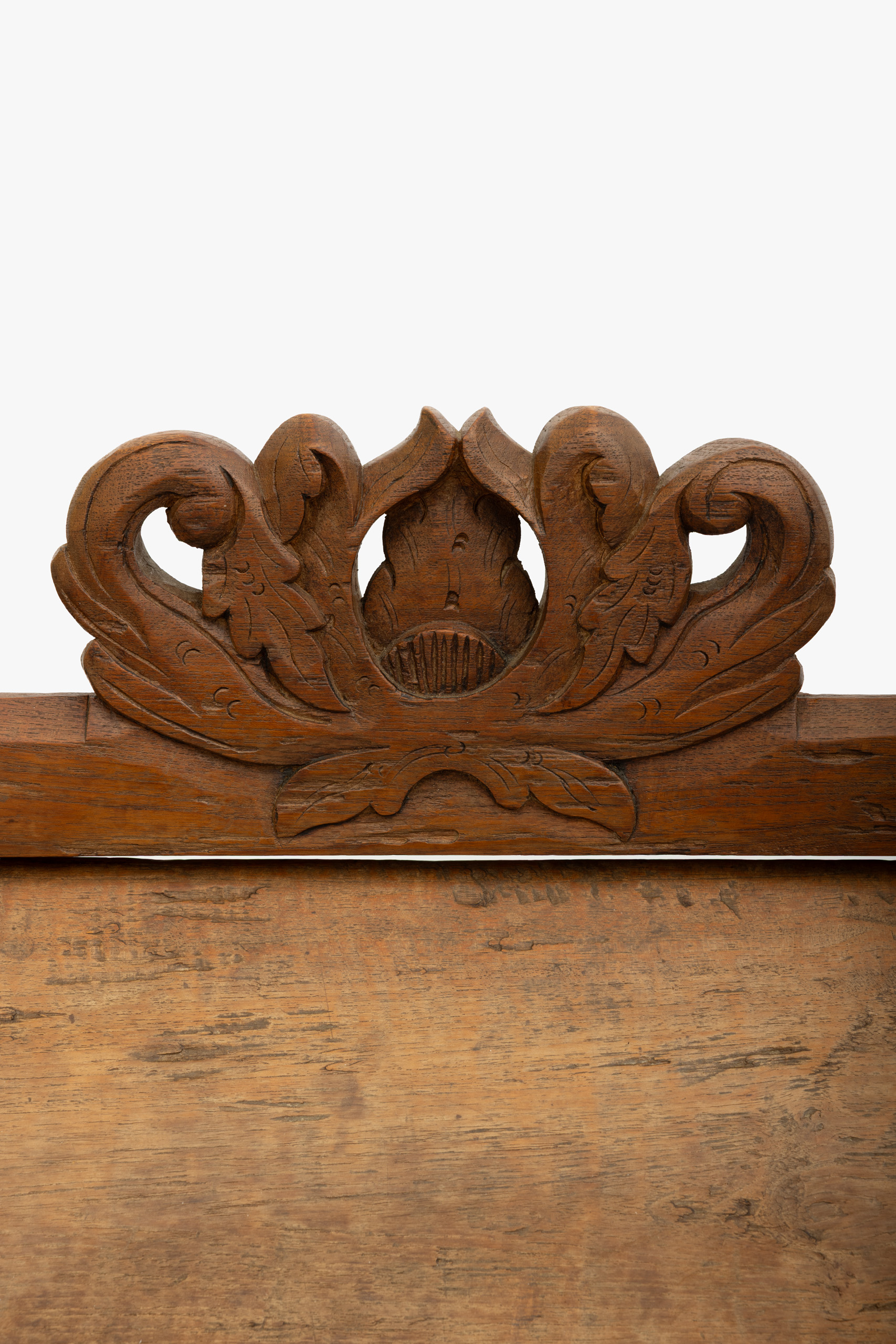
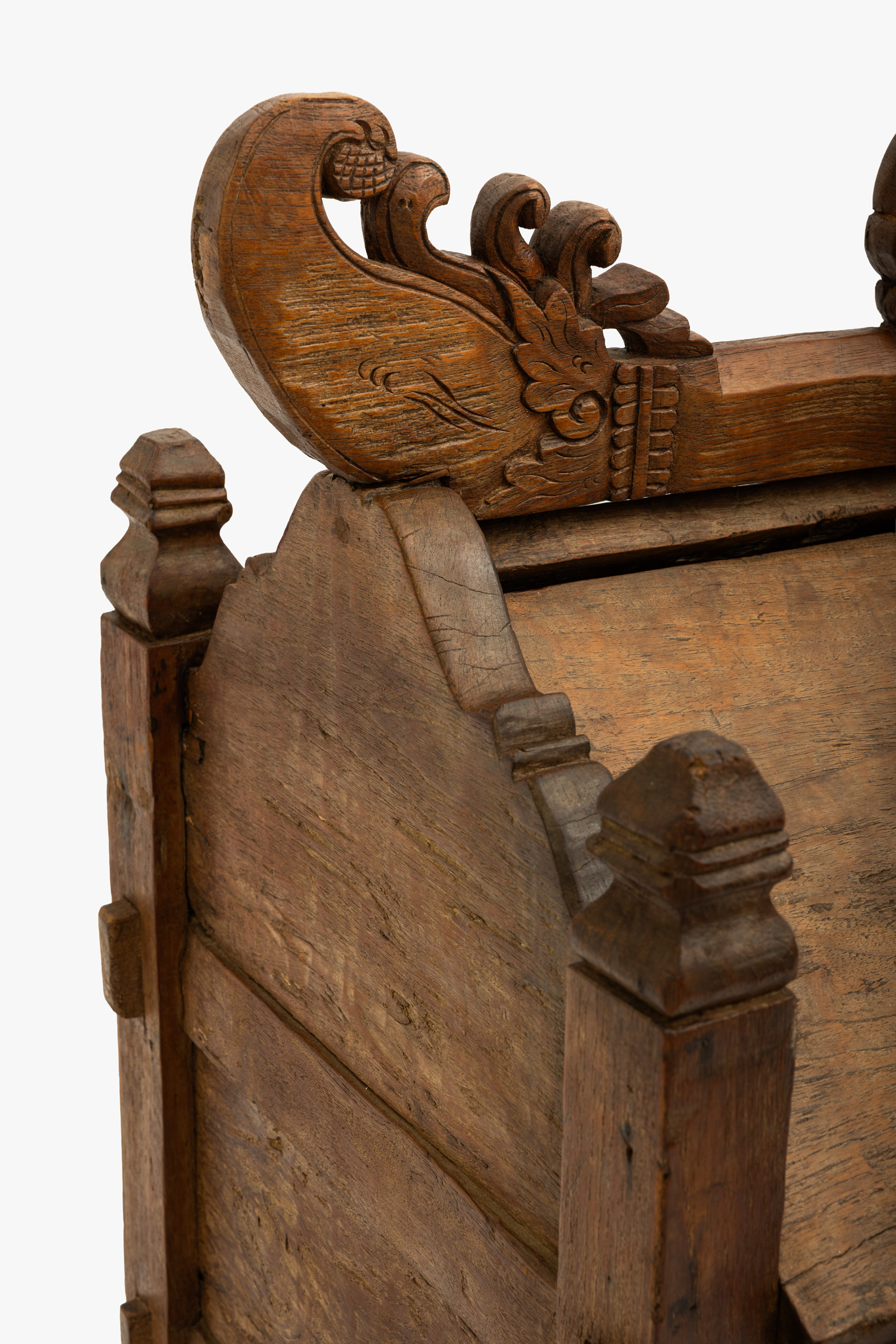
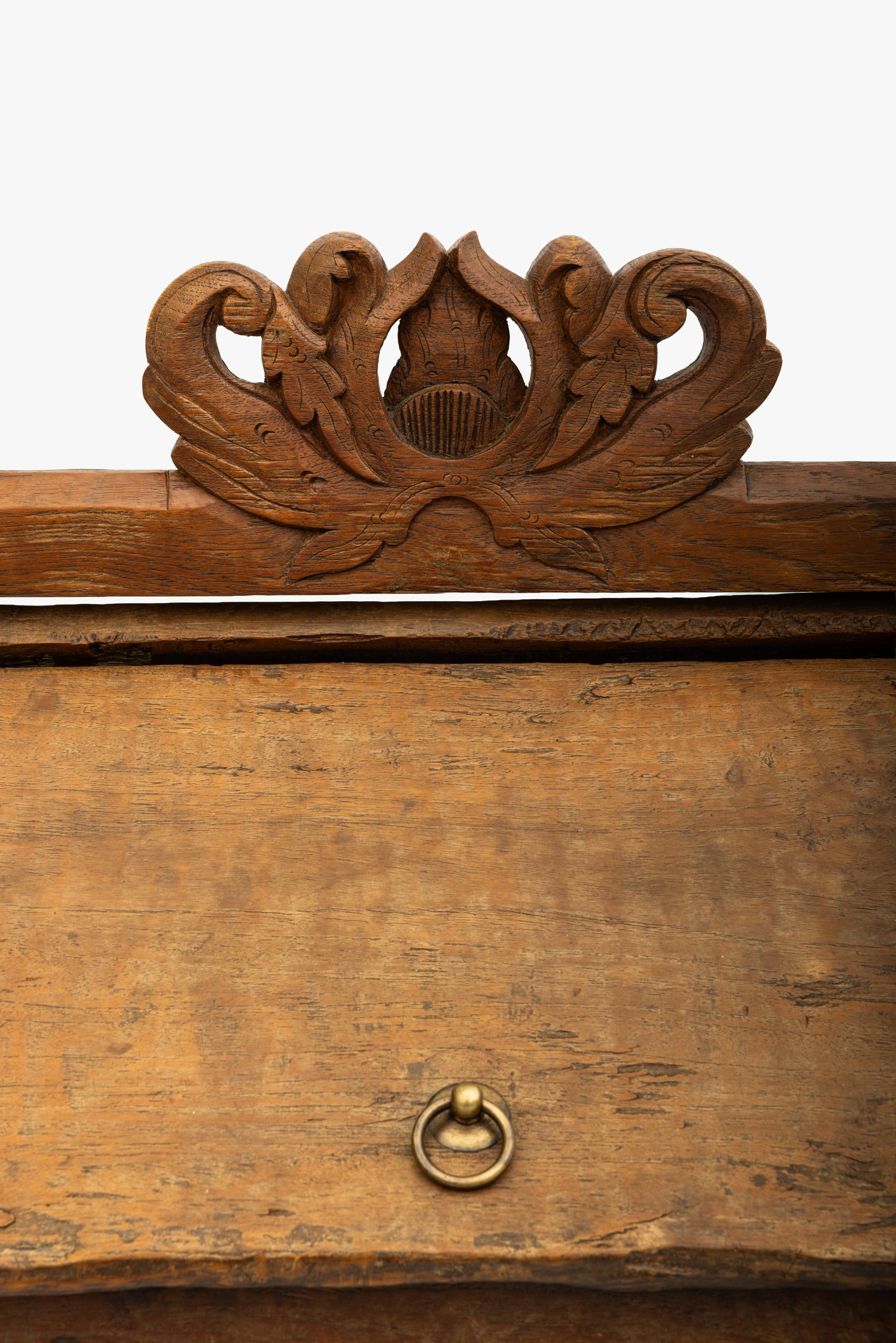
An impressive traditional Indonesian jodang wedding chest from Java or Madura, dating to the late 19th or early 20th century. Constructed from solid hardwood, probably teak, the chest features distinctive opposing sloping lids, substantial pegged construction and an elaborate carved crest decorated with stylised birds and scrolling vegetal motifs. The heavily aged surface retains an evocative patina and extensive traces of traditional use.
1 in stock
MAKE AN OFFER - SELECT:
A substantial Indonesian jodang, a traditional form of wedding and dowry chest associated with Java and Madura, dating to the late 19th or early 20th century.
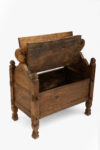
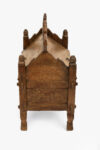
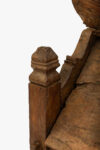
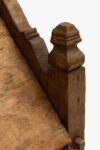
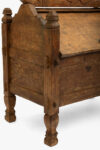
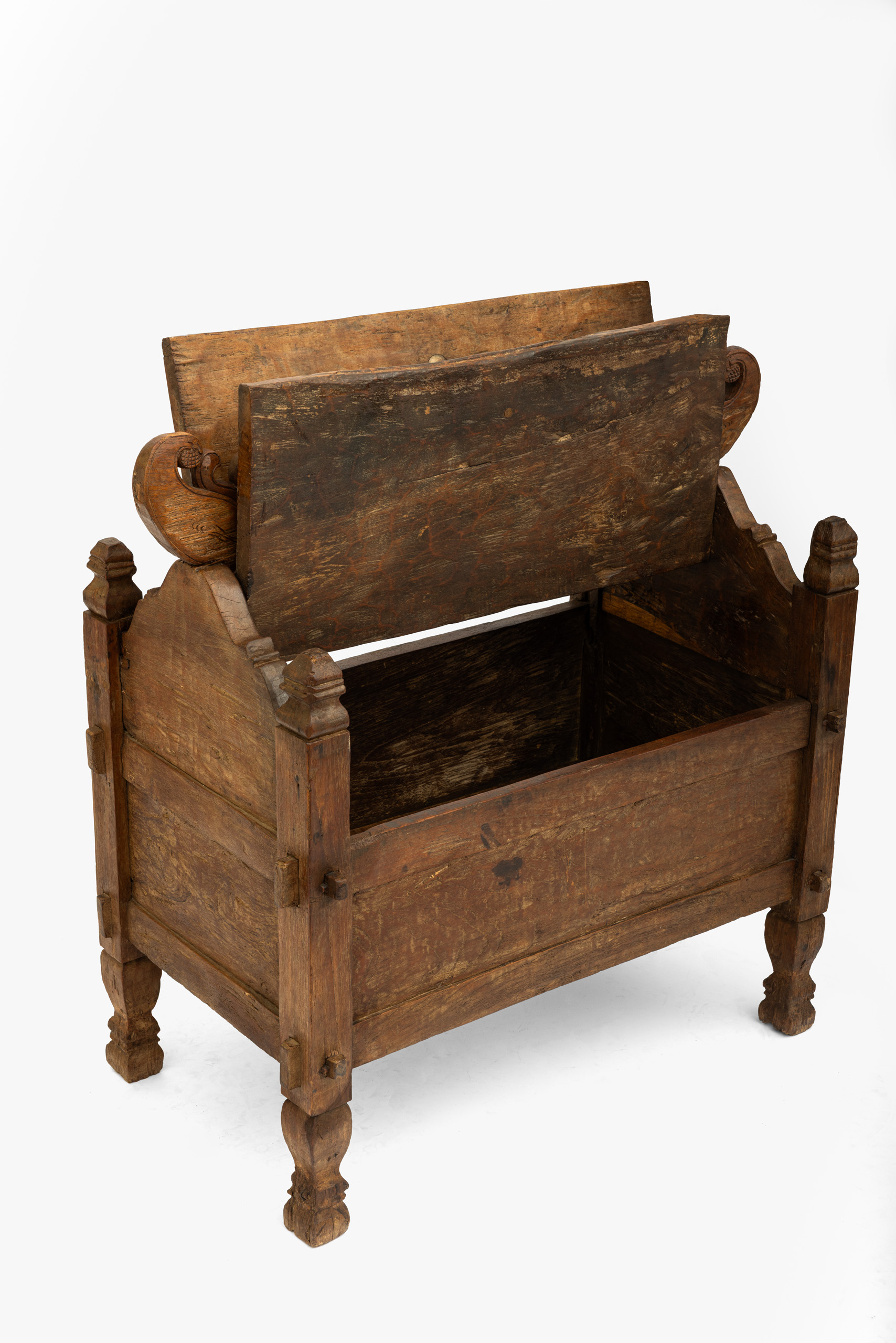
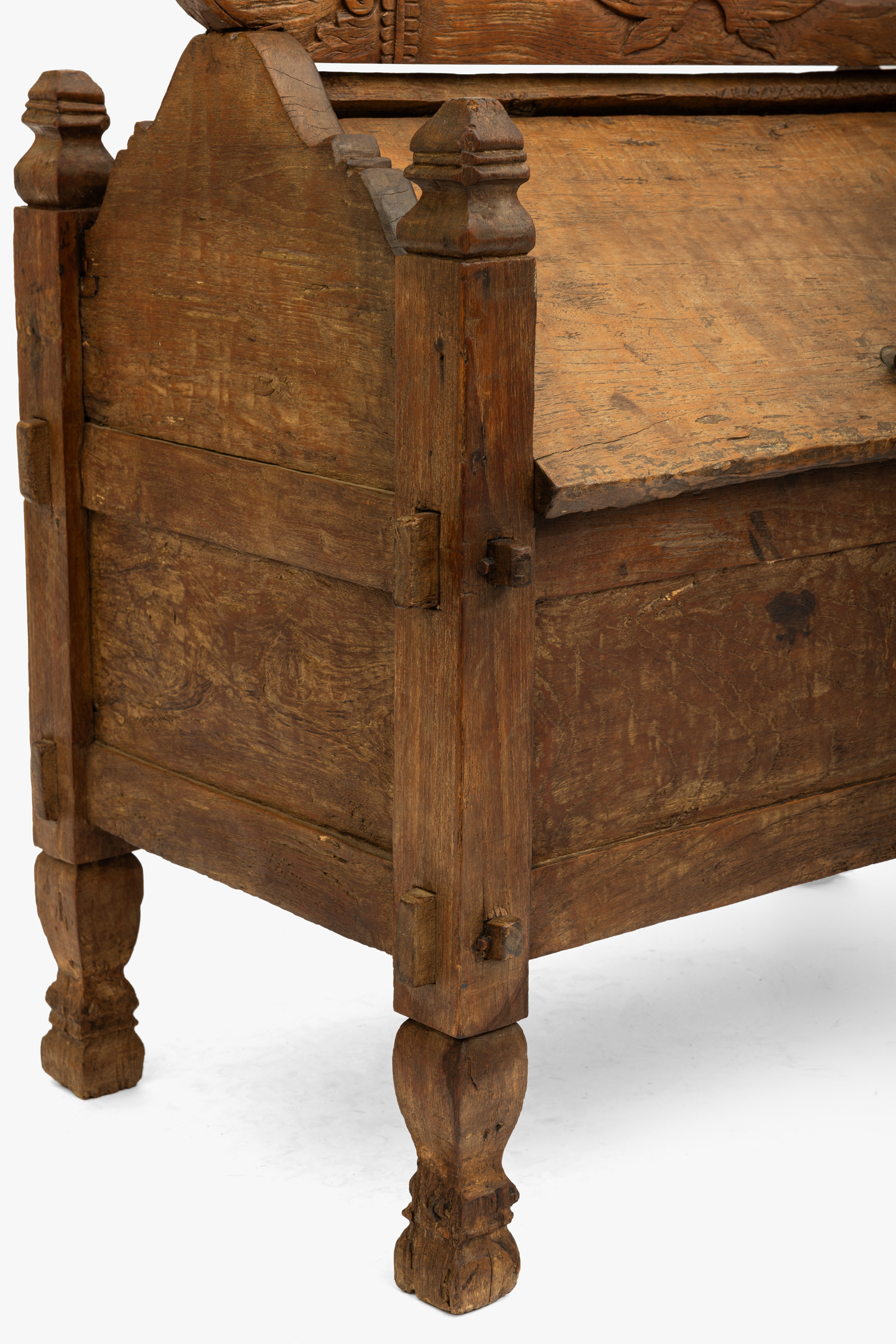
The chest is constructed from heavy solid hardwood, probably teak, around four substantial corner posts raised on carved feet. Its unusual upper section incorporates opposing sloping lids, each fitted with a simple brass ring pull and opening to reveal the large storage compartment within.
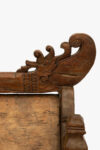
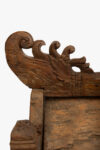
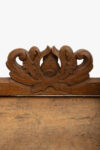
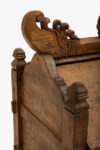
The most striking feature is the elaborate carved superstructure rising above the chest. A symmetrical central crest is composed of paired stylised birds arranged around a central vegetal or floral motif, while the two extremities terminate in large upward-sweeping carved forms enriched with scrolling foliage. The combination of birds, vegetation and strongly stylised curvilinear ornament reflects the decorative vocabulary of traditional Indonesian woodcarving.
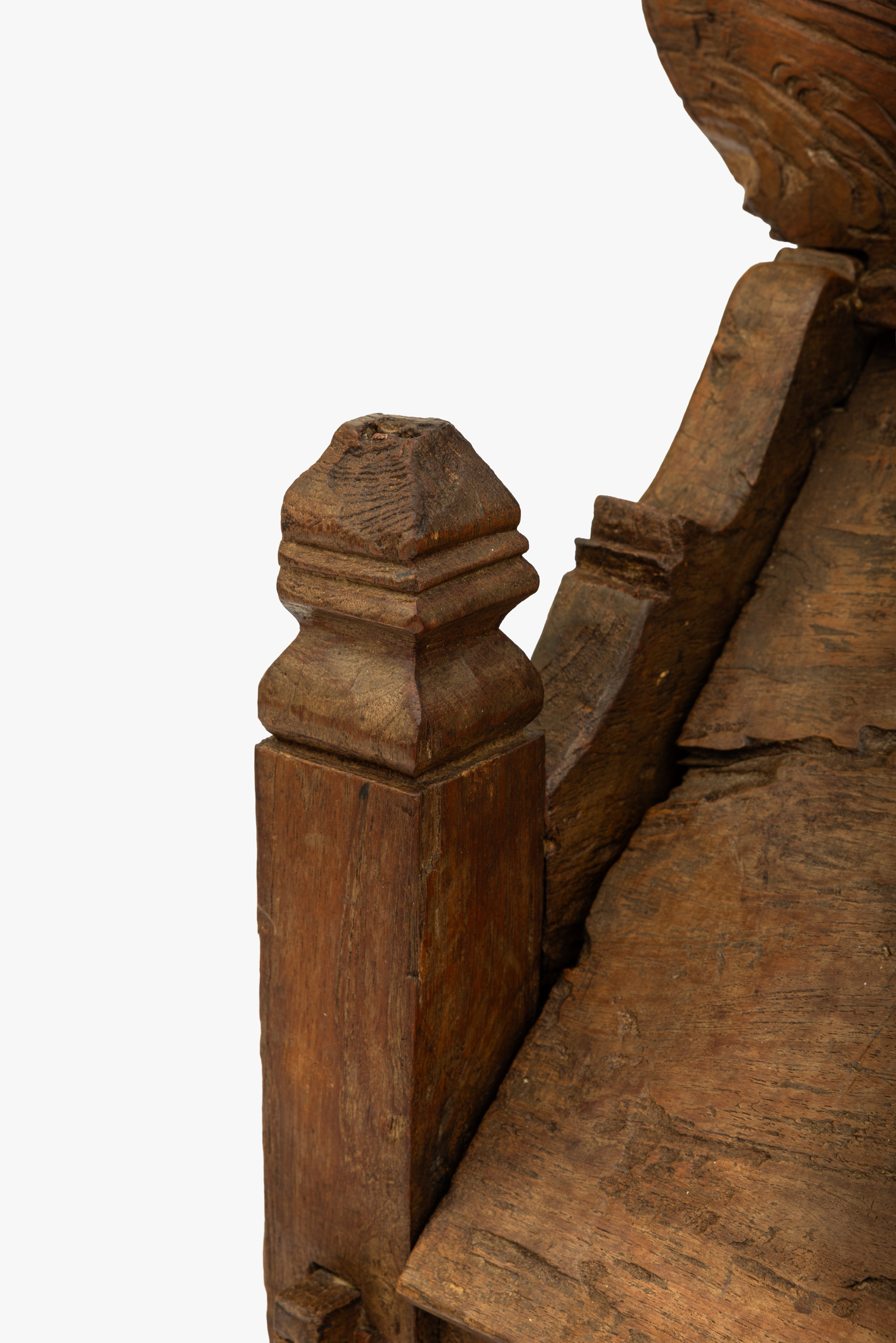
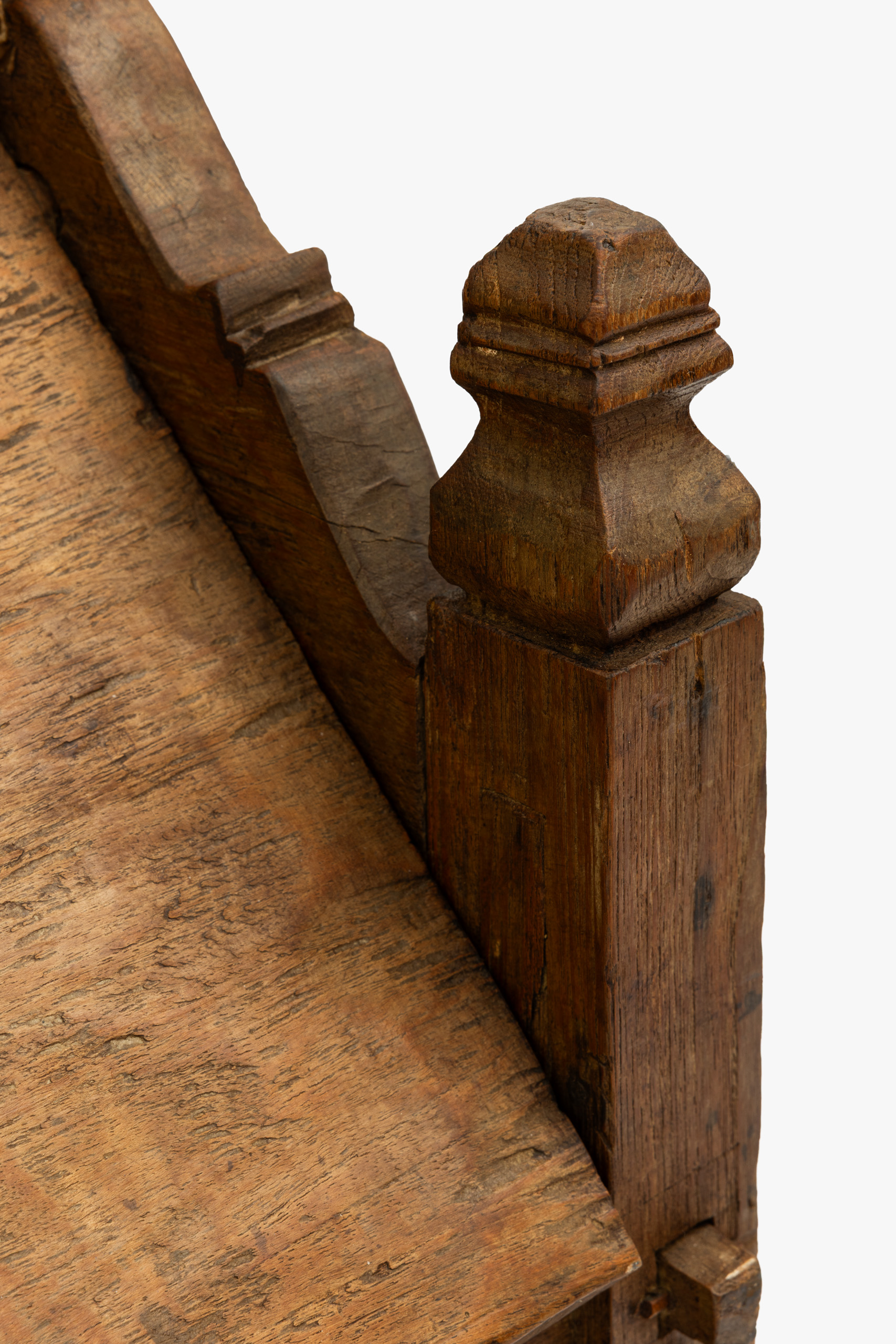
Particularly interesting is the construction itself. The broad wooden panels are joined to the substantial corner uprights using traditional joinery, with numerous projecting wooden pegs and tenons remaining clearly visible. Rather than concealing its construction, the piece makes these structural elements part of its visual character.
The term jodang is associated with traditional Javanese and Madurese chests used in connection with marriage ceremonies, particularly for the storage and transportation of clothing, textiles and other possessions forming part of the bride’s wedding goods.
The chest has clearly experienced a long working life. Its surface displays considerable variation in colour, extensive rubbing and wear, old scratches, cracks, abrasions and minor losses. The upper surfaces and lids are particularly worn, producing a warm, dry patina that gives the piece considerable visual character.
An evocative example of Indonesian vernacular furniture, combining functional construction, traditional woodworking and highly expressive carved decoration.
Condition
Good antique condition considering its age and original utilitarian function. Extensive age-related surface wear, scratches, abrasions, old cracks, staining and colour variation are visible throughout. There are minor losses and areas of wear to the carved crest, feet and other exposed elements, together with natural movement and irregularities to the solid wooden boards. The lids and upper surfaces show particularly pronounced wear. The aged surface and patina have been retained and form an important part of the object’s character. Please refer closely to the detailed photographs, which form an important part of the condition description.
Technical Details
Origin: Indonesia, Java or Madura
Period: Late 19th–early 20th century
Date: Circa 1880–1920
Type: Jodang / traditional wedding or dowry chest
Material: Solid tropical hardwood, probably teak; brass fittings
Decoration: Carved and pierced stylised bird and vegetal motifs
Construction: Traditional solid-board construction with pegged and tenoned joinery
Technique: Hand constructed and hand carved
Dimensions: 76cm x40cm x 75cm
Condition: Antique condition with extensive age-related wear, cracks, abrasions, minor losses and surface irregularities
| Condition | Excellent |
|---|---|
| Material | Wood |
| Period | 1850-1900 |
| Style | Folk |
Related Products
A robust and elegant industrial swivel chair from the early 20th century, featuring a solid beech wood frame with spindle back, saddle-shaped seat, and a cast iron rotating mechanism. Likely of Austro-German origin, this architect-style chair blends artisanal craftsmanship with early industrial design principles.
Out of stock
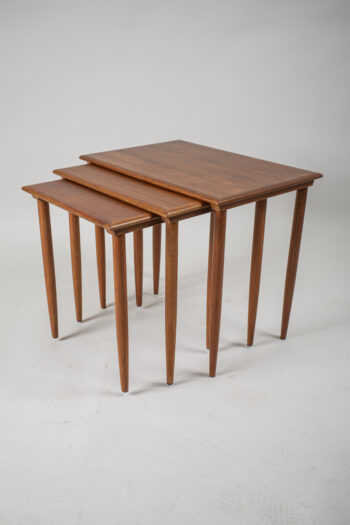
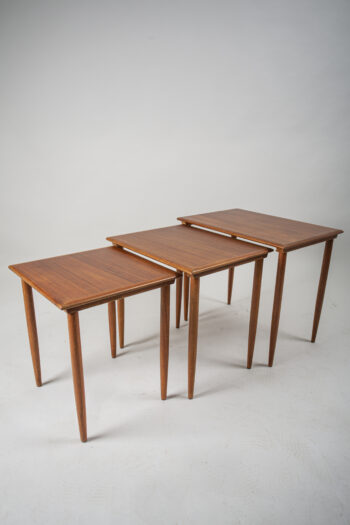
Elegant Danish Modern set of three nesting side tables in teak, showcasing the refined craftsmanship and functional elegance of Scandinavian mid-century design.
1 in stock
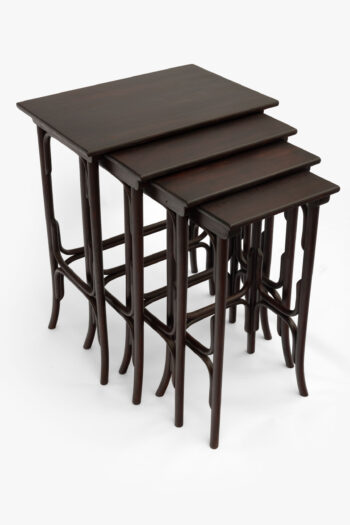
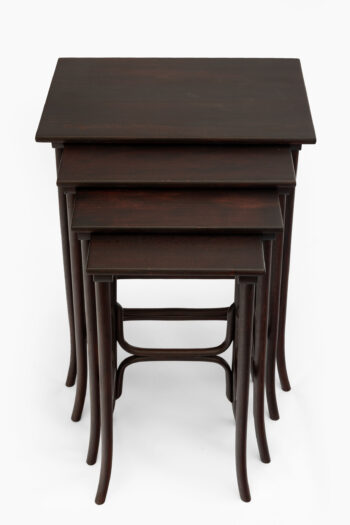
Elegant set of four bentwood nesting tables attributed to Thonet, Vienna, circa 1900, showcasing refined Secession-era craftsmanship and practical design.
1 in stock
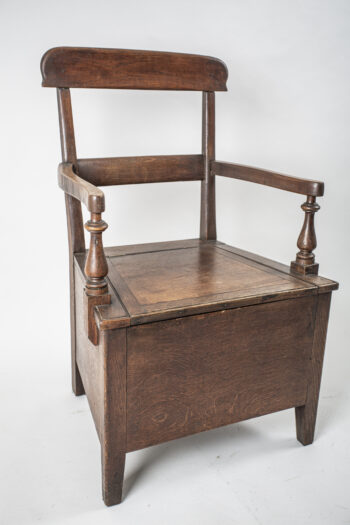
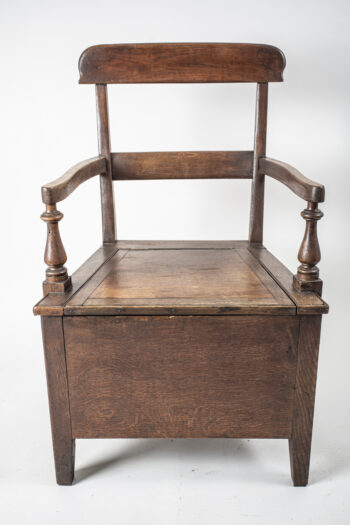
A charming late Victorian commode chair in solid oak, dating circa 1880, with turned arm supports, hinged seat, and original Bristol ceramic insert. A practical yet decorative 19th-century accent piece.


A highly sought-after Scandinavian vintage lounge chair and ottoman set, designed by Madsen & Schubell in the 1970s. Model 68, featuring tufted natural leather cushions and elegant beech star bases.
1 in stock
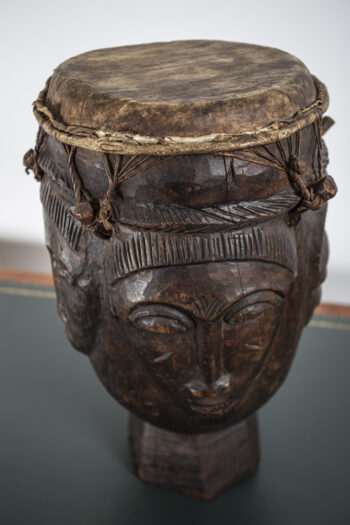
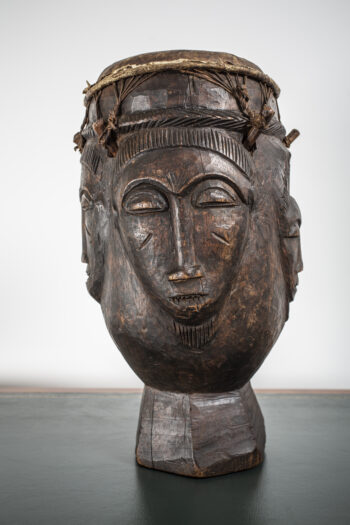
A striking African ceremonial drum, mid-20th century, carved with three stylized tribal faces and topped with its original goatskin hide secured by natural fiber ropes. A powerful example of mid-century tribal artistry, both decorative and functional.
1 in stock
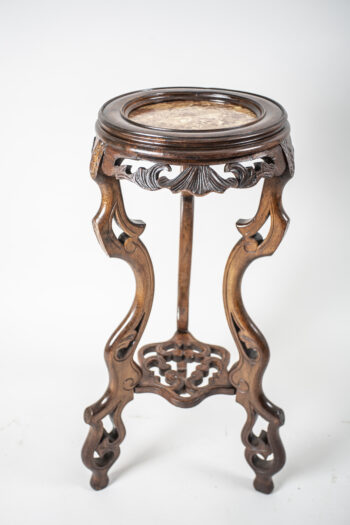
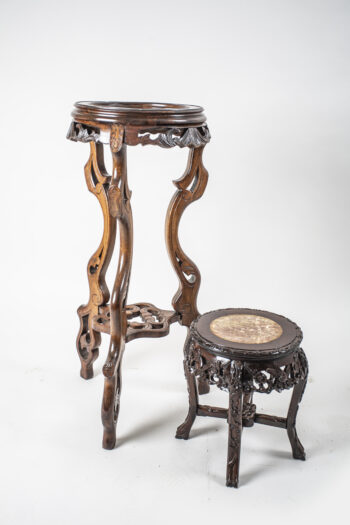
A finely carved Chinese Qing Dynasty hardwood plant stand, dating circa 1880–1900, featuring an inset marble top and intricate openwork detailing. A graceful late 19th-century piece combining traditional Chinese craftsmanship with elegant proportions.
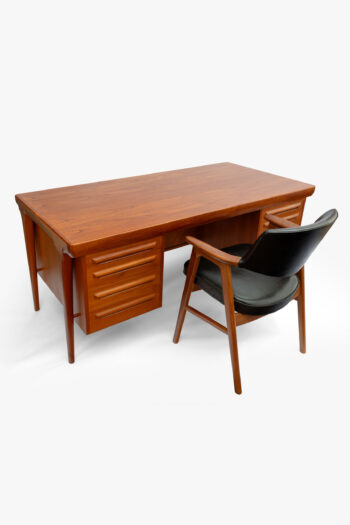
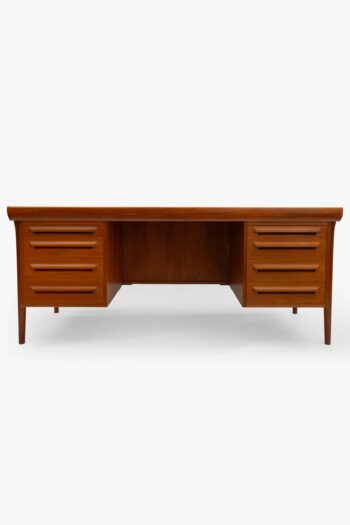
A refined Danish mid-century executive desk attributed to Kofod Larsen, paired with an Erik Kirkegaard armchair in natural wood and black leather.
1 in stock
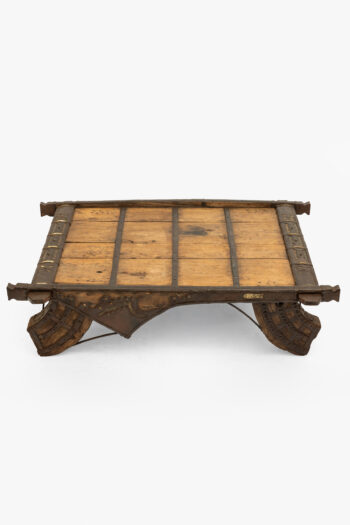
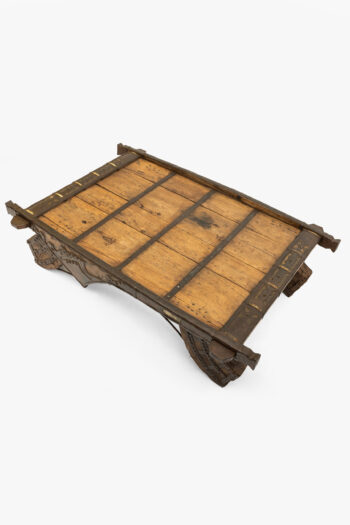
Antique low coffee table converted from an Indian ox-cart, retaining its original teak plank bed, iron cross-strapping, repoussé iron apron with brass studs, and carved wooden wheel-arch rockers. Rajasthan or Gujarat, 19th – early 20th century.
1 in stock


A superb English Windsor armchair, handcrafted circa 1880 in solid elm, boasting a beautifully pierced back splat, sculpted saddle seat, and masterfully turned legs. A true 19th-century original with deep, lustrous patina.
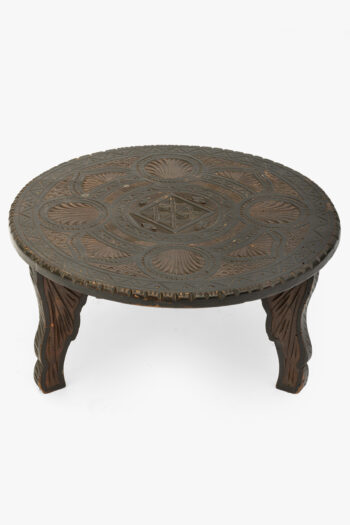
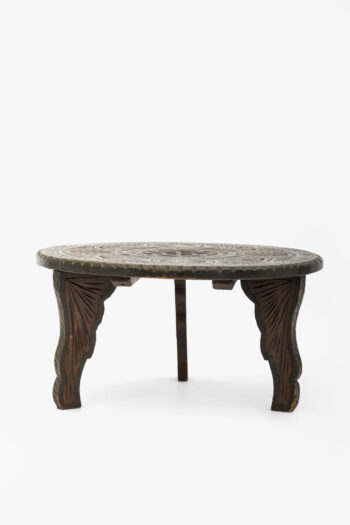
A finely carved Neo-Romanian low table featuring rich geometric ornamentation and traditional solar motifs, executed in dark-stained wood, Romania, circa 1920–1940.
Out of stock


A refined Danish modern sofa designed by Kai Kristiansen, showcasing elegant lines, gently curved armrests, and a solid teak frame. This rare 3-seater model from the 1960s has been newly reupholstered in a neutral beige fabric, with the original upholstery preserved and included.
1 in stock